
Lieferung heute & morgen

Qualitätsgarantie

Willkommens-Angebote freischalten: KOSTENLOSE Lieferung | Bis zu 80 % RABATT | Kostenlose 30-Tage-JoyPlus-Testphase
App herunterladen
A convertible tricycle promises to be a faithful companion through several of your child's developmental stages—from their first pushed outings to their first independent attempts at pedalling. But the market is flooded with models whose promises often don't hold up in practice. Many parents quickly find that the vehicle they bought is either impractical, quickly outgrown, or of inferior quality. This guide will show you what to look for to make an informed decision and avoid the common pitfalls.
Before we turn to the important features, let's highlight the three most common problems that lead to frustration and unnecessary expense.
To avoid these pitfalls, you should focus your attention on three objective core parameters. These determine the vehicle's durability, safety, and practical usability.
A true convertible tricycle is more than just a tricycle with a push bar. It actively adapts to your child's abilities. Look for the following stages:
Your child's safety is the top priority. Check these features carefully:
The wheels have a significant impact on ride comfort and noise level.
Based on the criteria mentioned, we have put together some models for different needs and age groups.
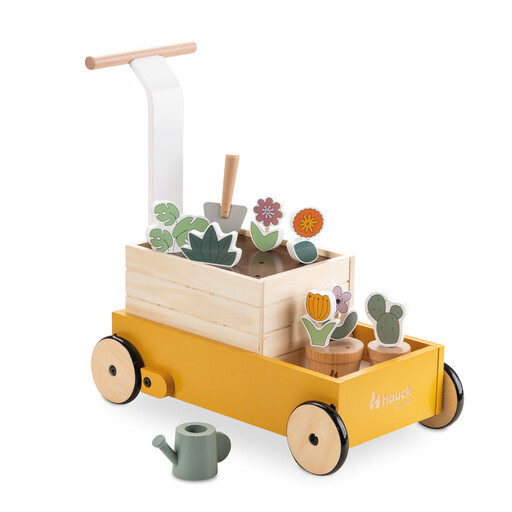
Why this model is a good fit: Ideal for children from around 12 months who are taking their first steps. It's not a tricycle alternative, but a targeted preliminary stage that provides security for learning to walk before the child is ready for pedals.
This product avoids the "one-season trap" by focusing on a specific, early developmental phase rather than trying to cover several years.
Features a braking system for individual adjustment of wheel speed and is made from FSC-certified wood.
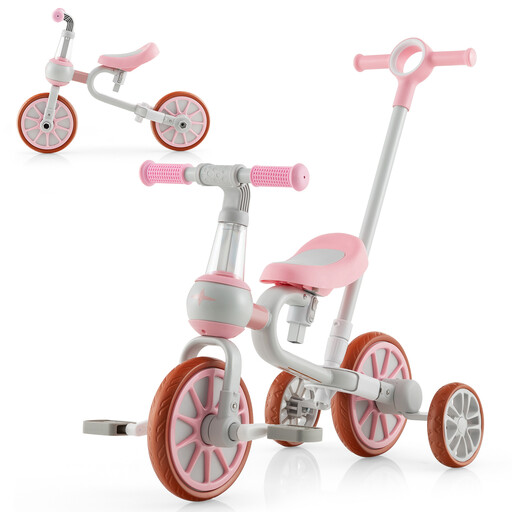
Why this model is a good fit: A solid choice for parents looking for a functional and durable solution for children aged 2 to 4 without breaking the bank. It covers the essential phases.
This model focuses on the core functions of a convertible tricycle and avoids the "complex conversion puzzle" with a straightforward assembly.
Offers an adjustable push bar for parents and the necessary safety features for the 2-4 age group at great value for money.
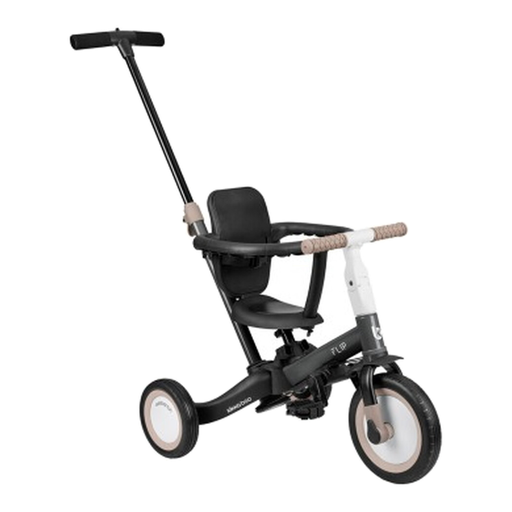
Why this model is a good fit: For parents seeking a single, versatile investment for the entire toddler period from 1 to 5 years. The Kikka Boo Flip is a true all-rounder.
Thanks to its robust steel construction and true 5-in-1 functionality, which includes conversion to a balance bike, it escapes the "one-season trap" and offers real value for years.
The combination of a tricycle and balance bike in one, as well as the rotating seat, make it an extremely flexible solution that comprehensively supports motor skill development.
We have compiled a complete, up-to-date list of products that fully meet these strict selection criteria and UK safety regulations.
A convertible tricycle is generally useful from the age of about 10 to 12 months, provided the model has the appropriate safety features. For a tricycle for children from 1 year, a 5-point harness, a high backrest, a safety bar, and a rotating seat are important features. The decisive factor is less about age and more about individual development: the child should be able to sit up stably and independently.
The effort varies greatly depending on the model. High-quality tricycles are designed for quick, tool-free conversion, often using click-systems or easy-to-use screw connections. Simpler models may require tools. This is an important point to check before buying to avoid the "conversion puzzle" pitfall.
That depends on the intended use. For indoor use on smooth floors, lightweight plastic wheels may suffice. For walks outdoors, on pavements, or on uneven terrain, EVA or rubber tyres are clearly superior. They offer more cushioning, are quieter, and provide a smoother, more comfortable ride for both child and parent.