
Lieferung heute & morgen

Qualitätsgarantie

Willkommens-Angebote freischalten: KOSTENLOSE Lieferung | Bis zu 80 % RABATT | Kostenlose 30-Tage-JoyPlus-Testphase
App herunterladen
A single vehicle that accompanies your child from their first birthday to their preschool years—that's the promise of a convertible tricycle. The idea is compelling: instead of multiple separate purchases, you invest once in a modular system. But the market is saturated with models whose promises often fall short in practice. Many parents soon find that the expensive "all-in-one" vehicle is just gathering dust in the garage. This guide reveals the most common pitfalls and explains the objective criteria that truly matter when making your choice.
Disappointment often runs high when a product advertised as durable becomes unusable after just a few months. Watch out for these three typical problems to avoid a bad purchase.
5-in-1 tricycle but are barely usable in their individual configurations. Often, the balance bike function is too heavy or unstable, the conversion is complicated, or the push handle is wobbly from the start. A true multi-function device must be impressive in every one of its forms.kids' tricycle for ages 1 to 5 must adapt precisely to the child's height. Often, the adjustment options for the seat and handlebar are so limited that the child outgrows the vehicle within a year. The result: an unergonomic posture and frustration instead of riding fun.To separate the wheat from the chaff, you should check three technical aspects before buying. These determine whether a tricycle can deliver on its promise as a long-term companion.
A good convertible tricycle is more than just a trike with a push handle. It should convert into different modes tool-free or with minimal effort. Check how the transformation from a push trike to a classic tricycle, and finally to a balance bike for toddlers, works. A well-designed system is distinguished by the fact that each configuration is stable and functional. For example, models designed as a tricycle and balance bike in one should offer a simple way to remove the pedals and bring the rear wheels together.
The longevity of a model depends directly on its adjustment options.
Safety is non-negotiable. Look for the following objective features:
Based on these objective criteria, we have identified some models that represent a considered choice for different needs and user profiles.
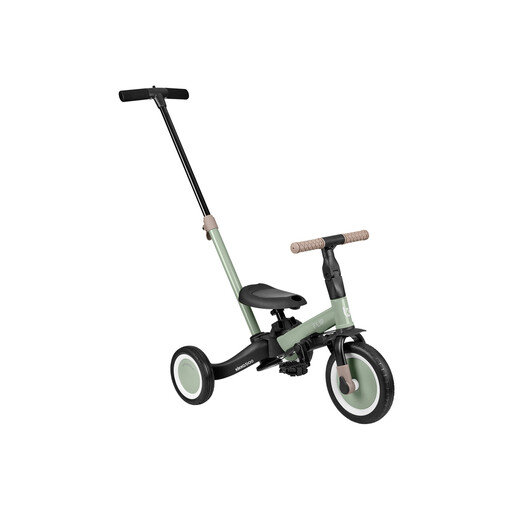
Why This Fits Their Persona: Ideal for parents seeking a single, reliable solution for the 1-to-5-year age range. This model covers all developmental stages, from a push-along vehicle to a first bike, and offers solid value for money.
Its clearly defined 5 modes (push mode, tricycle, balance bike, etc.) are functionally well-designed, not just a marketing ploy. The adjustable push handle and adaptable seat counteract the trap of poor adjustability.
The robust carbon steel construction ensures stability and longevity. The combination of a rubber front wheel and PU rear wheels offers a good compromise between quiet operation and grip.
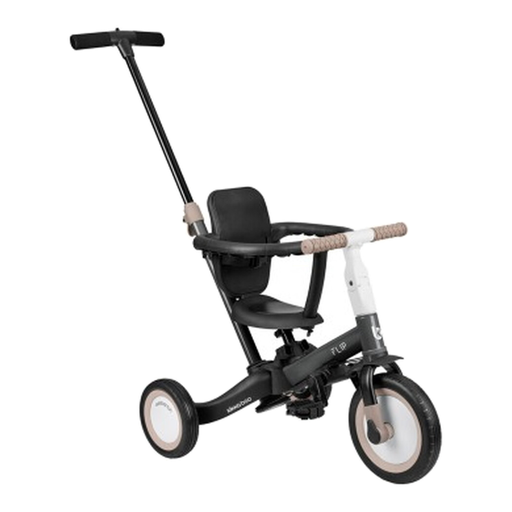
Why This Fits Their Persona: Perfect for parents of toddlers from 12 months old who prioritise safety and comfort. The ability to turn the seat to face the parent offers extra control and interaction during the initial phase.
This model avoids the subpar materials trap with a sturdy steel frame and a reliable harness system. The three-level adjustable parent handle is robust and offers precise control instead of wobbling.
The 360-degree rotating seat is a clear standout feature for the youngest riders. In combination with the 3-point harness (according to the manufacturer) and the removable safety bar, it provides a high level of security.
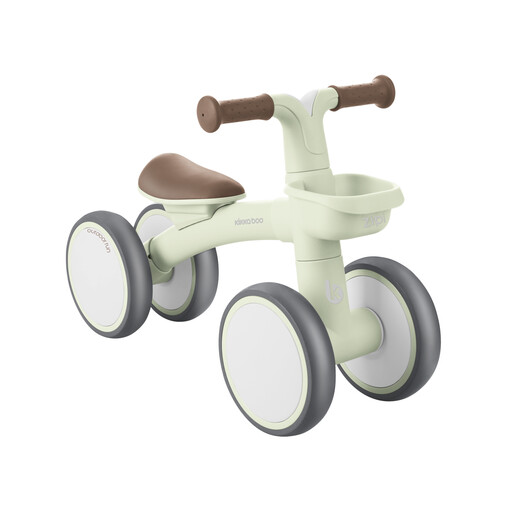
Why This Fits Their Persona: For parents whose main goal is to promote balance and coordination. If the complexity of a 5-in-1 model seems daunting, this lightweight and focused balance bike is an excellent alternative for children aged 1 to 3.
It avoids the trap of an over-engineered multi-function device by focusing on a single, well-executed function. The seat, adjustable forwards and backwards, offers better adaptability than many basic balance bikes.
Its extremely low weight of just 2 kg makes it very easy for toddlers to handle. The limited steering angle is a key safety feature that prevents oversteering and falls.
We have compiled a complete, up-to-date list of products that fully meet these strict selection criteria.
Although many models are advertised for "1 year and up," this usually refers to the push mode, where the child is a passive rider. The prerequisite is that your child can sit upright stably and unassisted. For active use—pedalling or pushing off in balance bike mode—motor coordination and leg length are crucial. This is typically the case between 18 and 24 months of age.
The conversion process varies by manufacturer. Some models allow for tool-free changes using click-in or plug-in systems. Others require a simple Allen key, which is often included. Common steps include attaching or removing the push handle, pedals, and adjusting the rear wheels for balance bike mode. It is essential to always follow the manufacturer's instructions to ensure correct and safe assembly.
Both materials have specific pros and cons. EVA wheels (ethylene-vinyl acetate foam) are very lightweight, puncture-proof, and quiet, making them a great choice for indoor use and on smooth surfaces. Rubber or PU (polyurethane) wheels offer better shock absorption and more grip on uneven paths like pavements or gravel. The choice, therefore, depends on where the tricycle will be used most often.