
Lieferung heute & morgen

Qualitätsgarantie

Willkommens-Angebote freischalten: KOSTENLOSE Lieferung | Bis zu 80 % RABATT | Kostenlose 30-Tage-JoyPlus-Testphase
App herunterladen
A single vehicle that grows with your child from their first year to preschool age—the concept behind a convertible tricycle is compelling. It promises durability, supports motor skill development, and is easy on your wallet. However, the market is flooded with models whose promises often fall short in practice. Before you make a decision, it's crucial to understand the common weaknesses that can quickly turn a smart investment into a purchase you'll regret.
This guide reveals the three most common pitfalls and explains which technical features truly matter, helping you choose a functional and safe convertible kids' vehicle for your child.
Many products advertise impressive features, but the devil is in the details. Pay close attention to these three points to avoid disappointment:
To avoid the problems mentioned above, you should base your purchase decision on objective criteria. The following three aspects are crucial for the safety, durability, and functionality of a convertible tricycle.
The foundation of any good kids' vehicle is its frame. There are two common materials:
Regardless of the material, a low and wide design is crucial for stability, especially during the first attempts at riding.
A good convertible system is characterised by a simple and logical conversion process. Check how the transformation between stages works. Ideally, the conversion should be tool-free or require only a few simple steps. The typical stages include:
A well-thought-out system ensures that you will actually use the various functions.
Your child's safety is the top priority. Look for the following features:
Based on the criteria above, we have identified several models suitable for different needs and age groups.
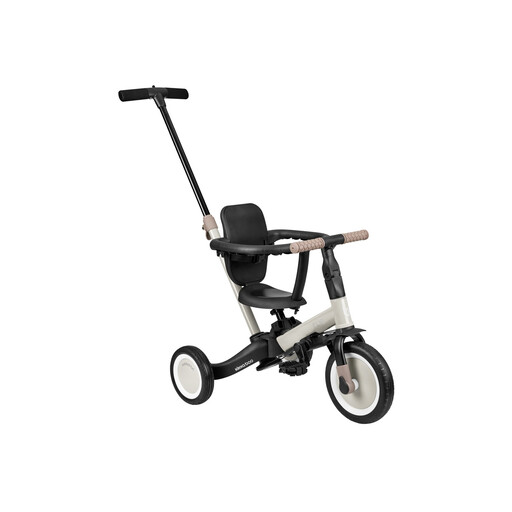
Why this model is a great fit: Ideal for parents seeking a single investment for the entire toddler period, from 1 to 5 years. The Kikka Boo tricycle covers all developmental stages, from being pushed to independent riding, offering a long-term usage perspective.
The robust carbon steel construction counteracts the pitfall of unstable frames. The five clearly defined conversion modes are practical to implement, making the vehicle a true multi-functional talent.
5-in-1 functionality for extended use; height-adjustable push handle with parental steering; height-adjustable seat for good ergonomics.
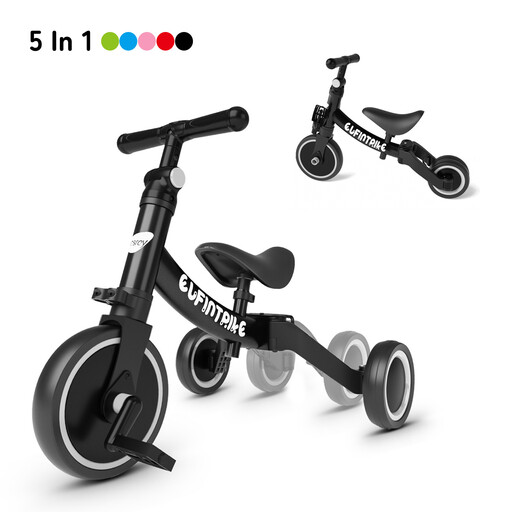
Why this model is a great fit: This model focuses on the earliest developmental phase, serving as a stable walking aid for children from 1 year old. It's an excellent choice for parents who prioritise maximum safety during their child's first attempts at walking and riding.
By concentrating on its function as a walking aid and first tricycle, the design is optimised for stability. It avoids the complexity of overloaded multi-function models and provides a secure foundation.
Strong focus on stability and safety for early walkers; easy handling for both parent and child; specifically supports balance in the early phase.
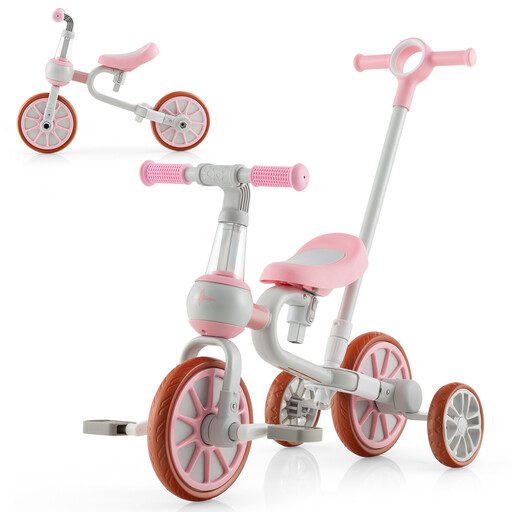
Why this model is a great fit: Designed for children aged 2 to 4, this 4-in-1 model is a pragmatic solution for parents looking for a reliable vehicle for the core years of toddler mobility, without covering the very earliest push-along phase.
By focusing on a narrower age range (2-4 years), the ergonomics can be better tailored to the body size and motor skills of this phase, thereby avoiding fit issues.
Focused 4-in-1 design for the 2-4 age group; adjustable push handle for parental control; straightforward functionality.
We've curated an up-to-date selection of products that meet our criteria for durability, safety, and functionality.
1. From what age is a convertible tricycle a good idea? A tricycle from 1 year is generally a good idea. At this age, it can be used in push mode with a safety harness and a parental push handle. This allows the child to get used to the vehicle early on and seamlessly transition through the subsequent developmental stages as soon as they are motor-ready.
2. What is the difference between a convertible tricycle and a balance bike? A classic balance bike is purely a two-wheeled vehicle without pedals, designed exclusively for training balance. A convertible tricycle is a modular system that can be converted into a balance bike as one of its stages. However, it also offers earlier phases, such as the pushed tricycle and the classic tricycle with pedals.
3. How complicated is the conversion process for this type of kids' vehicle? The effort required for conversion varies greatly by model. High-quality products prioritise a user-friendly mechanism that is often tool-free or works with just a few simple steps. Look for terms like "tool-free conversion" or "simple click system" in the product description. Clear instructions are also a mark of quality.