Small portions at different times
If you’re chopping cooked beetroot for individual meals, a small bowl makes it easier to keep an eye on the texture without having to use a large container for every portion.


For small portions and kitchens without a spare socket, a manual chopper is a good choice if you don’t mind doing the work by hand. If you use it often, an electric model can take the place of the pull cord. Look at how easily you can control the texture, how each part should be cleaned and whether the bowl suits your portion size: its stated capacity doesn’t tell you how much cooked beetroot you can realistically process in it. If you’re preparing food for later, remember to factor in chilled storage too.
If you’re chopping cooked beetroot for individual meals, a small bowl makes it easier to keep an eye on the texture without having to use a large container for every portion.
If several people use the appliance, clear care instructions for the bowl, blade and lid make it easier to clean each part appropriately between uses.
If you’re preparing a larger quantity, the bowl should suit your portion size. You’ll also need to make room in the fridge for meals you’re planning to eat later.
First, think about whether you usually chop small portions or larger quantities. Then consider whether the power source and cleaning requirements suit your kitchen routine.
| What matters | What to look for | Who should pay particular attention? |
|---|---|---|
| Texture of small portions | Check whether you can control the result using individual pulls, short pulses or a transparent bowl. | If you prepare small batches for individual meals, you’ll want to check the texture as you go. Around 33% of consumers say being able to control small portions in stages is a priority when choosing a chopper. |
| Cleaning between uses | Check the care instructions for the bowl, blade, lid and power unit separately. | If several people use the appliance, you’ll want to be able to clean it appropriately between uses. Around 27% of consumers prioritise easy cleaning for appliances used by more than one person. |
| Manual operation or mains power | Compare a pull-cord mechanism with electric operation, taking into account how often you’ll use it and how much space you have. | If you chop food regularly, deciding between doing it by hand and pressing a button may be a key consideration. Around 20% of consumers focus on which type of power suits their daily routine. |
| Bowl size for several meals | Compare the bowl with your portion size and check that the appliance will fit in your kitchen and storage space. | If you prepare several portions at once, the bowl should be big enough without taking up unnecessary space. Around 20% of consumers prioritise preparing larger quantities. |
A stated capacity doesn’t tell you the minimum or maximum amount of cooked beetroot that can be processed well in a particular appliance.
Compare your usual portion with the bowl and check the instructions for the specific model.
A bowl that’s the wrong size could mean extra batches or more storage space taken up.
For the Tefal K13304, the manufacturer says the bowl and blade are dishwasher-safe; the lid should be wiped with a damp cloth.
Check the cleaning instructions for each part separately and clean it accordingly before the next use.
A chopper doesn’t replace chilling prepared food if you’re not eating your next meal straight away.
Make room in the fridge and have suitable containers ready. The German Federal Institute for Risk Assessment recommends cooling leftovers to below 7 °C within a few hours, keeping them chilled and eating them within two to three days.
The manual 5-second chopper K13304 is an option for smaller batches when you don’t want to use a power socket.
The electric universal chopper MMR08A1 has a pulse setting as an alternative to a manual pull-cord mechanism.
The Mini Chopper 5KFC3516 is designed for people who want to switch between chopping and puréeing.
The electric MZ 500, with its 1.5-l glass bowl, could be worth considering for larger batches.
The MultiQuick 7 MQ7020WH is a hand blender set with a chopper attachment, for buyers who want both functions.
The following Joybuy models include manual and electric choppers, with options featuring one or more bowl sizes.
 No image available
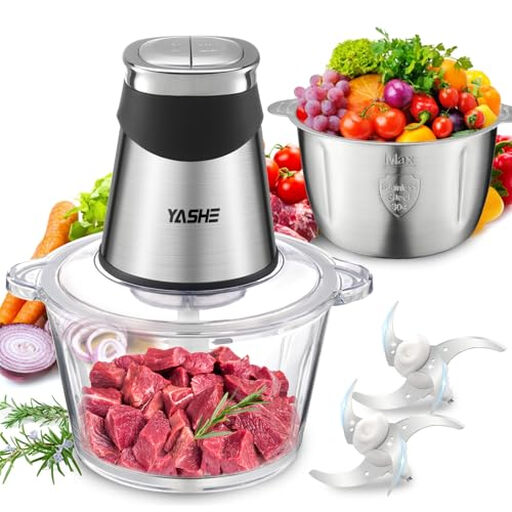
The two bowls give you a choice of sizes; check which one is right for your portion of cooked beetroot.
500 W; two speeds; two bowls made of glass and stainless steel; two blade sets.
The removable parts are described as dishwasher-safe.
 No image available
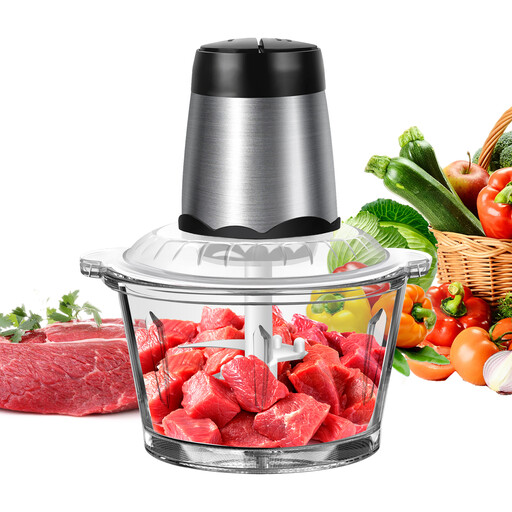
The pulse function gives you another way to operate it, but doesn’t guarantee a particular dice size for cooked beetroot.
2-l glass bowl; four stainless steel blades; two speeds and pulse function.
The removable parts are described as dishwasher-safe.
 No image available
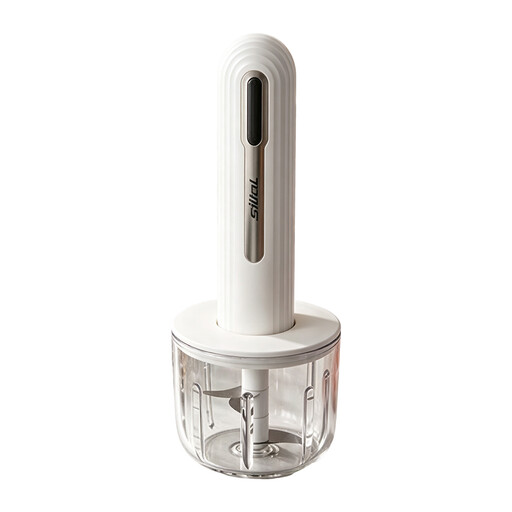
Cordless operation means you don’t need a socket nearby. The transparent bowl makes it easier to check the texture during short bursts.
Electric operation with one control button; transparent bowl.
The removable parts should be washed by hand, according to the description. The blades are sharp, so follow the instructions for handling them safely.
 No image available
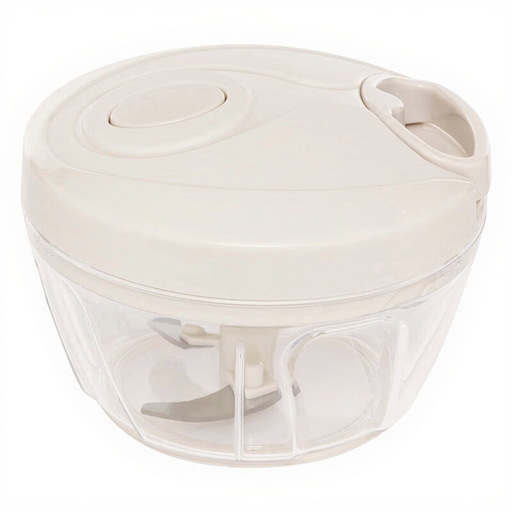
The manual pull-cord mechanism works without electricity, while the transparent bowl lets you check the texture as you go.
Manual operation; transparent bowl; stainless steel blades.
 No image available
The two bowl sizes let you choose between smaller and larger batches, but don’t guarantee evenly sized pieces.
300 W; glass bowls of 0.6 l and 2 l; two speeds; safety lock.
The bowls aren’t heat-resistant, according to the description. Don’t use them to process hot ingredients.
A pull-cord or pulse function lets you chop in stages, but doesn’t guarantee evenly sized cubes. KitchenAid also describes the 5KFC3516 as suitable for puréeing cooked vegetables. If you need neatly diced beetroot, check whether the specific appliance has a suitable cutting function.
Follow the instructions for each part. For the Tefal K13304, the manufacturer says the bowl and blade are dishwasher-safe; the lid should be wiped with a damp cloth. The German Federal Institute for Risk Assessment also recommends using separate kitchen utensils for raw and cooked food, and for food that will be eaten without further heating.
According to the general recommendation of the German Federal Institute for Risk Assessment, leftovers should be kept in the fridge and eaten within two to three days. Cool food to below 7 °C within a few hours; dividing larger quantities into shallow portions can help. This is a food hygiene guideline, not a guarantee of how long every specific dish will keep.