Salad with neat cubes
If you want to serve cooked beetroot in recognisable pieces, look for a dicing attachment that fits the model rather than a chopping function alone. Kenwood and KitchenAid list dicing attachments for certain models.


For neat, recognisable cubes, choose a machine that includes a dicing attachment for the exact model variant you’re considering. For chopped pieces, a blade with a pulse function may be suitable if you want to control the texture gradually. If you’re preparing several portions, consider the workload and cleaning effort as well as the bowl capacity. Manufacturer information and a KitchenAid recipe describe features and a method of preparation, but they are not an independent comparison specifically of cooked beetroot.
If you want to serve cooked beetroot in recognisable pieces, look for a dicing attachment that fits the model rather than a chopping function alone. Kenwood and KitchenAid list dicing attachments for certain models.
If you’re preparing a side dish for a shared meal, consider bowl capacity and the recommended working quantity separately. Kenwood and KitchenAid list bowls of 3.0 l and 3.1 l respectively for certain appliances; these figures don’t indicate a tested number of portions.
If chopped pieces are fine, ease of use, cleaning and storage may matter more than a precisely shaped cut. The German Society for Home Economics lists ease of use, cleaning suitability and container capacity as relevant features of multifunctional food processors.
Suitable if: You want recognisable cubes for a salad or side dish and are preparing several portions.
The trade-off: An additional attachment means more parts to clean.
Suitable if: Chopped pieces are fine instead of evenly sized cubes, and you want to control the texture as you process.
The trade-off: A blade can’t guarantee a particular piece size when used with soft, cooked beetroot.
Suitable if: You’re chopping smaller quantities and don’t need perfectly formed cubes.
The trade-off: You may need to process several batches for a larger meal.
| Consideration | What to look for when buying | Who is it important to? |
|---|---|---|
| Pieces rather than purée | Check whether a dicing attachment is included with the exact variant; for chopped pieces, look for a way to control the processing. | If you want to serve the beetroot in recognisable cubes, the cutting shape matters more than a general chopping function. Around 33% of consumers put the shape of the pieces first. |
| Quantity for several portions | Check the bowl capacity and the permitted working quantity for the specific appliance separately. | If you’re preparing food for several people, you’ll want to avoid repeatedly filling and emptying the bowl. Around 27% of consumers put portion quantity first. |
| Cleaning after preparation | Check the cleaning instructions for every part you use, and choose an attachment only if you need the cutting shape it produces. | If you want as little as possible to clean after chopping, extra attachments can make a difference. Around 20% of consumers put cleaning first. |
| Storage space and other uses | Check the appliance dimensions and how the attachments are stored; consider whether you’ll regularly use other cutting functions. | If storage space is limited or you have several cooking tasks, the appliance needs to suit the space available and how you plan to use it. Around 20% of consumers put space requirements and versatility first. |
Blades and dicing attachments are different tools. Kenwood and KitchenAid list dicing attachments for certain model variants; a general chopping function doesn’t tell you what shape the pieces will be.
Check the full model name and what’s included against the cut you want.
The litre figures given describe bowl capacity, not a tested working quantity or number of portions for cooked beetroot.
If you regularly prepare food for several people, check the working quantities in the instructions for the specific appliance. A small bowl may mean extra filling, emptying and cleaning.
Kenwood offers both larger food processors and compact choppers for different quantities.
The 5KFP1319EAC food processor combines a 3.1-l bowl with a blade, pulse function and listed dicing attachment.
Philips describes the Viva Collection HR7530/10 as a compact food processor with an S-blade and a 2-in-1 disc.
The selection below includes electric choppers and vegetable cutters for chopped or sliced ingredients. When preparing cooked beetroot, check that the cut, recommended method of use and guidance for the specific model suit your needs.
 No image available
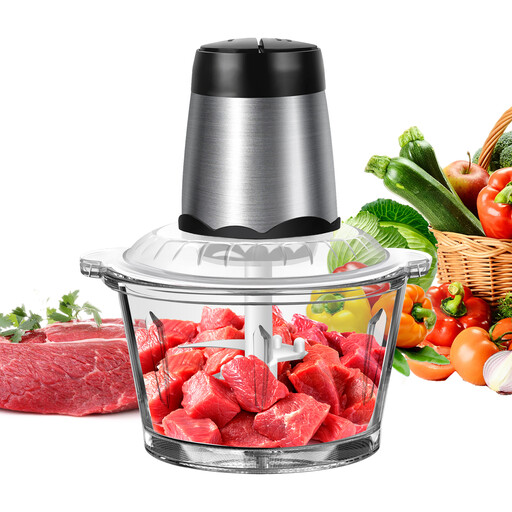
If you want chopped pieces rather than a specific cube shape, a bladed chopper is an option. With soft beetroot, check the size of the pieces gradually as you process.
The product title specifies a 2-l glass bowl and stainless steel blades.
 No image available
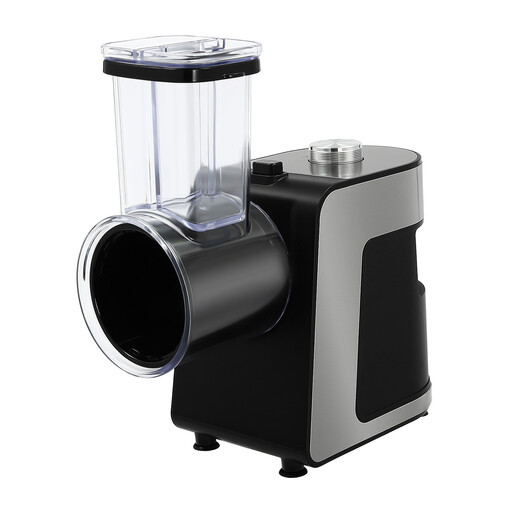
If you want a choice of cuts, check which of the blades listed in the product title are suitable for the preparation you have in mind.
The product title lists coarse, fine, wavy, chopping and slicing blades. Use the supplied pusher while operating the appliance and follow the stated short operating intervals.
 No image available
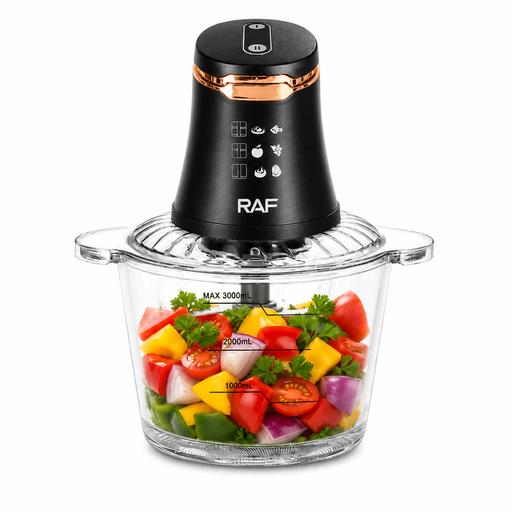
A model with a larger stated bowl capacity may be worth considering when preparing several portions; check the actual working quantity in the appliance instructions.
The product title specifies 3 l and two speeds.
 No image available
If you’d like to use different bowl sizes during preparation, compare the sizes included with the quantities you actually need to process.
The product title specifies three bowls that nest inside one another, with capacities of 2.5 l, 2.2 l and 1.8 l, as well as 350W.
The product description specifies short pulse cycles of up to 30 seconds; follow this guidance when using the appliance.
 No image available
Two bowl sizes can be useful for preparing different quantities; choose the bowl to suit the amount you’re working with.
The product title specifies a 2-l and a 0.6-l glass bowl, as well as 300W. According to the product description, the bowl and lid aren’t heat-resistant; avoid temperature changes of more than 50 °C.
For clearly shaped cubes, choose a model that actually includes a dicing attachment; for chopped pieces, a blade with a controllable pulse function may be enough. A KitchenAid recipe uses a dicing disc for cooked, peeled beetroot, but it isn’t a comparison of different appliances.
Use clean parts and separate kitchen utensils for raw and cooked food. If you want to store hot food for longer, the German Federal Institute for Risk Assessment recommends cooling it quickly to below 7 °C; perishable food should be stored at 2 °C to no more than 7 °C. These are food hygiene recommendations, not appliance features.
Yes. EU rules on materials that come into contact with food also cover food-processing appliances and require materials to be suitable under normal or foreseeable conditions of use. The Verbraucherzentrale points out that the absence of a glass-and-fork symbol alone doesn’t prove a breach when an item is clearly intended for food. Follow the intended use and the guidance for the specific attachment.
Your statutory rights relating to faulty goods are against the seller; a guarantee is an additional voluntary service provided under its own terms and conditions. The Verbraucherzentrale makes a clear distinction between these rights. Also check the exact model number when looking for spare parts and attachments.