A chopper may be enough for small quantities, provided the instructions allow cooked meat and its capacity per batch suits your recipe. For several portions, or if you regularly want to chop and grate other ingredients too, a food processor with a chopping blade may be a better fit. Bear in mind, though, that more functions also mean more attachments, more cleaning and more storage space. Whichever appliance you choose, clean all parts that come into contact with food hygienically and keep this perishable dish sufficiently chilled during transport.
Which option is right for you?
Hosts preparing several portions
If you’re preparing chicken for several guests, check that the appliance’s permitted quantity per batch matches the amount in your recipe. Philips lists 100–150 g of meat per batch for the HR1393/00 and HR1393/90 models; check the relevant instructions to see whether this includes cooked meat.
Cooks who want a particular texture
If you want visible pieces of chicken rather than a fine paste, look for a suitable chopping blade and easy-to-control operation. Kenwood lists cooked meat as one of the uses for the chopping blade on its food processors.
People bringing a dish who prioritise hygiene
If you’re chopping meat and then taking the dish with you, factor in cleaning all food-contact parts and keeping the dish properly chilled. The Verbraucherzentrale recommends cleaning kitchen utensils thoroughly; the German Federal Institute for Risk Assessment advises using a cool box for perishable foods on longer journeys.
What should you look for when buying?
Small electric chopper
A good fit if: you’re preparing a smaller quantity of chicken and don’t mind processing it in several batches.
Consider: The permitted quantity of meat varies by model and is not the same as the bowl capacity.
Food processor with chopping blade
A good fit if: you’re preparing several portions or want to use the appliance for slicing and grating other ingredients too.
Consider: Extra attachments need storage space and must be cleaned after use.
Hand blender set with chopper
A good fit if: you’d like a small chopper as well as a hand blender; the Braun MQ7020WH set includes a 350 ml chopper.
Consider: Check the instructions for the full model code to confirm they cover cooked chicken and the quantity you plan to prepare.
| Priority |
What to check when buying |
Who is this important to? |
| Batch size |
Check the permitted quantity of meat per batch in the instructions and compare it with the amount in your recipe. |
If I’m preparing food for several guests, the right quantity per batch matters to me. Around 33% of consumers have this as their main priority. |
| Texture |
Check that the blade and controls allow short, carefully controlled batches. |
If I want visible pieces of chicken, being able to control the processing is essential. Around 25% of consumers prioritise achieving their preferred texture. |
| Cleaning |
Read the care instructions for all food-contact parts and check how to remove the blade safely. |
When I prepare meat, I want to be able to remove residue thoroughly from the blade, bowl and lid. Around 25% of consumers put ease of cleaning first. |
| Other kitchen tasks |
Compare what’s included with the full model code and check how much space the bowl and attachments will need. |
If I want to use the appliance for slicing, grating or blending too, the extra functions matter to me. Around 17% of consumers have this as their main priority. |
Avoid common buying mistakes
-
Assuming the bowl capacity is the permitted quantity of meat
The 1.3-l bowl on the Kenwood FDP23.140RD doesn’t tell you how much cooked chicken you can process per batch.
Compare the ingredient and quantity guidance in the instructions for the specific model with your recipe.
If the permitted batch size is smaller, you may need extra preparation time to process the chicken in several batches.
-
Choosing by product range rather than the full set
A 350 ml chopper is listed for the Braun MQ7020WH set; you can’t assume that other MultiQuick 7 models include the same attachments.
Check the full model code against the list of accessories to see exactly which attachment is included.
-
Confusing appliance choice with food safety
Even once the chicken is cooked, it’s important to use hygienically clean utensils and keep it properly chilled during transport.
Clean all food-contact parts according to their instructions and keep the perishable dish properly chilled until it’s time to eat.
Brands to consider
Kenwood
Food processors with chopping blades; some MultiPro Go models also offer additional slicing and grating functions.
- Kenwood lists cooked meat as a possible use for its chopping blade. The FDP23.140RD comes with a 1.3-l bowl, a chopping blade and slicing/grating discs.
- The bowl size doesn’t tell you how much chicken you can process per batch. Kenwood advises holding the blade by the top of the handle, not by the cutting edge.
Philips
Compact choppers for smaller portions, which can be processed in several batches if needed.
- Philips lists a meat capacity of 100–150 g per batch for the HR1393/00 and HR1393/90 models.
- The guidance doesn’t specify whether it applies to raw or cooked meat. Check the instructions for the specific model before using it for your chicken dish.
Braun
Hand blender sets with a chopper attachment are an alternative if you’d like both functions.
- The MQ7020WH set is listed with a 350 ml chopper.
- Check the instructions for the complete set to see whether the attachment is suitable for cooked chicken and the quantity you plan to prepare.
Choppers on Joybuy
This selection mainly features electric meat choppers, as well as one manual mini chopper. Check the instructions for each model before using it for cooked chicken.
 No image available
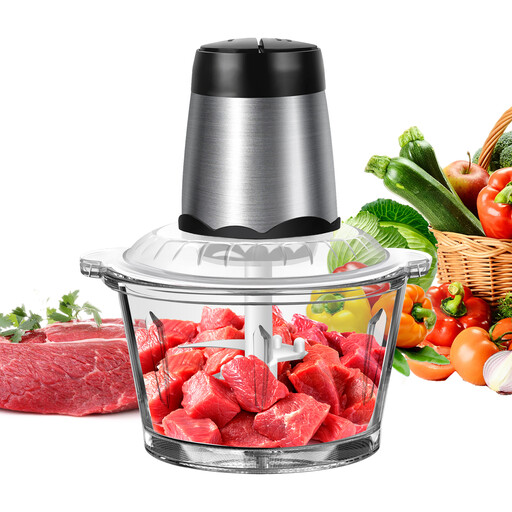
Electric meat chopper with 2-litre glass bowl
This appliance is described as suitable for chopping meat. Before using it for cooked chicken, check the instructions and the permitted quantity per batch.
2-litre glass bowl, two speeds and a pulse function.
Joybuy
 No image available
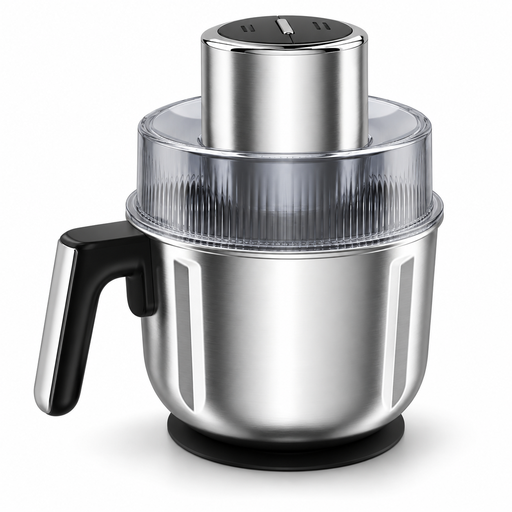
YASHE 25JM08-Q electric chopper with three bowls
This appliance is described as a meat chopper. Check the instructions to confirm it’s suitable for cooked chicken and the quantity you plan to process per batch.
Three bowls with capacities of 2 l, 1.2 l and 0.5 l for different kitchen tasks.
Joybuy
 No image available
IAGREEA MS-25JM08 electric chopper, 350 W
The description lists meat and cooked foods among its uses. Check the instructions to find out how much chicken you can prepare per batch.
Three bowls made from 304 stainless steel, with capacities of 2.5 l, 2.2 l and 1.8 l; two speeds. The description specifies pulse cycles of up to 30 seconds.
Joybuy
 No image available
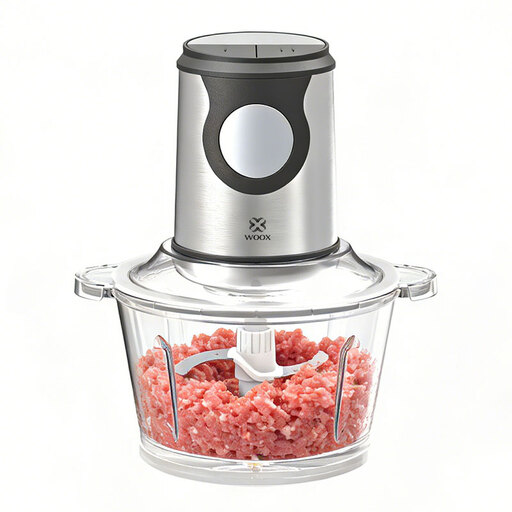
WOOX electric meat chopper with 1.5-litre glass bowl
This appliance is described as suitable for preparing meat. Before chopping cooked chicken, check the instructions to find out whether it’s suitable and what quantity you can use.
1.5-litre glass bowl and stainless steel blades.
Joybuy
 No image available
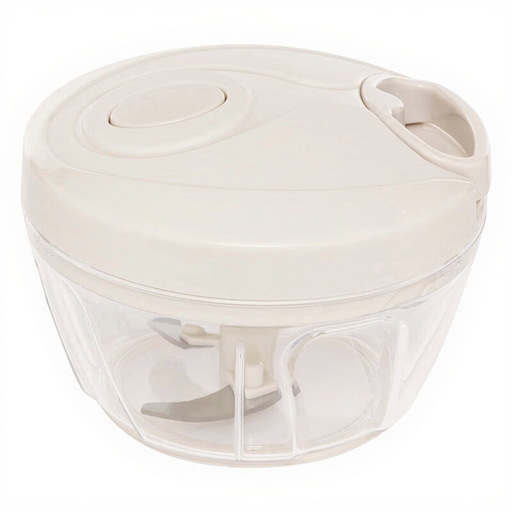
5five mini food processor
This manual chopper is described as suitable for food. Before choosing it for cooked chicken, check that the instructions cover this ingredient and the quantity you want to prepare.
Manual pull-cord mechanism and stainless steel blades.
Joybuy
Frequently asked questions
How do I plan the quantity for a bring-a-dish gathering?
Compare the amount of chicken you plan to prepare with the permitted quantity of meat per batch in the instructions. Philips lists 100–150 g of meat for the HR1393/00 and HR1393/90; it doesn’t specify whether this includes cooked chicken. The bowl capacity isn’t a substitute for this quantity guidance.
How should I clean the appliance after chopping?
Clean all food-contact parts according to the relevant instructions and make sure residue doesn’t get onto ready-to-eat ingredients. The Verbraucherzentrale recommends cleaning kitchen utensils thoroughly. Kenwood advises holding its chopping blade by the top of the handle, not by the cutting edge.
How should I transport the finished chicken dish?
Keep perishable foods as cool as possible until you’re ready to eat. For longer journeys, particularly in summer, the German Federal Institute for Risk Assessment recommends using a cool box for food, including dishes you’re taking to a celebration.
Are there EU rules for appliance parts that come into contact with food?
Yes. The European Commission describes Regulation (EC) No 1935/2004 as a harmonised framework for materials that come into contact with food, setting out general principles on safety and inertness. This doesn’t provide a specific statement about whether an individual appliance complies.


