Households with different mealtimes
If you cook once and take out portions at different times, you’ll need space for separate containers and suitable chilled storage.


If you’re eating cooked pasta at different times, look for a fridge with enough room for several shallow, covered containers and a temperature of no more than +7 °C where they’ll be stored. The German Federal Institute for Risk Assessment (BfR) recommends cooling leftovers to below +7 °C within a few hours. A fresh-food compartment or rapid-cooling function is no substitute for cooling food promptly or checking the temperature. A fridge without a freezer compartment is enough for portions you’ll keep chilled for a short time, while a fridge-freezer gives you extra freezer space.
If you cook once and take out portions at different times, you’ll need space for separate containers and suitable chilled storage.
If you’ll serve some portions soon and freeze others for later meals, it helps to check the fridge and freezer capacities separately.
If you only need to chill a few portions but space is tight, make sure the external dimensions and usable interior space suit your containers.
The BfR recommends dividing larger quantities between several shallow dishes and cooling leftovers to below +7 °C within a few hours. They should be stored in the fridge at no more than +7 °C. So make sure there’s enough suitable shelf space and that you can check the temperature where you plan to store them.
| Criteria | What to check before buying | Who is this important to? |
|---|---|---|
| Temperature and cooling | Check the temperature where food will be stored and allow room for several shallow containers. | If I want to chill leftovers safely for later meals, I look at the temperature and space for portioning; around 36% of consumers put safe short-term storage of leftovers first. |
| Space for portions | Compare the fridge capacity and shelves with the number and size of your containers. | If I need to store several separate portions at once, I want easy-to-reach shelves rather than just a large overall capacity; around 29% of consumers prioritise space for separate portions. |
| Floor space | Check the external dimensions, route into the kitchen and clearance needed to open the door. | If my kitchen has limited floor space, the appliance and its open door must fit the space available; around 21% of consumers say available space is their main constraint. |
| Energy consumption | Compare the stated kWh/year figures for appliances of a suitable size. | If I want to keep an eye on running costs, I compare the annual figures and factor in my electricity tariff; around 14% of consumers focus on ongoing energy costs. |
A good choice if: you’ll eat the portions within the recommended chilled-storage period and want to use all the available space for chilling.
The trade-off: There’s no freezer space for food you want to freeze for later.
A good choice if: as well as chilled portions, you regularly want to freeze cooled food for meals on later days.
The trade-off: Check the fridge and freezer capacities separately, as freezer space doesn’t count towards the room for freshly chilled containers.
A good choice if: you only need to store a few portions and have limited height or floor space.
The trade-off: Measure your containers, as there’ll be less room for several portions to cool at the same time.
The total capacity doesn’t tell you how quickly a large quantity of hot food will cool.
Allow room for several shallow, covered portions and check the temperature where they’ll be stored. Extra capacity won’t replace prompt cooling.
Liebherr’s description of EasyFresh refers to fruit and vegetables; it doesn’t establish any benefit for cooked pasta.
Choose a fridge based on usable chilled space and a temperature you can check. Only rely on special compartments for the uses specified by the manufacturer.
Freezer space can’t store pasta portions that need to stay chilled until your next meal.
Compare fridge and freezer capacities separately, and check whether you’ll actually use the freezer space. Also factor the stated annual energy consumption into your comparison.
The Rd 4600 Pure and Rdi 1620 Plus illustrate the difference between a larger freestanding fridge with no stated freezer compartment and a compact under-counter fridge.
The Series 4 KGN39VXBT fridge-freezer is an example for households that need freezer space as well as fridge space.
The B5RCNE405HXB is an example of a freestanding fridge-freezer.
The RB38C7B5AB1/EF is an example for households that need both fridge and freezer space.
The following options from Joybuy are fridge-freezers for households that want to store chilled portions and make use of extra freezer space.
 No image available
A fridge-freezer for households that want freezer space as well as room for chilled portions.
Total capacity: 333 l. No Frost. Energy efficiency class C.
 No image available
A fridge-freezer for chilled portions and food you want to keep frozen.
Total capacity: 262 l. Design: 70/30. Low Frost. 54 cm wide and 176 cm high. Colour: black.
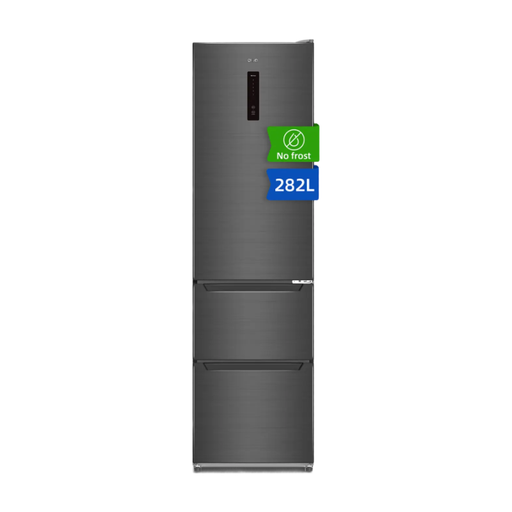 No image available
A fridge-freezer for households that want to use fridge and freezer space in one appliance.
Total capacity: 282 l. No Frost. Energy efficiency class E. 54 cm wide and 192 cm high.
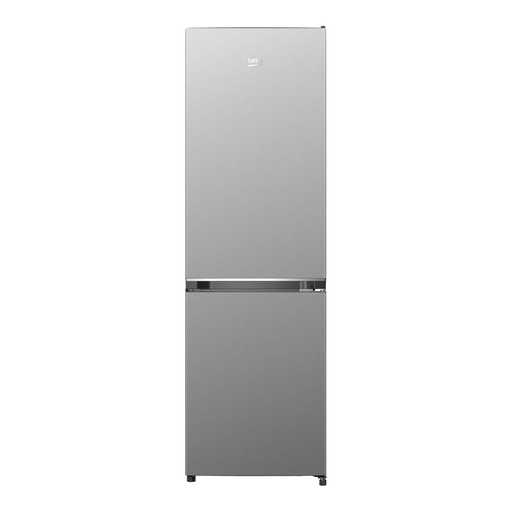 No image available
A fridge-freezer for chilled portions and extra freezer space.
Total capacity: 250 l, including 180 l of fridge space and 70 l of freezer space. No Frost. Energy efficiency class D. Stainless steel effect.
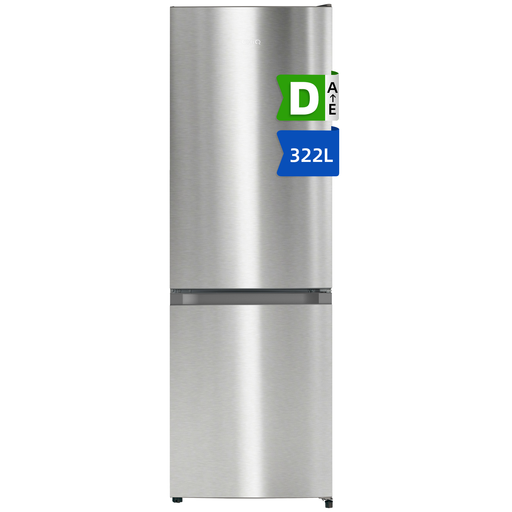 No image available
A fridge-freezer for storing separate chilled portions as well as extra frozen food.
Total capacity: 322 l. Total No Frost. Energy efficiency class D. According to the product name, 59 cm wide and 185 cm high. The stated depth is 63.5 cm; check whether the appliance will protrude in the space you have planned for it.
Divide larger quantities between shallow containers, cool the leftovers to below +7 °C within a few hours, then cover and store them in the fridge at no more than +7 °C. The BfR recommends eating chilled leftovers within two to three days. These food-safety guidelines don’t mean that any fridge brand can guarantee how long food will keep.
No, you shouldn’t rely on that. According to the BfR, Bacillus cereus spores can survive cooking, and reheating won’t deactivate cereulide that has already formed. The BfR recommends heating food to at least 70 °C for two minutes throughout, but this doesn’t replace proper storage.
Compare the external dimensions with the space available, the route into your home and the clearance needed to open the door. The EU energy label includes information such as annual consumption in kWh and fridge and freezer capacities. To estimate your own electricity costs, multiply the kWh/year figure by your electricity price per kWh.
In Germany, retailers covered by the take-back requirement must accept an old appliance of the same type, with essentially the same function, free of charge when you buy a new electrical appliance. You can return it where the new appliance is handed over or nearby. Check with the retailer in advance how this will be arranged for your order.
Since 1 March 2021, household fridges in the EU have been rated on a scale from A to G. The label also shows the stated annual energy consumption.