
Lieferung heute & morgen

Qualitätsgarantie

Willkommens-Angebote freischalten: KOSTENLOSE Lieferung | Bis zu 80 % RABATT | Kostenlose 30-Tage-JoyPlus-Testphase
App herunterladen
Choosing the right cooker hood is crucial for maintaining a clean and pleasant kitchen atmosphere. But the market is flooded with models whose marketing promises often create more confusion than clarity. As your Joybuy Product Recommendation Officer, I'm here to help you identify the common pitfalls and make an informed decision based on objective criteria.
Many buyers focus on single, heavily advertised features while overlooking critical disadvantages. Here are three common mistakes you should avoid:
To make the right choice, you should focus on the technical fundamentals that determine its real-world, everyday value.
This is the first and most important decision.
A high extraction rate is only useful if the noise level remains comfortable.
Modern appliances not only save electricity but are also often more technologically advanced.
Instead of presenting an overwhelming list, we've selected models that meet specific user needs and successfully avoid the pitfalls mentioned.
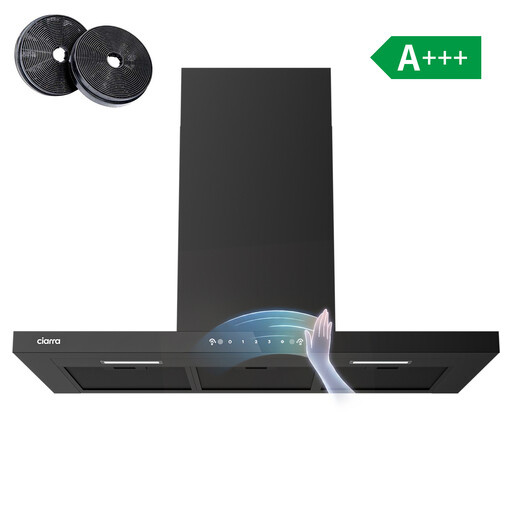
Why This Fits Their Persona: Ideal for modern, open-plan kitchens where aesthetics and function go hand in hand. The elegant black wall-mounted hood in a 90cm width seamlessly integrates into a contemporary kitchen design, becoming a stylish focal point.
This model bypasses the trade-off between performance and comfort. It combines a powerful extraction rate of 650 m?/h with a moderate noise level of 59 dB and an A+++ energy efficiency class.
The ultra-slim 40mm glass panel and modern, hygienic gesture controls (Wave & Touch Control) make a strong statement in both technology and design.
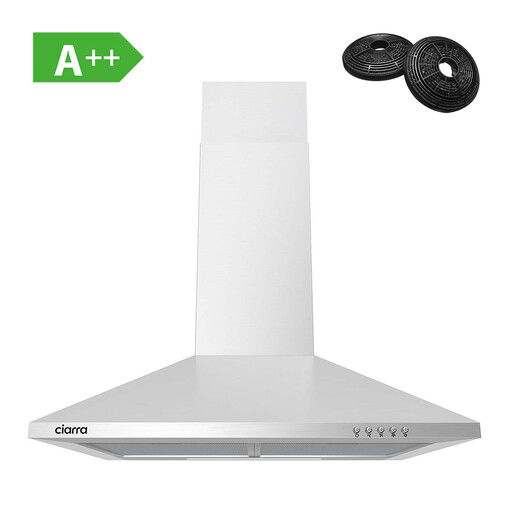
Why This Fits Their Persona: Perfect for standard kitchens in rental properties where structural changes are not an option. The 60cm cooker hood format is common, and the option for recirculating operation is essential here.
It focuses on reliability with mechanical push-buttons and a washable aluminium grease filter. This reduces long-term costs and dependency on proprietary disposable filters.
Flexible operating modes (extraction/recirculation) for any installation scenario and durable, straightforward controls. The A++ energy efficiency class ensures low running costs.
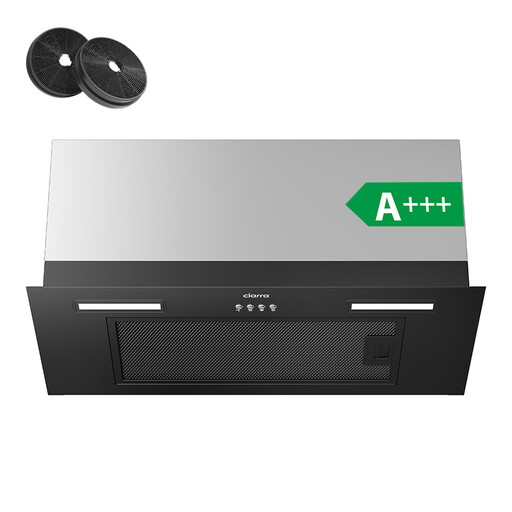
Why This Fits Their Persona: For those who want a high-performance extractor hood that doesn't interrupt the visual flow of the kitchen. This built-in cooker hood disappears completely inside an upper cabinet, ensuring a seamless, clean look.
It debunks the myth that integrated hoods are underpowered. With a powerful 650 m?/h extraction rate and an A+++ energy efficiency class, it delivers top-tier performance while remaining invisible, avoiding any compromise between function and form.
Its invisible integration into the kitchen cabinet is combined with an exceptionally high extraction rate for a built-in model and the highest energy efficiency class.
We have compiled a complete, up-to-date list of products that fully meet these strict selection criteria and EU safety regulations.
The lifespan of an activated carbon filter depends heavily on your cooking habits. With daily use, replacement is recommended every 3 to 6 months. Some models feature a saturation indicator that signals the optimal time for a change. Timely replacement is crucial for effective odour elimination.
Safety and performance depend on the correct installation height. As a general guideline, a minimum distance of approx. 65 cm above an electric hob and approx. 75 cm above a gas hob is recommended. However, always refer to the specific instructions in the manufacturer's installation manual, as requirements can vary by model.
An angled hood is a wall-mounted hood with a slanted design. Its shape allows you to lean over the hob freely while cooking without bumping your head—a significant ergonomic advantage, especially for taller people. At the same time, these models often make a modern design statement in the kitchen.