
Lieferung heute & morgen

Qualitätsgarantie

Willkommens-Angebote freischalten: KOSTENLOSE Lieferung | Bis zu 80 % RABATT | Kostenlose 30-Tage-JoyPlus-Testphase
App herunterladen
A cooker hood should reliably remove cooking vapour, grease particles and odours from your kitchen. However, many people focus first on the design or a high extraction-rate figure when buying. This can lead to common mistakes: the hood does not match the width of the hob, recirculation mode is used without the right filters, or the noise level is higher than expected in everyday use.
This guide explains which technical details really matter before buying a cooker hood and which models suit different kitchen set-ups.
A figure such as 650 m³/h sounds impressive at first. However, it does not automatically represent the performance you will experience once the hood is installed. The extraction duct, duct length, bends and backdraught shutter all affect airflow. With an extractor hood, you should therefore check whether the existing connection is compatible with the recommended duct diameter and the appliance’s design.
Performance can also vary in recirculation mode because the air must additionally pass through a charcoal filter. Comparisons should therefore take the operating mode into account wherever possible.
A 60 cm cooker hood is suitable for many standard hobs, provided the extraction area is correctly positioned above the cooking zone. For wider hobs or frequent cooking with several pans, a 90 cm cooker hood can provide greater coverage at the sides.
The external width is not the only factor that matters. Also check the depth, chimney height and distance from the hob. The manufacturer’s instructions and local installation requirements apply to installation. Gas hobs may require different minimum clearances from electric or induction hobs.
A grease filter captures grease particles from the airflow. If it becomes heavily soiled, the airflow may be reduced. Irregular cleaning can also increase safety risks. A washable aluminium grease filter can be removed and, depending on the manufacturer’s instructions, cleaned by hand or in the dishwasher.
A charcoal filter is also required in recirculation mode. It traps odours but needs to be replaced regularly. A filter included in the package does not therefore mean that no replacement will be needed throughout the appliance’s service life.
An extractor hood vents contaminated air outside through a duct. This requires a suitable opening through the wall or masonry, a compatible extraction connection and professional installation. In rented homes, structural alterations are often only possible with the landlord’s permission.
A recirculating hood filters the air and returns it to the room. It can usually be used more flexibly, but requires a suitable charcoal filter and regular maintenance. Many models, including several of the recommendations below, support both operating modes.
Extraction rate is measured in m³/h. When choosing a hood, your cooking habits, room size and operating mode should be considered together. A high rated extraction rate is not the only relevant factor: the noise level in dB and the number of power settings also affect everyday use.
An energy-efficient cooker hood can offer advantages through lower consumption when used regularly. Product details such as A++ or A+++ should be checked directly on the energy label and in the data sheet for the specific model. The designation A+++ cooker hood is only meaningful when considered together with annual consumption and extraction rate.
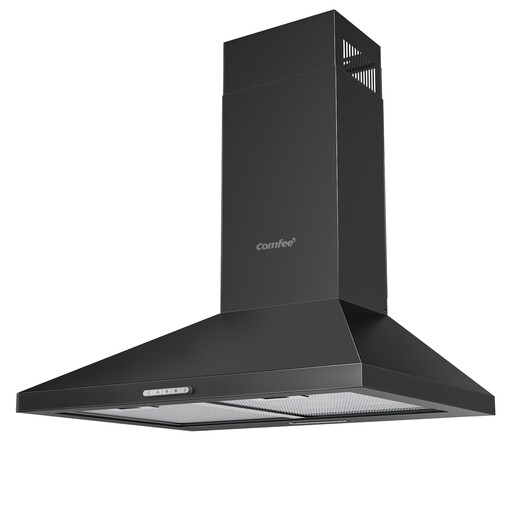
Why this product suits this profile: This 60 cm wall-mounted hood offers three power settings, an extraction rate of 400 m³/h, and both extraction and recirculation modes. It is therefore suitable for standard kitchens where flexible installation is important.
The two operating modes prevent the hood from being suitable for only one available installation type. According to the product information, the charcoal filter is included.
LED lighting, three settings and a push-button control panel; energy efficiency class B according to the product data.
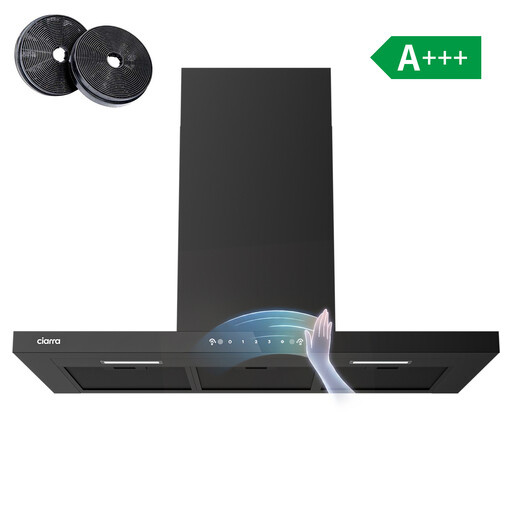
Why this product suits this profile: This wall-mounted hood is designed for wide cooking areas and combines an extraction rate of 650 m³/h with touch and wave controls. The installation height can be adjusted from 527 to 1005 mm.
The 90 cm width reduces the risk of a large hob not being fully covered at the sides. Three washable aluminium filters make regular maintenance easier.
A+++ according to the product information, maximum noise level of 59 dB, and both extraction and recirculation modes.
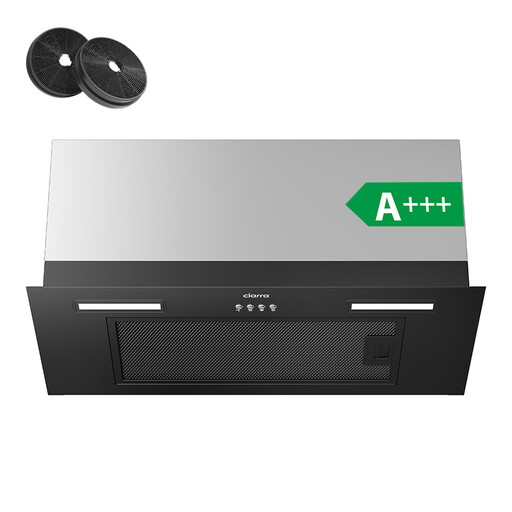
Why this product suits this profile: This built-in hood is aimed at users looking for a discreet appearance and a high stated extraction rate in a 60 cm format. It supports both extraction and recirculation.
The stated dimensions of 599 × 309 × 263 mm help you check whether an existing wall cabinet is suitable. The CBCF003 charcoal filter is specified according to the product information.
A+++ and 650 m³/h according to the product data; washable aluminium grease filter and three power settings.
We have put together a complete, regularly updated list of products that fully meet these strict selection criteria and the safety regulations applicable in the EU.
Before placing your order, check the installation dimensions, the distance from the hob, the power connection and the extraction route. A qualified professional should be consulted for a fixed electrical connection or any structural alteration. The installation instructions for the specific model take precedence over general recommendations.
The grease filter should be cleaned regularly, depending on how often the hood is used. If you fry frequently, a shorter cleaning interval may be advisable than for occasional cooking. In recirculation mode, the charcoal filter must also be replaced according to the manufacturer’s instructions. For ongoing costs, the main factors are annual energy consumption, usage time, filter replacements and the selected power setting.
The hood should be at least as wide as the hob. For a 60 cm hob, a 60 cm cooker hood is standard. For wider hobs or intensive use, a 90 cm cooker hood can provide a larger capture area. Depth and installation height are also important.
That depends on your home and the existing installation. Extraction vents air outside, but requires a suitable duct and may not always be possible in rented homes without permission. Recirculation is more flexible, but requires a suitable charcoal filter and regular replacement.
There is no reliable fixed service life that applies to every model. It depends on factors including the motor, materials, intensity of use, cleaning and professional installation. Regularly cleaned grease filters, unobstructed airways and following the operating instructions can all help maintain everyday performance.