
Lieferung heute & morgen

Qualitätsgarantie

Willkommens-Angebote freischalten: KOSTENLOSE Lieferung | Bis zu 80 % RABATT | Kostenlose 30-Tage-JoyPlus-Testphase
App herunterladen
A cooker hood should reliably remove or filter cooking vapour, grease particles and odours from the cooking area. In practice, however, the stated extraction rate alone does not determine whether an extractor hood is suitable for your kitchen. Design, installation, operating mode and maintenance requirements are just as important.
Manufacturers often state the maximum extraction rate in m³/h. This figure describes the volume of air moved under specific conditions and can vary depending on the extraction duct, duct length, bends and filter condition. A model with 650 m³/h therefore needs a suitable installation for its stated performance to be used effectively in everyday conditions.
A lower extraction rate may be sufficient for a small kitchen or a short extraction route. For open-plan kitchens, frequent frying or several cooking zones, however, a higher performance reserve is advisable.
Noise levels are given in dB or dB(A). Buyers should check whether the figure refers to the lowest, highest or a specific power setting. A cooker hood rated at 59 dB on its highest setting should be assessed differently from a model for which only the lowest setting has been specified.
An extraction duct with an unsuitable diameter or sharp changes of direction can also increase noise levels. The information in the product data sheet and installation instructions is therefore essential.
With extraction and recirculation, air is either directed outside or cleaned and returned to the room. Many appliances require an additional activated carbon filter for recirculation. This traps odours, but must be checked regularly and replaced according to the manufacturer's instructions.
An activated carbon filter included with the appliance reduces the initial installation cost, but does not mean that replacement filters will not be needed later. Recirculation is often simpler for rented properties because no wall penetration or external extraction connection is required. In owner-occupied homes, extraction can be a lower-maintenance option where the building is suitable.
A 60 cm cooker hood is often suitable for standard hobs of a similar width. For a larger hob or kitchen island, a 90 cm cooker hood may be a better choice as it covers a wider area above the cooking surface.
The main designs at a glance:
In addition to the external width, check the depth, adjustable chimney and distance from the hob. The exact safety clearance depends on the installation instructions, hob type and local installation requirements. Different minimum clearances may apply to gas and electric hobs.
The extraction rate should suit both the room and your cooking habits. The following questions can help you choose:
With recirculation, the grease filter should be cleaned regularly and the activated carbon filter replaced according to the manufacturer's instructions. In extraction mode, use a suitable hose, keep the route as short as possible and ensure that the backdraught flaps are installed correctly.
A dishwasher-safe grease filter makes regular cleaning easier. Aluminium filters should be cleaned in accordance with the instructions for use. Heavily soiled filters can reduce the extraction rate and pose a safety risk if neglected for an extended period.
LED lighting improves visibility over the hob and, on many models, has comparatively low energy consumption. Touch controls or gesture control can make the surface easy to wipe clean. Traditional switches or rotary controls, on the other hand, provide direct tactile feedback and may be easier for some users.
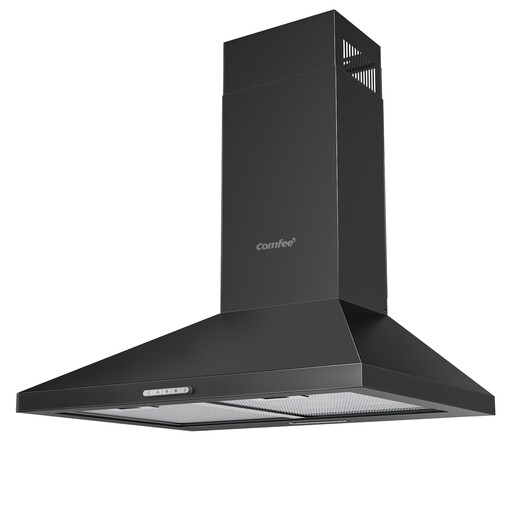
Why this product suits this profile: The 60 cm wall-mounted hood offers 400 m³/h, three power levels, plus extraction and recirculation modes. This makes it suitable for standard hobs and a range of home layouts.
The two operating modes avoid tying you to a single installation method. The product description states that an activated carbon filter is included; no carbon filter is required in extraction mode.
400 m³/h extraction rate, three speeds, LED lighting and energy efficiency class B.

Why this product suits this profile: This wall-mounted hood combines an extraction rate of 650 m³/h with four speeds, touch and app controls, plus recirculation and extraction options.
The maximum noise level is stated as 59 dB. Specific information is also provided on the extraction rate, filter type CBCF003*2 and operating modes.
650 m³/h, energy efficiency class A+++, washable aluminium filters and touch controls with Wi-Fi/app functionality.
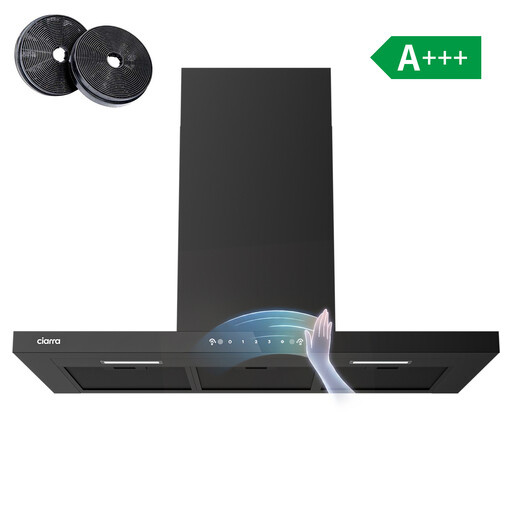
Why this product suits this profile: The 90 cm width covers larger hobs. This model is designed for intensive cooking and supports both extraction and recirculation.
The greater width prevents a wide hob from being only partially covered. Height adjustment, washable aluminium filters and two operating modes make it easier to adapt to your needs.
650 m³/h, maximum noise level of 59 dB, energy efficiency class A+++ and three washable aluminium filters.
A cooker hood should be installed in accordance with the relevant instructions. Several models in the selection require installation by a qualified professional. Before buying, check the condition of the wall, power connection, extraction outlet and minimum distance from the hob.
With recirculation, the air outlet must remain unobstructed. With extraction, the duct should follow as straight a route as possible. If a flue-dependent appliance is operated at the same time, ensure adequate ventilation in the room to prevent dangerous negative pressure. The specific requirements should be discussed with a specialist and, where applicable, a chimney sweep.
The grease filter should be cleaned regularly, depending on usage and how dirty it becomes. If you frequently prepare fried or pan-fried dishes, a shorter cleaning interval is advisable. A dishwasher-safe filter reduces the cleaning effort, but does not replace checks for damage and grease deposits.
Running costs mainly depend on power consumption, usage time, energy efficiency class and filter replacements. An energy-efficient cooker hood with lower annual consumption can be beneficial in everyday use, provided that its performance and design suit your kitchen.
We have put together a complete, regularly updated list of products that fully meet these strict selection criteria and the safety regulations applicable in the EU.
The hood should be at least as wide as the hob. For a 60 cm hob, a 60 cm cooker hood is standard. A 90 cm hood can provide additional coverage for larger hobs or intensive use. Depth, installation height and the position of the cooking zones are also important.
Its lifespan depends on the motor, materials, usage, cleaning and filter maintenance. Regularly cleaned grease filters and correctly replaced activated carbon filters help support reliable operation. If you notice unusual noises, reduced performance or damaged cables, stop using the appliance and have it professionally inspected.
Extraction usually involves lower ongoing filter costs, but requires a suitable external connection. Recirculation is often easier in rented properties and where no extraction outlet is available, but requires regular replacement of activated carbon filters. The right choice therefore depends not only on the purchase price, but also on installation costs, the building's capabilities and long-term use.