
Lieferung heute & morgen

Qualitätsgarantie

Willkommens-Angebote freischalten: KOSTENLOSE Lieferung | Bis zu 80 % RABATT | Kostenlose 30-Tage-JoyPlus-Testphase
App herunterladen
A cooker hood is designed to remove or filter cooking fumes, grease particles and odours from the area directly above the hob. When buying one, many people initially focus on the design and maximum airflow. In practice, however, several other factors determine whether the appliance is suitable for your kitchen, cooking habits and existing ventilation connection.
Figures such as 650 m³/h in product descriptions usually refer to the maximum airflow. The actual achievable figure depends on factors including the length of the ducting, bends, backdraft damper and exhaust cross-section. With a recirculating hood, the air is also passed through grease and activated carbon filters, which can affect the airflow.
So don’t compare only the highest figure. The operating mode, noise level, filters and structural requirements are also important.
A 60 cm cooker hood is often suitable for standard hobs. With a wider hob or more intensive use, a 90 cm cooker hood may be a better choice because it covers more area at the sides. A hood that is too narrow can allow steam and grease to pass around it.
Before buying, check the width of the hob, the available wall or cabinet space, and the distance from wall cabinets.
A recirculating hood does not require an opening through the wall, making it suitable for rented homes or kitchens without an exhaust duct. However, it returns the filtered air to the room. An activated carbon filter captures odours and must be checked regularly and replaced depending on how frequently it is used.
An extractor hood directs the air outside. This requires a suitable connection, professional installation and consideration of the building’s structural conditions. In buildings with fireplaces or other combustion appliances, consultation with specialists may be necessary to prevent dangerous negative pressure.
Airflow is specified in m³/h. A small, enclosed kitchen may require a different performance level from an open-plan kitchen and living area. Models offering, for example, 250, 400, 580, 620 or 650 m³/h should always be considered in relation to the room size and installation type.
Noise level is specified in dB. As the noise increases with the selected setting, comparing models at the same performance level is more meaningful than looking at a single maximum value. A “quiet cooker hood” should therefore include information about the lower settings as well as the maximum noise level.
Washable aluminium grease filters can be cleaned regularly in accordance with the manufacturer’s instructions, and some are even suitable for cleaning in a dishwasher. Recirculating operation also requires a compatible activated carbon filter. Check the exact filter designation and the expected cost of replacement parts.
A cooker hood with LED lighting illuminates the hob while using little additional energy. Touch controls, gesture controls and app connectivity are convenient features, but they are not essential for every kitchen. Simple push-button or slider controls can be more practical when your hands are greasy or wet.
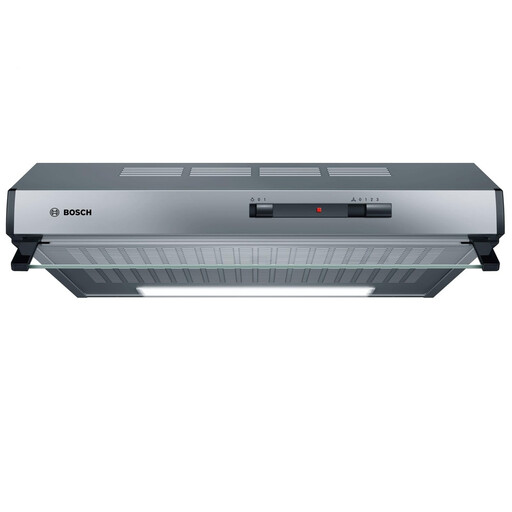
Why this product suits this profile: Its compact design, 60 cm width and three power settings are intended for smaller kitchens and standard hobs.
The product details specify both extraction and recirculation modes; recirculation requires a separate conversion kit. This makes it easier to plan the installation requirements before buying.
LED lighting, a dishwasher-safe grease filter and maximum airflow of 250 m³/h according to the product data.
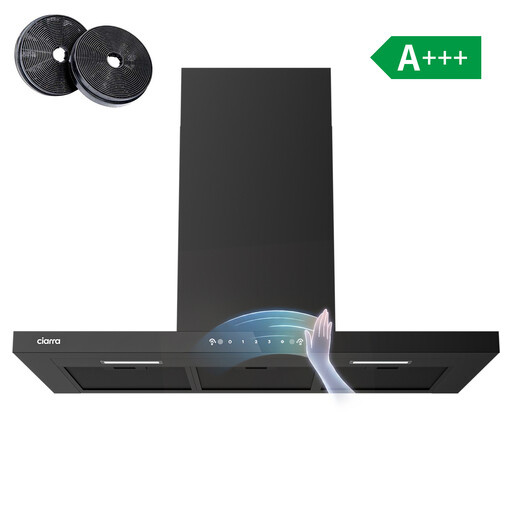
Why this product suits this profile: The wide black glass front is designed for larger hobs and open-plan kitchens where the wall-mounted hood is on display.
Both extraction and recirculation modes are specified, along with two activated carbon filters. Before installation, you should still check whether the existing wall and connection positions are suitable.
650 m³/h airflow, A+++-rated energy efficiency according to the listing, touch and gesture controls, and a maximum noise level of 59 dB.
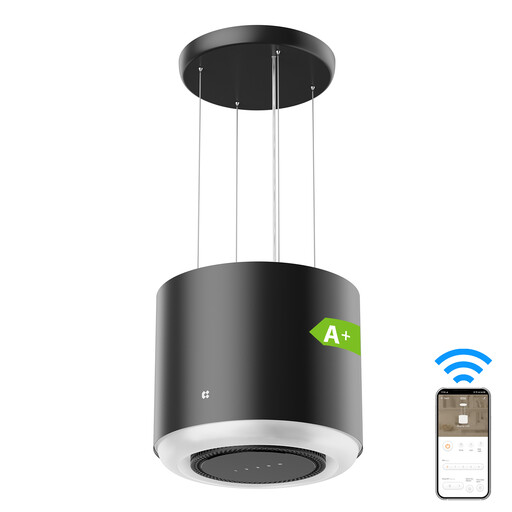
Why this product suits this profile: The round, free-hanging design is intended for kitchen islands and open-plan layouts where the hood remains visible.
The model is designed for recirculation and is described as including an activated carbon filter. The ceiling mounting and adjustable height of 100 to 2,000 mm must be planned in advance.
Up to 550 m³/h recirculated airflow, four power settings, Wi-Fi app control and LED lighting with two brightness levels according to the product data.
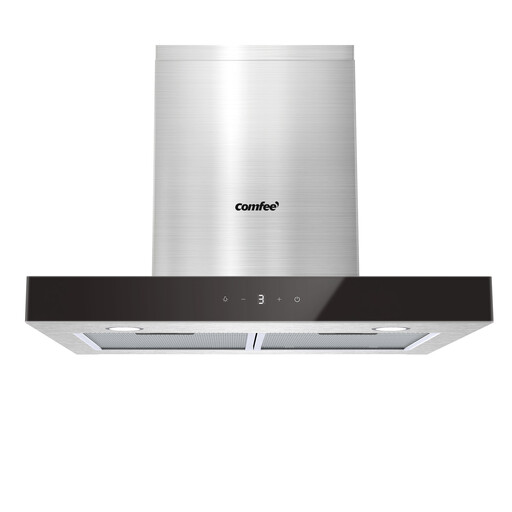
Why this product suits this profile: Four power settings, a booster function and a width of 60 cm are suited to households that cook regularly and have a standard hob.
Both extraction and recirculation modes are supported; the reusable five-layer aluminium filter should be cleaned regularly. The installation height must comply with the instructions.
Maximum airflow of 650 m³/h, LED lighting, gesture and touch controls, and a BLDC motor according to the product description.
We have put together a complete, regularly updated list of products that fully meet these strict selection criteria and the safety regulations applicable in the EU.
Observe the manufacturer’s specified minimum height above the hob. Different clearances may apply to gas and electric hobs. The hood should be securely mounted to the wall or ceiling; with an extraction system, the ducting and connection must be properly sealed.
Clean the grease filters regularly, depending on how often the hood is used—for example, every two to four weeks. Disconnect the power supply before every cleaning session or filter change. Activated carbon filters must not be confused with grease filters: they are intended exclusively for recirculation and have a limited service life.
The hood should cover at least the full width of the hob. For a standard 60 cm hob, a 60 cm cooker hood may be suitable. With wider hobs or strong sideways steam, a 90 cm hood can provide greater coverage.
It depends on your kitchen. Extraction directs cooking fumes outside but requires a suitable connection. Recirculation is more flexible in homes without an exhaust duct, but it requires regular care of the activated carbon filter and returns the filtered air to the room.
Its service life depends on the motor, installation, frequency of use and maintenance. Regular filter cleaning, unobstructed airflow and replacing activated carbon filters can help maintain the hood’s intended performance over time. The specific maintenance intervals are set out in the relevant operating instructions.