
Lieferung heute & morgen

Qualitätsgarantie

Willkommens-Angebote freischalten: KOSTENLOSE Lieferung | Bis zu 80 % RABATT | Kostenlose 30-Tage-JoyPlus-Testphase
App herunterladen
A cooker hood with a carbon filter is a practical solution for kitchens without an extraction duct. Instead of venting the air outside, it filters it and recirculates it back into the room. To ensure your choice works well in the long term, you shouldn't just focus on design, touch controls or a high airflow rate.
Three common pitfalls crop up particularly often:
A 60 cm cooker hood is typically suitable for a hob of a similar width. For wider hobs or more intensive use, a 90 cm cooker hood can cover a larger area. The key point is that the hood captures the rising cooking vapours as completely as possible.
Airflow is usually given in m³/h. This is the extraction rate stated by the manufacturer. High figures can be useful if you frequently fry and cook, but they should be considered alongside noise levels and your existing room ventilation. A larger airflow isn't automatically necessary in every kitchen.
With an extraction hood, the air is vented outside through an extraction hose. This requires a suitable hole through the wall, the correct hose diameter, and permission from your landlord or building management.
A recirculation hood doesn't need a wall opening. It uses a grease filter for grease particles and a carbon filter to absorb cooking odours. The carbon filter must be replaced regularly, while metal grease filters can be cleaned according to the manufacturer's instructions. A hood that supports both operating modes gives you more flexibility during installation.
Multi-layer aluminium grease filters can trap particles from cooking vapours. Even with a dishwasher-safe grease filter, you should still follow the manufacturer's care instructions, as harsh detergents or high temperatures can damage the surface.
The carbon filter in a cooker hood is a consumable item. Replacement intervals depend on how often you cook, how much you fry, and the type of filter. For the Ciarra models listed here, a replacement interval of two to four months is recommended, depending on usage. A clogged filter can reduce airflow. So always check model compatibility before ordering.
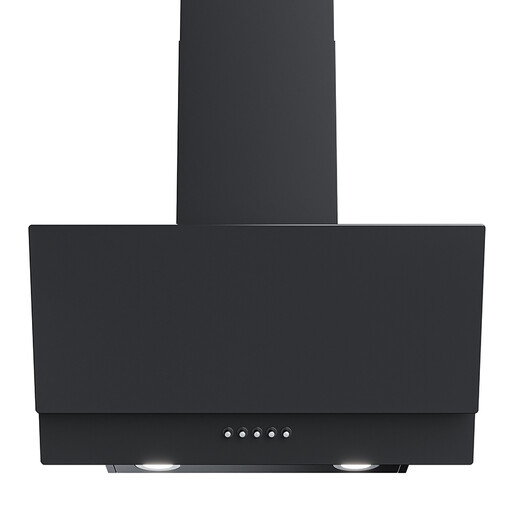
Why this product suits the profile: This 60 cm wall-mounted hood with a black glass front is designed for smaller kitchens and hobs of a matching width.
The product details mention both recirculation and extraction modes, as well as an included carbon filter. This makes the operating mode clearer before purchase.
60 cm width, stated airflow of 300 m³/h, LED lighting and a dishwasher-safe five-layer aluminium grease filter.
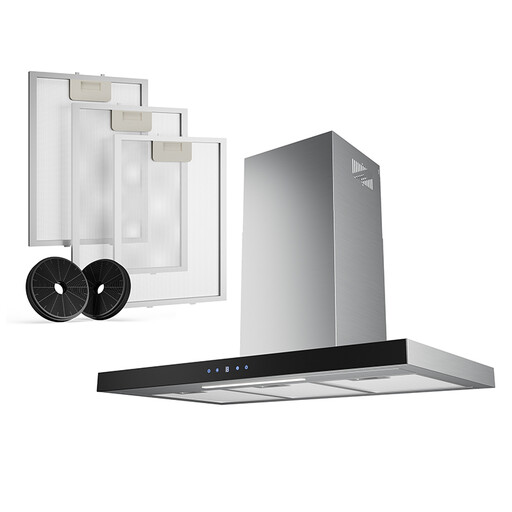
Why this product suits the profile: This 90 cm wall-mounted hood is aimed at households with a wider hob and users who prefer digital controls.
The dimensions, airflow and operating modes are listed in the product data. The scope of delivery also includes a chimney pipe, non-return flap, mounting kit and carbon filter.
90 cm width, stated airflow of 564 m³/h, energy efficiency class A++ according to the product information, touch controls and digital display.
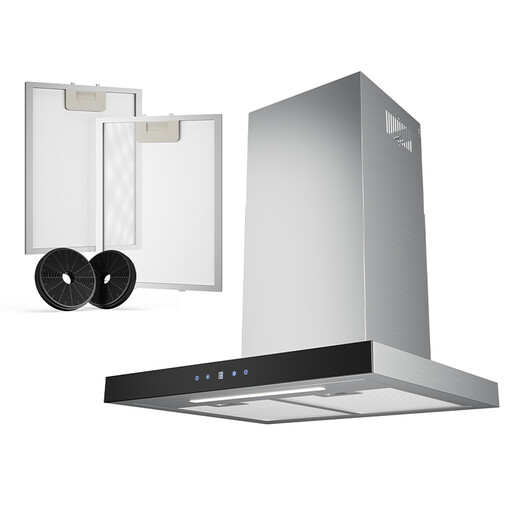
Why this product suits the profile: This 60 cm model combines a compact design with a stated airflow of 611 m³/h according to the product data, making it suitable for frequent cooking.
The selection considers not just airflow but also cleaning: the five-layer aluminium grease filter is described as dishwasher-safe in the product description.
60 cm width, touch controls, LED light, recirculation and extraction modes, and an included carbon filter set according to the supplier's information.
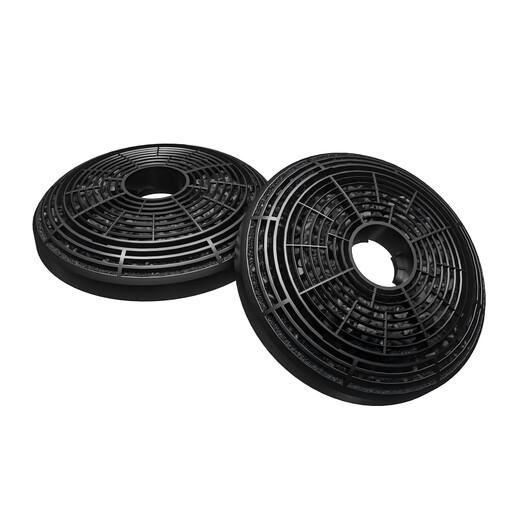
Why this product suits the profile: Suitable for Ciarra models such as CBCS6201, CBCB6201, CBCS6906D, CBCB6906D and CBCB9201-B, provided they use the filter type CBCF002X2.
The specific model list and filter dimensions of 11 × 11 × 4 cm make it easy to check compatibility before ordering. This avoids assuming a supposedly universal filter will fit.
Pack of two, tool-free replacement according to the product description, and a recommended replacement interval of two to four months depending on usage.
We've put together a complete, regularly updated list of products that fully meet these strict selection criteria and the safety regulations in force in the EU.
Before changing the filter, switch off the cooker hood and disconnect it from the power supply. First, remove the metal grease filter and check how the existing carbon filter is secured. With a replacement filter for your cooker hood, the shape, dimensions and model name must all match.
Disposable polyester filters, such as the Vileda Fume Filter on offer, are thrown away after the stated usage period. According to the product description, this model has a coarse side and a smooth side, and comes with a replacement glove. The information on replacement frequency should be used as a guide and adjusted to your actual usage.
For reusable metal filters, regular cleaning is important. The carbon filter itself should not normally be washed like an aluminium grease filter. Always follow the care instructions provided by the manufacturer.
This depends on the filter type and how much you use it. For the Ciarra filters mentioned, a replacement interval of two to four months is recommended. If you frequently deep-fry or sear food, you should check the filter sooner. Reduced airflow or lingering cooking odours can indicate that a replacement is needed.
The metal grease filter can trap grease particles, but it doesn't replace a carbon filter for odour absorption in recirculation mode. So check whether a carbon filter is included with the hood or needs to be ordered separately.
Both specifications are relevant. The width should match your hob, while the airflow should suit your cooking intensity and room size. Before installation, also check the distance to the wall, the extraction routing, the electrical connection and the manufacturer's installation instructions.