
Lieferung heute & morgen

Qualitätsgarantie

Willkommens-Angebote freischalten: KOSTENLOSE Lieferung | Bis zu 80 % RABATT | Kostenlose 30-Tage-JoyPlus-Testphase
App herunterladen
A cooker hood is designed to extract or filter cooking vapours, grease particles and odours. In practice, however, disappointing purchases are often caused not by the design, but by unsuitable dimensions, unrealistic assumptions about performance or overlooked running costs. This selection guide from the Joybuy Product Recommendation Officer explains which specifications matter before purchasing a cooker hood and which models may suit different kitchen setups.
Specifications such as 650 m³/h or 620 m³/h refer to the airflow rate stated by the manufacturer. In a real kitchen, extractor ducts, bends, backdraft dampers and filters can affect actual performance. Recirculation also operates differently from an extraction installation. The figure alone is therefore not a complete measure of quality.
A 60 cm cooker hood is not automatically suitable for every 60 cm hob. The hood’s design and its position above the cooking zones are equally important. For a wider hob or frequent cooking with several pots, a 90 cm cooker hood can provide broader extraction coverage.
Recirculation mode requires a cooker hood with an activated carbon filter. This filter captures odours but must be replaced regularly. Replacement intervals depend on the model and frequency of use. Metal grease filters, on the other hand, should be cleaned according to the manufacturer’s instructions. A dishwasher-safe filter can make maintenance easier, but it does not eliminate the need for regular care.
The relevant installation instructions from the manufacturer apply to both gas and electric hobs. For example, the Comfee TSHM77SS-60 product information specifies 75 cm clearance for gas hobs and 65 cm for electric hobs. The specific installation manual always takes precedence.
An extraction cooker hood vents filtered air outside through a duct. This requires a suitable wall or window connection and professional installation. With a recirculating cooker hood, the air remains in the room and is passed through grease and activated carbon filters. This option is often more practical in homes without an extraction duct.
Several of the models listed here support both operating modes. Before ordering, check whether the extraction hose, backdraft damper, chimney cover and activated carbon filter are included or need to be purchased separately.
A moderate airflow may be sufficient for smaller kitchens, while frequent frying or an open-plan kitchen may justify a higher stated airflow rate. According to the product specifications, the Comfee CH90J64ET4A2B2-EU delivers 620 m³/h with a noise level of 59 dB. The Comfee TSHM77SS-60 and the Ciarra CBCB6102-B each offer up to 650 m³/h; the Ciarra hood also has a stated maximum noise level of 59 dB.
For ratings such as A++ or A+++, always refer to the specific energy label and product datasheet. The rating should not be viewed in isolation: operating time, power setting and lighting all affect actual electricity consumption. An energy-efficient cooker hood with LED lighting can help keep running costs under control with regular use, provided the other technical specifications are suitable for your kitchen.
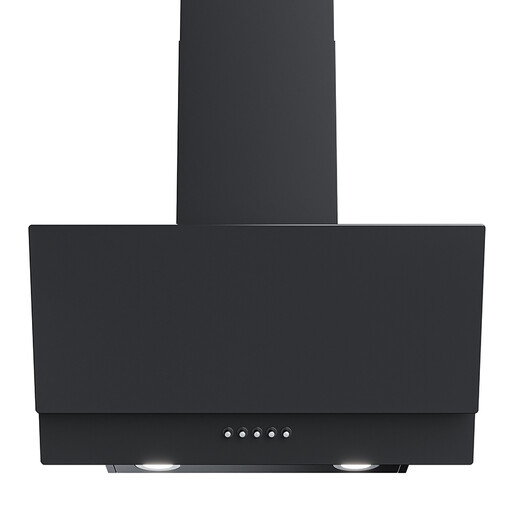
Why it suits this profile: This 60 cm wall-mounted hood offers both recirculation and extraction, LED lighting and a supplied activated carbon filter set—an ideal combination for typical rented homes and smaller kitchens.
Both operating modes are clearly specified. The package also lists an activated carbon filter set, mounting screws and a five-layer aluminium grease filter.
300 m³/h airflow, LED lighting and a dishwasher-safe grease filter according to the product description.

Why it suits this profile: Designed for users seeking touch controls, app connectivity and flexible installation options in a 60 cm wall-mounted hood.
The hood supports both recirculation and extraction. Recirculation requires two CBCF003 carbon filters, whose regular replacement should be factored into the total cost of ownership.
Up to 650 m³/h, a maximum noise level of 59 dB, LED lighting, Wi-Fi/app control and washable aluminium grease filters according to the manufacturer’s specifications.
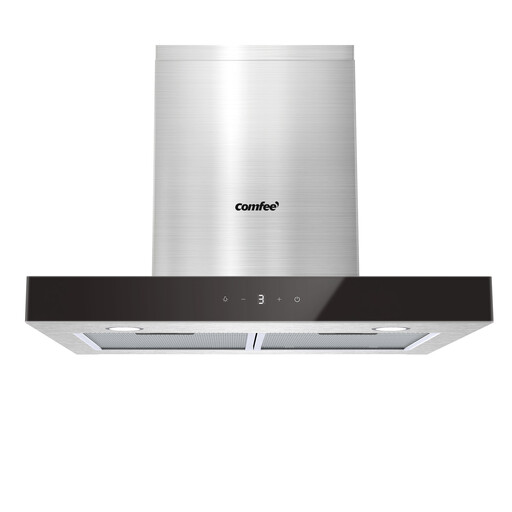
Why it suits this profile: This T-shaped cooker hood is aimed at households that need a stated airflow rate of 650 m³/h and four power levels.
The product specifications list the operating modes, filter design and noise data separately. This makes it easier to compare the hood with the specific conditions in your kitchen.
650 m³/h, four power levels, gesture and touch controls, LED lighting and a reusable five-layer aluminium filter according to the product data.
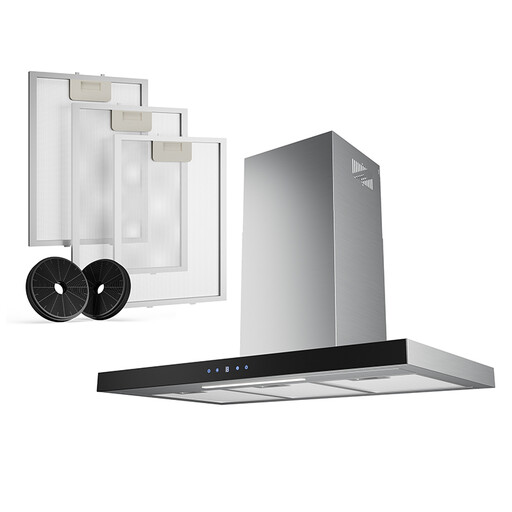
Why it suits this profile: With its 90 cm width, this wall-mounted hood is an appealing choice for larger hobs when broader extraction coverage matters more than an especially compact design.
Before buying, check the wall width, chimney height and available extraction route. According to the product description, the hood supports both recirculation and extraction.
564 m³/h, touch controls with digital display, LED lighting and a dishwasher-safe five-layer aluminium grease filter according to the product specifications.
Explore the complete selection of cooker hoods and compatible filters for different designs, widths and operating modes.
A cooker hood should be installed in accordance with the instructions; several of the models mentioned require installation by qualified professionals. Before carrying out any cleaning or maintenance, disconnect the appliance from the mains. Grease filters should be cleaned regularly, as deposits can accumulate inside them. Recirculation mode also requires the activated carbon filter to be replaced.
Also pay attention to:
If there is no extraction connection, a recirculating cooker hood is usually the most practical solution. It requires a suitable activated carbon filter. Before installation, check the wall construction, power connection and permitted mounting method.
This depends on the model, cooking habits and filter type. For the Ciarra replacement filters mentioned above, replacement every two to four months is recommended. The instructions for the specific hood remain authoritative. The filter designation must match exactly—for example, CBCF003, CBCF009 or CBCF002X2.
Performance and noise level are separate specifications. Check the stated dB value at the relevant power setting and bear in mind that extraction ducts and higher settings can increase noise. Models with several power levels allow you to adjust extraction to suit light vapours or intensive frying.