If your existing freezer compartment is rated four stars and you can regularly set aside clearly labelled space for cookie dough, you may not need an extra appliance. If the shared freezer is often full, compare compact freezers by their dimensions, door clearance, layout and annual energy consumption. A larger model is better suited to storing substantial amounts of food for everyone. Freezing raw cookie dough does not make it safe to eat: the German Federal Institute for Risk Assessment advises against eating unbaked dough.
Which option suits you?
People with limited space in a shared kitchen
If floor space is limited, check the appliance’s actual dimensions, the clearance needed to open the door and the route for getting it into place. The Verbraucherzentrale, Germany’s consumer advice organisation, recommends considering both your needs and the space available when choosing an appliance.
People who prepare dough regularly
If you freeze several portions, you’ll need enough usable space and a layout that keeps containers separate and easy to find. Clearly labelled containers make it easier to identify what’s yours, as the Verbraucherzentrale also recommends.
People keeping an eye on energy use
An additional appliance should suit your actual needs. The Verbraucherzentrale notes that oversized freezers use electricity unnecessarily; the European Commission’s EU energy label includes information such as annual energy consumption.
What to consider when buying
Existing four-star compartment
A good fit if: You only freeze dough occasionally and can use a suitable compartment with space you can clearly identify as your own.
The trade-off: You won’t need another appliance, but you’ll have to agree how to share the existing space with others.
Compact freezer
A good fit if: The shared freezer is often full and you have space for your own appliance.
The trade-off: Drawers can help keep portions organised, but an additional appliance takes up space and adds to your ongoing electricity costs.
Larger freezer
A good fit if: Several people regularly want to store larger quantities of dough and other food together.
The trade-off: More capacity takes up more space. The Verbraucherzentrale warns that a freezer that’s too large for your needs can use electricity unnecessarily.
| Priority |
What to check when buying |
Who it matters most to |
| Space and door clearance |
Compare the width, height, depth, door clearance and access route with the space you’ve agreed to use. |
If I have limited space in the shared kitchen, I want to know in advance whether the appliance will fit with the door open. Space is the top priority for around 34% of consumers. |
| Keeping portions organised |
Check the usable capacity, the number and internal dimensions of the compartments, and whether there’s room for labelled containers. |
If I freeze several portions regularly, I want to store them separately and find them easily. Keeping portions organised is the top priority for around 25% of consumers. |
| Energy consumption |
Compare the annual energy consumption in kWh with the usable capacity shown on the energy label; work out the cost using your own electricity tariff. |
If I buy another appliance, the extra space it gives me needs to justify the ongoing running costs. Running costs are the top priority for around 25% of consumers. |
| Suitable freezer compartment |
If you’re using an existing fridge-freezer compartment, check that it has a four-star rating. For a new appliance, check the documentation to make sure it’s suitable for freezing. |
If I want to freeze fresh cookie dough, I first need to know whether the compartment I’ve chosen is suitable. This is the top priority for around 16% of consumers. |
Common buying mistakes
-
Assuming your existing compartment is suitable for freezing
Having space available doesn’t necessarily mean a compartment can freeze freshly made dough.
Check the star rating of your existing compartment and how much space is actually available. The Verbraucherzentrale notes that a four-star compartment is relevant when you want to freeze fresh food.
-
Measuring the appliance with the door closed only
An open door can block a shared walkway, even if the appliance fits in its allotted space.
Check the door clearance and the route for getting the appliance into place. The manufacturer lists a depth of 108 cm with the door open for the Exquisit GS80-040E.
-
Choosing an oversized appliance for occasional portions
A freezer runs continuously. The Verbraucherzentrale points out that an appliance with more capacity than you need can use electricity unnecessarily.
First check whether there’s suitable space in your existing compartment and how many portions you usually freeze. Then compare the usable capacity and annual energy consumption of suitable models; energy-label figures are based on standardised conditions.
-
Confusing NoFrost or freezing with food safety
NoFrost reduces the need to defrost; it doesn’t make raw dough safe to eat. The German Federal Institute for Risk Assessment advises against eating unbaked dough.
Consider ease of defrosting separately from kitchen hygiene. Don’t eat ordinary raw cookie dough without baking it, and keep work surfaces clean.
Brands and models to consider
The details below relate to the specific models mentioned; they are not a general assessment of the brands.
Beko
The FS166020 is a freestanding table-top model for spaces where room is limited.
- According to the manufacturer, the model has 65 l of freezer space, is 47.5 cm wide and has a reversible door.
- The appliance uses static cooling. The claim about MinFrost and reduced ice build-up comes from the manufacturer; it isn’t an independent comparison with NoFrost.
Exquisit
The GS80-040E is a freestanding model with drawers for keeping food separate.
- The manufacturer lists 91 l of usable capacity, four drawers and annual energy consumption of 166,28 kWh.
- As well as the appliance’s 55 cm width, allow for the 108 cm depth with the door open, as stated by the manufacturer.
Liebherr
The FNe 1404 Pure is a compact model with NoFrost.
- According to the manufacturer, the model has a total capacity of 92 l and NoFrost; its external dimensions are 85 × 55 × 60,7 cm.
- NoFrost describes a feature of this model, but doesn’t show that it uses less electricity than other appliances.
Haier
The H4F226WDH1 is a larger model for substantial shared food stores.
- Haier lists a capacity of 226 l, dimensions of 60 × 74,2 × 153,5 cm and Total No Frost.
- Whether its space requirements and fridge/freezer conversion feature make sense in a shared kitchen depends on how you’ve agreed to use it.
Freezers at Joybuy
These freestanding freezers offer different amounts of space and a range of options for organising portions of dough. Before choosing, check the four-star rating, the appliance’s dimensions including door clearance, and its stated annual energy consumption, where available.
 No image available
Exquisit GS581-H-010E, 85 l
The three drawers, including one large drawer, help you organise the interior and store portions separately.
85 l usable capacity; four-star rating; stated freezing capacity of 4 kg/24 h; dimensions 56 × 57,5 × 84,5 cm; reversible door. Manual defrosting is required when frost builds up.
View at Joybuy
 No image available
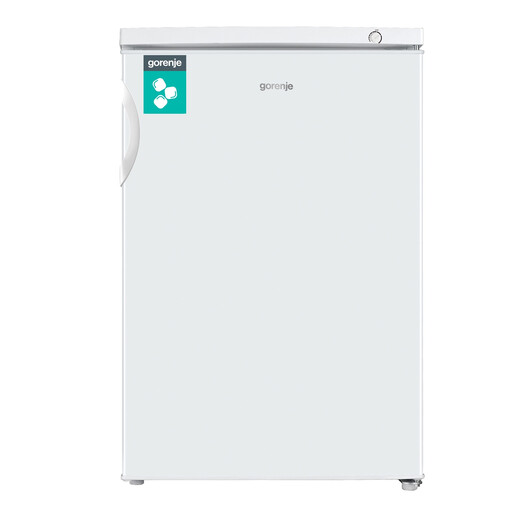
Gorenje F49DPW, 85 l
The stated four-star rating is an important detail to check if you want to freeze fresh dough.
85 l usable capacity; 131 kWh/year; energy class D; freezing capacity 4 kg/24 h; 15-hour storage time; 40 dB; dimensions 56 × 57,5 × 84,5 cm; reversible door. The appliance requires manual defrosting.
View at Joybuy
 No image available
COMFEE' RCU40WH2(E), 31 l
Its stated compact capacity may suit individual portions; check that your containers will fit inside.
31 l capacity; four-star rating; 147 kWh/year; reversible door; adjustable feet.
View at Joybuy
 No image available
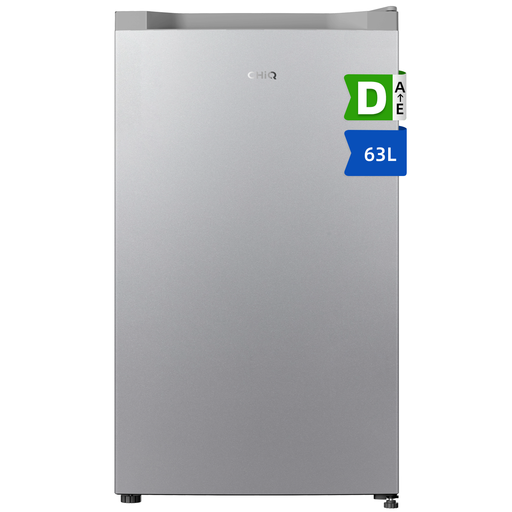
CHiQ JR63DSD, 63 l
Two shelves with hinged lids and a bottom drawer create separate storage areas.
63 l capacity; four-star rating; stated freezing capacity of up to 6 kg/24 h; 47 cm wide and 44,7 cm deep; reversible door. This model is listed as requiring manual defrosting.
View at Joybuy
 No image available
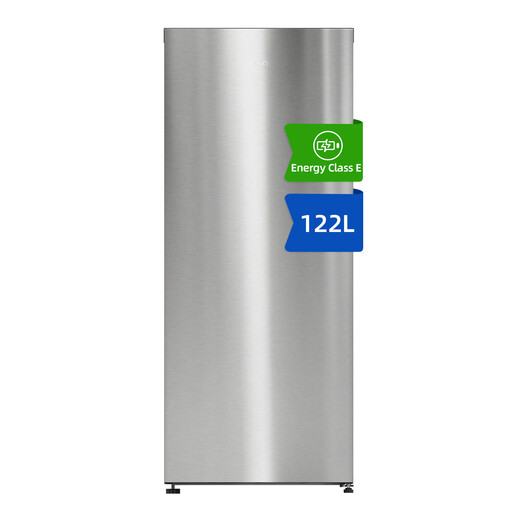
CHiQ JR122WSD, 122 l
The larger capacity gives you more room for several portions; consider whether you really need the extra space.
122 l; four-star rating; NoFrost; Multi-Airflow; 47,5 cm wide; reversible door.
View at Joybuy
Frequently asked questions
What temperature should a freezer be set to?
The Verbraucherzentrale recommends −18 °C for upright and chest freezers. This recommendation doesn’t guarantee that every appliance will reach that temperature in all installation conditions.
How should I label portions of dough in a shared kitchen?
Use containers that are suitable for freezing and label them with the contents and date they were put in the freezer. In a shared kitchen, you could also add your name. Check that the containers and portions will fit in the space provided. The Verbraucherzentrale recommends labelling containers with their contents and date.
Does freezing make raw cookie dough safe to eat?
No. The German Federal Institute for Risk Assessment advises against eating unbaked cookie dough or other raw dough, partly because flour may be contaminated with STEC/EHEC. Follow good kitchen hygiene when preparing food.
What information does the EU energy label show for freezers?
The EU energy label includes the efficiency class from A to G, annual energy consumption in kWh, capacity and noise emissions. The European Commission provides this information for fridges and freezers. Compare specific models rather than relying on the letter rating alone.


