Bakers with limited space
You need a freestanding fan oven that will fit in your chosen spot, including the required clearances. Steba and Severin specify different clearances for different models in their instructions.


First, measure the space where you plan to put the oven, including the clearances specified in the instructions for that particular model. Otherwise, an oven that looks compact might not fit where you want it. Next, compare the usable baking tray area with the number of cookies you want to bake in each batch, and check whether you can select fan-assisted or conventional top and bottom heat. An air fryer could also be an option for a small number of cookies. Don’t assume that recipe instructions will work unchanged across different types of appliance.
You need a freestanding fan oven that will fit in your chosen spot, including the required clearances. Steba and Severin specify different clearances for different models in their instructions.
You want to space the cookies out on the tray and work out in advance how many batches your dough will take. Dr. Oetker recommends leaving space between portions of dough in its cookie recipe; Rommelsbacher gives a tray size of 32.5 × 28.5 cm for the BG 1550.
You want to choose between fan-assisted and conventional top and bottom heat, rather than applying recipe instructions to another appliance without checking. Dr. Oetker gives different settings for fan-assisted and conventional heat in one of its cookie recipes.
A good fit if: You want a flat baking tray and the option to select fan-assisted or conventional top and bottom heat, and the appliance fits your space with the model-specific clearances.
Consider: The oven’s capacity in litres won’t tell you how many cookies you can space out on the tray. Check the usable tray dimensions.
A good fit if: You often bake larger quantities and can make more worktop space available for the appliance. Rommelsbacher gives a tray size of 32.5 × 28.5 cm for the BG 1550.
Consider: The BG 1550 measures 48.5 × 39.5 × 34 cm externally (W × D × H). You’ll also need to follow its instructions and allow for the required clearances.
A good fit if: Small batches are your priority and the basket and required clearance fit your chosen spot. A Dr. Oetker cookie recipe describes cooking four portions of dough at a time in an air fryer.
Consider: Larger quantities of dough may need to be cooked in several batches. Air fryer recipe settings aren’t a general guide for mini ovens.
| Priority | What to check before buying | Who it matters most to |
|---|---|---|
| A safe, suitable place for the appliance | Measure the worktop and the space above it; check the external dimensions and the side, rear and top clearances for the exact model. | If I have limited worktop space, I measure the area, including the required clearances, before choosing an appliance. Around 36% of consumers put finding a safe, suitable space first. |
| Tray area and number of batches | Check the usable tray dimensions and arrange your own portions of dough with space between them; don’t assume that the number of shelf positions equals the number of cookie trays you can use at once. | If I’m making a larger quantity of dough, I want to know how many cookies will fit on a tray with space between them, and whether I’ll need another batch. Around 29% of consumers prioritise tray area and the number of batches. |
| Heating settings and adapting recipes | Check whether fan-assisted and conventional top and bottom heat can be selected on the specific model; keep an eye on the first batch and follow the recipe and appliance instructions. | When I bake different recipes, I want to be able to choose the right heating setting rather than copying the temperature and time without checking. Around 21% of consumers prioritise a choice of heating settings and the ability to adapt recipes. |
| Cleaning and ongoing needs | Check the cleaning instructions, whether the crumb tray can be removed and whether a suitable replacement tray is available. Only compare energy-use figures under similar conditions. | If I bake regularly, I want to clean crumbs and trays easily and find suitable replacement parts. Around 14% of consumers put ease of everyday use first. |
The required clearances are in addition to the appliance dimensions, and vary by model. The Severin TO 2068 instructions specify 12 cm at the sides and rear and 30 cm above; for the Steba KB M19, a distance of 10 cm from the kitchen wall is specified.
Measure the planned location, allowing for the clearances in the instructions for the exact model, and check that there’s a suitable power connection.
Dr. Oetker gives different recipe instructions for air fryers and ovens. That means you can’t simply transfer the temperature and cooking time from one appliance to another.
Follow the recipe and appliance instructions, and keep an eye on the first batch. Compare energy consumption only using relevant figures under similar conditions—not just the wattage.
For the KB M19, Steba lists a 19 l capacity, optional fan-assisted cooking and conventional top and bottom heat, with a footprint of 45 × 37 cm.
According to Severin, the TO 2068 combines a 20 l capacity and fan-assisted cooking with switchable conventional top and bottom heat. Its external dimensions are 44 × 39 × 29.5 cm (W × D × H).
According to Caso, the freestanding Caso TO 20 SilverStyle has a 20 l capacity, fan-assisted cooking and conventional top and bottom heat. It measures 45 × 39.5 × 27 cm (W × D × H).
According to Rommelsbacher, the BG 1550 has a 30 l capacity, several fan-assisted cooking combinations and a 32.5 × 28.5 cm baking tray.
This selection includes mini ovens and air fryers for baking. If you have limited worktop space, make sure the appliance’s footprint, required clearances and usable tray or basket area suit the quantity of cookies you want to bake.
 No image available
Described as an oven for baking; before buying, check that its footprint and the required clearances fit your chosen spot.
32 L; 1,600 W; 100–250 °C; 60-minute timer; crumb tray.
 No image available
A mini convection oven for baking; check whether the usable area is large enough for your batch of cookies.
28 L; temperature control and timer as stated in the product name.
 No image available
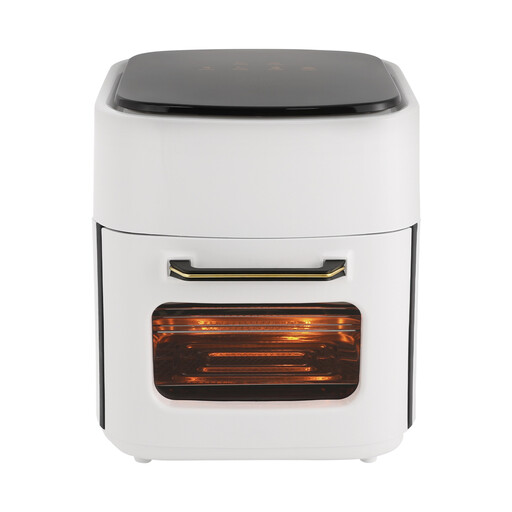
If you’re considering an air fryer instead of a mini oven, check that the basket area and required clearances suit the space where you plan to use it.
15 L; 1,400 W; 360° fan-assisted heating; touchscreen; 80–200 °C; 5–65-minute timer; viewing window; dishwasher-safe basket.
 No image available
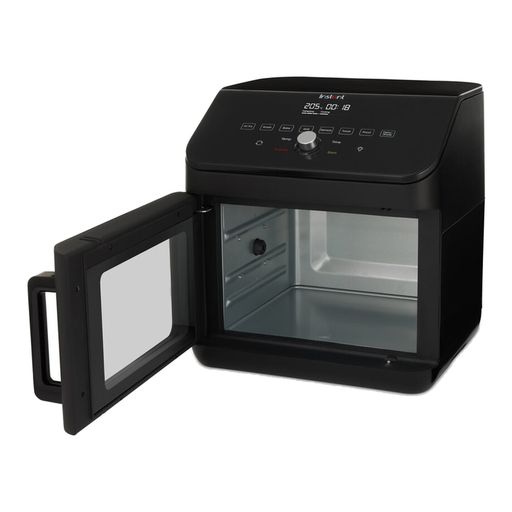
Described as an air fryer with an oven-style name; check that your chosen baking tin and batch of cookies will fit in the usable cooking space.
13 L; model 140-4101-01-EU.
 No image available
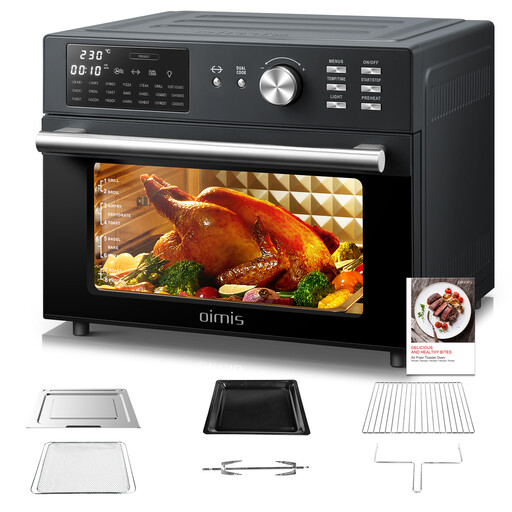
If worktop space is tight, check in advance that this model’s footprint, described as Extra Large, will fit with the required clearances.
30 L; 1,800 W; 21 presets; rotisserie and dehydrator functions; suitable for a 13-inch pizza.
No. What matters is the usable tray area, where you can leave space between the portions of dough. For example, Rommelsbacher gives a tray size of 32.5 × 28.5 cm for the BG 1550; this figure doesn’t apply to other models.
It depends on the specific model, so follow its instructions. For the TO 2068, Severin requires 12 cm at the sides and rear and 30 cm above, and says it must not be built into a cupboard. These clearances can’t be applied to other appliances.
Follow the recipe and appliance instructions, and keep an eye on the first batch. A Dr. Oetker recipe suggests around 180 °C for fan-assisted cooking or around 200 °C for conventional top and bottom heat, with a baking time of 8–10 minutes. These settings aren’t guaranteed to work for every recipe or mini oven.
It may work if the batch fits in the usable basket or cooking space and the appliance instructions allow baking. Dr. Oetker’s air fryer recipe describes cooking four portions of dough at a time; its temperature and timing aren’t general recommendations for mini ovens.
Only compare figures that relate to similar conditions and a similar baking process. The wattage alone won’t tell you how much electricity is used to bake a batch of chocolate chip cookies.