
Lieferung heute & morgen

Qualitätsgarantie

Willkommens-Angebote freischalten: KOSTENLOSE Lieferung | Bis zu 80 % RABATT | Kostenlose 30-Tage-JoyPlus-Testphase
App herunterladen
A new cooking pot should be a long-lasting addition to your kitchen, but the reality is often different. Many buyers quickly discover that the base warps, the handles get dangerously hot, or the promised induction compatibility doesn't perform in practice. Such defects are not only annoying but also lead to uneven cooking results and wasted energy.
This guide will help you navigate the common pitfalls of buying a cooking pot. We focus on the objective features that distinguish a good pot from an inadequate one, ensuring your next purchase meets the demands of your daily routine.
Before you make a decision, you should be aware of the following three weaknesses that often only become apparent after the purchase:
To avoid these problems, you should check three core aspects before buying: the material, the base construction, and the right size for your needs.
The material significantly determines a pot's cooking properties and longevity.
The base is the most important component of a pot. A so-called sandwich base or encapsulated base is the standard for quality here. It consists of several layers, typically stainless steel on the outside and a core of aluminium or copper on the inside. This construction ensures fast, even heat distribution and prevents the base from warping.
For owners of induction hobs, a ferromagnetic base is essential. You can tell if a pot is suitable for induction by the coil symbol (a stylized spiral) on the bottom. A simple test: if a magnet sticks to the pot's base, it is suitable for induction pots.
The right size and shape depend on your cooking habits.
Here are some models tailored to specific user profiles that meet the quality criteria mentioned.

Why This Fits Their Persona: This set is ideal for singles or couples who cook small portions. The pots are stackable to save space and cover basic needs with various sizes without wasting storage.
According to the manufacturer, the integrated TransTherm universal base ensures a stable, flat surface and even heat distribution, which prevents the typical warping of bases.
Made from durable Cromargan 18/10 stainless steel. Suitable for all hob types, including induction, and dishwasher-safe.
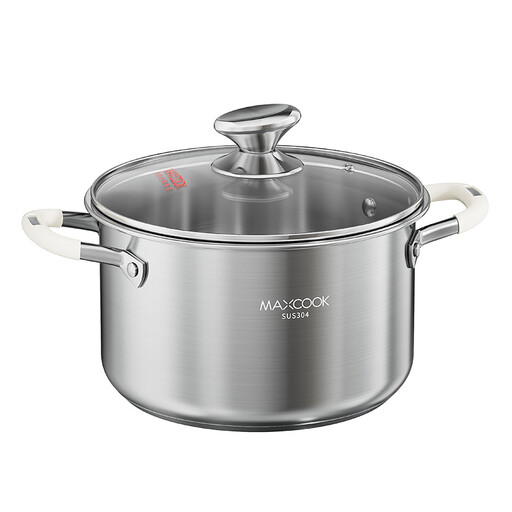
Why This Fits Their Persona: With a 4.3-litre capacity, this pot is the right size for family meals like soups, stews, or pasta. The glass lid allows you to monitor the cooking process without letting heat escape.
The handles are coated with heat-resistant silicone. This prevents the handles from getting dangerously hot and ensures a secure grip, even when the pot is full and heavy.
Made from food-grade 304 stainless steel with a flat composite base suitable for all hob types, including induction.
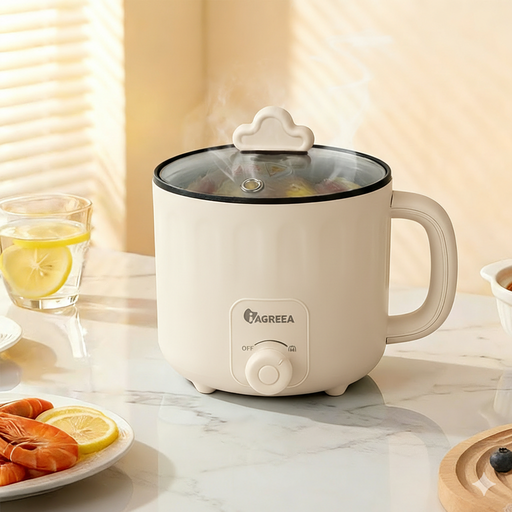
Why This Fits Their Persona: This electric cooking pot is an all-in-one solution for environments without a full kitchen. It's compact, portable, and only needs a power outlet – ideal for dorms, the office, or camping trips.
Integrated safety features like overheat protection and boil-dry auto-shutoff address safety concerns when cooking in confined spaces or without constant supervision.
Multifunctional for boiling, stewing, and steaming. The food-grade non-stick coating makes cleaning significantly easier.
We have compiled a complete, up-to-date list of products that fully meet these strict selection criteria and German safety regulations.
The surest way is to look for the official induction symbol (a stylized coil with three loops) on the packaging or the pot's base. Alternatively, you can hold a magnet to the base. If the magnet is attracted, the material is ferromagnetic and therefore suitable for induction hobs. A thick, flat base is also crucial for efficient heat transfer.
Limescale spots or rainbow-colored discoloration are normal and harmless on stainless steel pots. They are caused by minerals in the water or by overheating. To remove them, you can wipe the pot with a little vinegar or lemon juice and then rinse with clean water. Add salt only to boiling water to avoid small corrosion spots (pitting) on the pot's base.
These numbers describe the composition of the steel alloy. "18/10" means that the steel contains 18% chromium and 10% nickel. Chromium provides rust resistance, while nickel makes the steel more resistant to food acids and gives it a lasting shine. This label is considered a mark of high-quality and durable cookware.