
Lieferung heute & morgen

Qualitätsgarantie

Willkommens-Angebote freischalten: KOSTENLOSE Lieferung | Bis zu 80 % RABATT | Kostenlose 30-Tage-JoyPlus-Testphase
App herunterladen
A new pot should not only look good, but also suit your hob, household and the dishes you plan to prepare. However, unclear product information can quickly lead to the wrong purchase. Capacity, hob compatibility and coating are particularly often misunderstood. Our selection shows what households, singles, couples, families and students in Germany should look out for.
The stated litre capacity usually describes the total volume. However, you should not fill a pot right up to the rim when cooking. That is why it is useful to leave some extra room for soups, pasta and stews.
A cooking pot for small households does not need to be large. A model that is too big takes up more storage space and may be less efficient when heating smaller quantities.
A cooking pot for induction requires a magnetic base of sufficient size. Statements such as “suitable for all heat sources” should explicitly list gas, induction, ceramic and electric hobs in the technical specifications.
An electric pot does not work like a conventional hob pot. It requires a power socket, must not be immersed in water and should be placed on a stable, heat-resistant surface. Also check the mains voltage and power rating. Models with 220 to 240 volts are suitable for Germany, provided this is specified by the manufacturer.
A coated cooking pot can make cleaning easier, but is generally more susceptible to metal utensils, sharp edges and abrasive cleaning products. Use wooden or silicone utensils and follow the care instructions.
A stainless steel pot is often versatile and less vulnerable to kitchen utensils. However, food may stick more readily if the temperature is incorrect. With ceramic and stoneware products, temperature changes are particularly important: a hot vessel should not be placed directly on a cold or wet surface.
The diameter of the pot should match the cooking zone. A 16 cm saucepan is suitable for sauces, milk, small portions and side dishes. For family meals or a wok pan, 28 to 32 cm is standard. A pot that is too small on a large induction zone may transfer heat less effectively, while a pot that is too large may extend beyond the cooking zone.
A cooking pot with lid helps reduce splashes and supports even cooking. Glass lids let you see the cooking process, while steam vents can reduce pressure inside. However, a lid does not replace supervision while cooking.
Look for clear information on whether the pot is dishwasher-safe. “Dishwasher-safe” does not necessarily mean that frequent machine cleaning will not affect the service life of handles, wooden details or coatings. The housing, connection and mains cable of electrical appliances must not be immersed in water.
Stable handles are important for a soup pot or stewing pot that is heavy when full. Also check that the lid sits securely and that the product is approved for your preferred heat source.
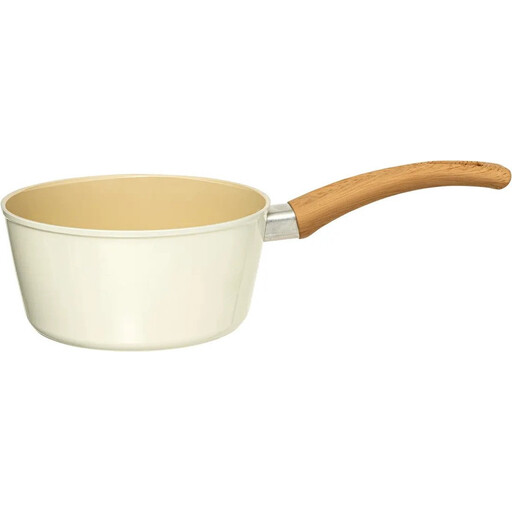
Why this product suits the profile: The 1.7-litre saucepan is suitable for sauces, small portions and side dishes. According to the product information, it is suitable for gas, induction, ceramic and electric hobs.
Hob compatibility is clearly specified. This helps avoid the common assumption that every small pot is automatically suitable for induction.
16 cm diameter, 1.7-litre capacity and a body made from recycled aluminium with a stainless steel induction base.
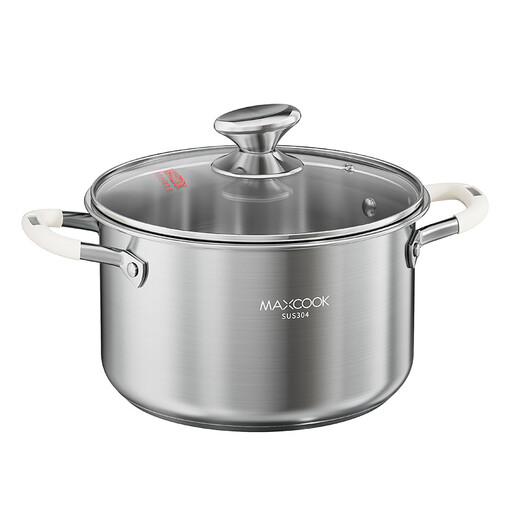
Why this product suits the profile: The stainless steel pot with glass lid and encapsulated base is suitable for soups, pasta and stews in households of various sizes.
The product information clearly specifies the material, capacity and heat sources. Guidance on water spots and cleaning makes the care requirements transparent.
304 stainless steel, 3.2-litre capacity, silicone handles and suitability for gas, induction, electric and ceramic hobs according to the product description.
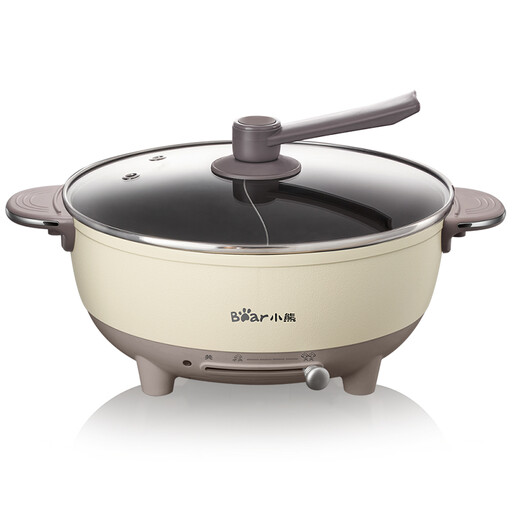
Why this product suits the profile: This electric multi-cooker is aimed at families and users who want to prepare hot pot, stews or several ingredients at the same time.
The 6-litre capacity and continuously adjustable temperature are clearly stated. Dry-boil protection and a detachable mains cable are also specified.
6-litre capacity, 1,500 watts, temperature range from 0 to 210 °C and separate sections in the pot according to the product data.
We have put together a complete, regularly updated list of products that fully meet these strict selection criteria and the safety regulations applicable in the EU.
The key feature is an induction base explicitly specified by the manufacturer. Stainless steel alone is not always enough. Also look for a flat base and a diameter that matches the cooking zone.
For sauces and side dishes, 1 to 1.7 litres is often sufficient. For pasta, soups or stews, around 2 to 3 litres is more practical. A 1.6-litre mini cooking pot is particularly suitable for small kitchens, halls of residence and offices.
Consumption depends on the power rating and operating time. A 600-watt appliance theoretically uses 0.6 kWh after one hour of operation; in practice, the heating element does not run continuously, depending on the temperature control. To calculate the running cost, multiply this amount of energy by your current electricity tariff.