If you want to see several separate audio tracks and editing panels at once, a 21:9 monitor could be a good fit, thanks to its wide workspace. For checking 4K image detail and colour grading in SDR, a 4K monitor with a suitable Rec.709 workflow is a more obvious choice. An HDR-capable OLED model is worth considering if HDR is genuinely your intended delivery format. No monitor will sync separate recordings for you or replace audio monitoring in your editing software.
Which monitor is right for you?
Editing with separate audio tracks
If you want to arrange video, voice recordings and kitchen sounds alongside each other in your editing software, more horizontal screen space can help. Adobe describes syncing separately recorded video and audio tracks as a feature of the editing software; the monitor does not do it for you.
SDR colour grading for recipe videos
If you’re assessing colours for SDR delivery, your monitor and sequence should match your intended colour workflow. Adobe notes that source colour spaces need to be identified correctly, and that choosing the right output settings for the sequence is essential.
Editing 4K footage on a laptop
If you want to check details in 4K footage and use the monitor as a permanent workstation, resolution, connectivity and the specific model’s charging power all matter. BenQ and ASUS quote different USB-C charging power for their respective models, so check that the figures meet your laptop’s requirements.
What should you look for when buying?
First decide whether a wider timeline or more native screen height matters more to you. For assessing colour in SDR, your sequence settings should also match the monitor’s colour mode, as Adobe explains in its colour management guidance.
| What you need |
What to check when buying |
Who is this important to? |
| Space for video and audio tracks |
21:9 and 3.440 × 1.440 pixels give you a wide workspace, but less screen height than 3.840 × 2.160 pixels. Check how your editing software’s panels are arranged. |
If I want to see the preview, tools and several separate audio tracks at once, timeline width is my main priority. Around 31% of consumers prioritise space for editing panels and audio tracks. |
| Colours for SDR delivery |
Check for a suitable Rec.709 mode and the sequence’s colour settings. Manufacturers’ colour gamut coverage figures are not independent measurements of your device. |
If I’m assessing recipe colours for planned SDR delivery, I need a suitable colour workflow, not just a high colour gamut figure. Around 31% of consumers prioritise colour for SDR delivery. |
| Detail in the 4K preview |
Check the native resolution and whether the screen size and scaling make text easy to read. 3.840 × 2.160 pixels offer more screen height than 3.440 × 1.440 pixels. |
If I want to check fine image detail, native resolution matters more to me than extra timeline width. Around 23% of consumers prioritise 4K image detail. |
| Laptop connectivity and setup |
Check that the specific monitor supports your display output and cable, and provides the charging power you need. Also check the stand and the space available on your desk. |
If I want to minimise the number of connection steps at my permanent laptop workstation, connectivity and charging power are among my top priorities. Around 15% of consumers prioritise a laptop workstation. |
Common buying misconceptions
-
A wide timeline solves audio problems
A wide display can make tracks easier to see, but it won’t sync separate recordings by itself.
Plan to handle syncing and audio monitoring in your editing software, independently of your monitor purchase.
-
A wide colour gamut is all you need for accurate SDR colour
According to Adobe, colour reproduction also depends on whether source colour spaces are identified correctly and the sequence’s output settings are chosen appropriately.
Decide on your output format first, then check the colour mode and workflow that suit it.
-
Every USB-C monitor is a complete laptop docking solution
The USB-C charging power quoted varies between monitors and needs to match the connected laptop.
Compare your laptop’s power requirements with the figures for the specific model, and check that the cable and connection support the display output you need.
Key brands at a glance
BenQ
The DesignVue PD2705U is a documented 27-inch 4K option for an SDR workflow centred on Rec.709.
- BenQ quotes 99% Rec.709, a Rec.709 mode and 65 W USB-C for this model.
- These are manufacturer specifications. Check that the charging power suits your laptop.
ASUS
The ProArt PA279CRV is a 27-inch 4K option with colour presets, while the ROG Swift OLED range has a different, HDR-focused approach.
- ASUS quotes a Rec.709 mode and 96 W USB-C Power Delivery for the PA279CRV.
- ASUS describes the ROG Swift OLED PG32UCDM Gen3 as having a 4K QD-OLED panel and OLED care features. These specifications apply to this model, not the brand as a whole.
LG
The UltraWide 34U650A-B is a 21:9 option if a wide editing view is important to you.
- LG quotes a typical value of 34 inches, 3.440 × 1.440 pixels and 99% sRGB.
- These specifications do not demonstrate a full 4K preview or accuracy for a particular SDR colour workflow.
Dell
The UltraSharp U3425WE is a 34.1-inch option with a wide workspace and Thunderbolt hub.
- Dell quotes 3.440 × 1.440 pixels, built-in speakers and 90 W power delivery.
- The speakers are not a proven solution for assessing or syncing separately recorded audio tracks.
EIZO
The ColorEdge CS2740 is worth considering if you want to use hardware calibration with a 27-inch 4K monitor.
- EIZO describes this model as supporting the ColorNavigator software and hardware calibration.
- Check in advance which calibration process and accessories you’ll need for your setup.
Joybuy monitors for editing and previewing
These models cover a wide ultrawide workspace, as well as 4K monitors for image detail and different display types. The key is to choose the workspace and output format that suit your editing routine.
 No image available
INNOCN 40C1U, 40-inch 5K ultrawide monitor
The wide workspace could suit you if you want to arrange the preview, editing tools and separate audio tracks at the same time.
The product specifications list 5K at 5.120 × 2.160 pixels, IPS, 21:9, 100 Hz and USB-C with 65 W Power Delivery. DeltaE < 2 is also listed as a product specification, not an independent measurement.
View at Joybuy
 No image available
MSI PRO MP273UPDE E6, 27-inch 4K UHD
This 16:9 model could suit you if a detailed 4K view matters more than the extra horizontal space of a 21:9 monitor.
The product name specifies a 27-inch IPS display with 4K UHD, 60 Hz and HDR Ready.
View at Joybuy
 No image available
INNOCN CB27U1, 27-inch 4K UHD
4K resolution can be useful for viewing detail in compatible footage. The 16:9 format offers less horizontal space for long timelines than an ultrawide.
The product name specifies 3.840 × 2.160 pixels, IPS, 120 Hz, HDR500 and USB-C with 90 W Power Delivery.
View at Joybuy
 No image available
ASUS ROG Swift OLED PG32UCDMR, 32-inch 4K UHD
An OLED model could be right for you if OLED suits your intended output format and workflow. HDR support alone won’t turn an SDR sequence into HDR.
The product name specifies 32 inches, 3.840 × 2.160 pixels, 16:9 and 240 Hz.
View at Joybuy
 No image available
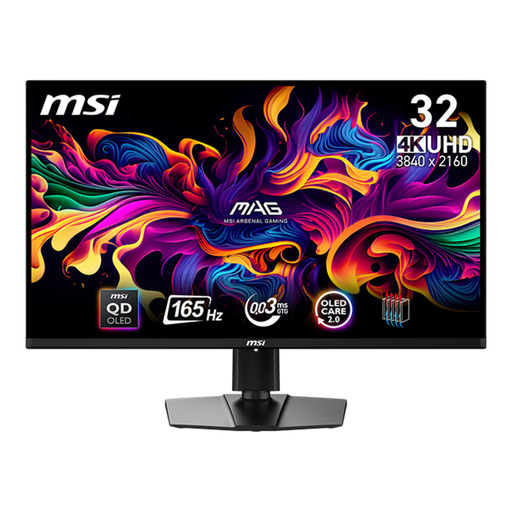
MSI MAG 321UPDE QD-OLED, 31.5-inch 4K UHD
Consider whether 4K image detail matters more to you than a wider timeline, and whether the display type suits your intended colour workflow.
The product name specifies 80 cm (31.5 inches), 3.840 × 2.160 pixels and QD-OLED.
View at Joybuy
Frequently asked questions
Does a wide monitor automatically sync separately recorded audio?
No. Syncing is done in your editing software. Adobe’s Premiere guidance describes how to sync separately recorded video and audio clips; screen width only affects your workspace.
Do I need an HDR monitor for every cooking video?
No. Set up your monitor and sequence to suit your intended output format. Adobe describes separate colour settings for SDR and HDR sequences, and specifies Rec.709 as the standard output colour space for a new sequence.
Is USB-C on a monitor enough to run my editing laptop with one cable?
Not necessarily. Check display output, cable compatibility and your laptop’s charging requirements against the specific model. BenQ quotes 65 W for the PD2705U, while ASUS quotes 96 W USB-C Power Delivery for the PA279CRV.
What energy and consumer information matters when buying a monitor in Germany?
For monitors covered by EU labelling rules, the energy label shows information such as the efficiency class, as explained by the European Commission. When consumers buy remotely from a trader in the EU, they generally have 14 days from delivery to withdraw from the purchase, although exceptions may apply. According to Your Europe, faulty goods are covered by a legal guarantee from the seller for at least two years.


