
Lieferung heute & morgen

Qualitätsgarantie

Willkommens-Angebote freischalten: KOSTENLOSE Lieferung | Bis zu 80 % RABATT | Kostenlose 30-Tage-JoyPlus-Testphase
App herunterladen
A cooking pot needs to do more in everyday life than simply heat water. For soups, pasta, vegetables, stews or a sociable hot-pot meal, capacity, heat distribution, the lid and hob compatibility all matter. Many disappointing purchases are not caused by the price, but by unclear product details and an unsuitable design.
A pot with a diameter of 28 cm can hold different amounts depending on its height and base shape. That is why the key factors are capacity in litres, internal height and usable width. For four people, around 4 to 5 litres is enough for many soups and stews. If you regularly cook for a larger family or prepare meals in advance, you should allow for more volume.
A very shallow braising pot is practical for slow-cooked dishes, but may be less suitable as a traditional soup pot. A tall stockpot, on the other hand, makes efficient use of the hob and provides room for pasta, asparagus or larger ingredients.
An induction pot requires a magnetic base that sits flat on the hob. Not every stainless steel cooking pot is automatically suitable for induction. Check the technical details specifically for compatibility with induction, gas, electric and ceramic hobs.
A multi-layer or encapsulated base can distribute heat more evenly. This is particularly important for milk, sauces and dishes that simmer slowly. With a gas hob, the base of the pot should also match the size of the flame, so that heat does not unnecessarily escape around the sides.
A pot with a lid keeps heat and moisture inside the vessel. A glass lid makes it easier to monitor the contents without lifting it. For a heavy cast-iron pot, a sturdy cast-iron lid is more usual. This improves heat retention, but also increases the weight.
You should also look for:
A stainless steel cooking pot is generally uncoated, odour-neutral and versatile enough for soups, pasta and vegetables. Stainless steel can develop discolouration if used at the wrong temperature or with too little liquid. White limescale or starch residue can usually be removed with mild vinegar water. Scouring products and metal scourers may damage the surface.
A cast-iron pot retains heat for a long time and is particularly suitable for slow-cooked dishes, roasting and gentle cooking. Enameled cast iron does not require traditional seasoning, but it is heavy. Hot pots should not be placed directly on cold or delicate surfaces, as sudden temperature changes can put stress on the material and enamel.
As a practical guide:
For a hot-pot pot, the shape and number of handles are also important. A divided pot can hold two broths or flavours at the same time. Before buying, check that the pot will sit securely on your existing hob ring.
An oven-safe pot allows you to move it from the hob to the oven, for example when braising or baking. The permitted maximum temperature and the materials used for the lid knob and handles are crucial. Glass lids often have their own temperature and usage instructions. You should therefore follow the manufacturer’s guidance before using the pot in the oven.
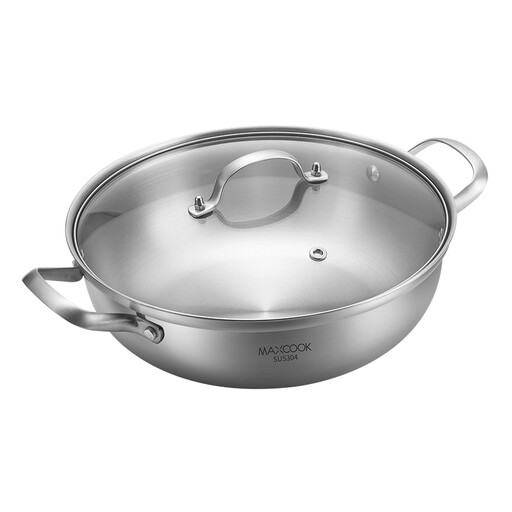
Why this product suits the profile: This 28 cm pot made from 304 stainless steel is designed for everyday cooking and sociable hot-pot gatherings. According to the product details, it is suitable for gas, induction, electric and ceramic hobs.
The clearly stated hob compatibility and thick bonded base make the choice easier to assess for households with different types of hob.
304 stainless steel without a non-stick coating; dishwasher-safe according to the product description.
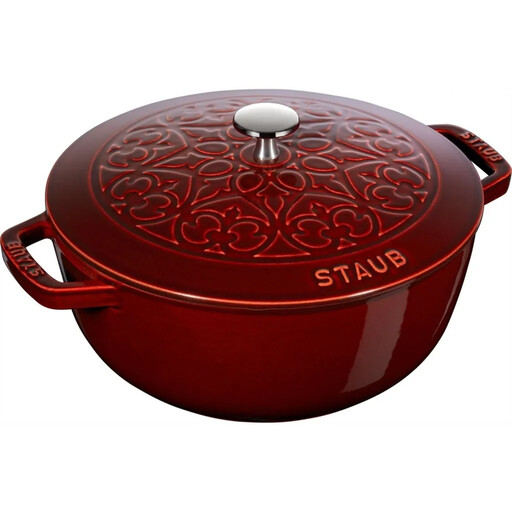
Why this product suits the profile: This enamelled cast-iron pot has a 5-litre capacity and is suitable for slow-cooked dishes, roasts and larger family portions. It is designed for induction and oven use.
The technical details clearly state the capacity, material and compatible hob types. This reduces the risk of choosing a braising pot that is too small or unsuitable for induction.
5-litre capacity; enamelled cast iron; stated to be suitable for all hob types, including induction, and for oven use.
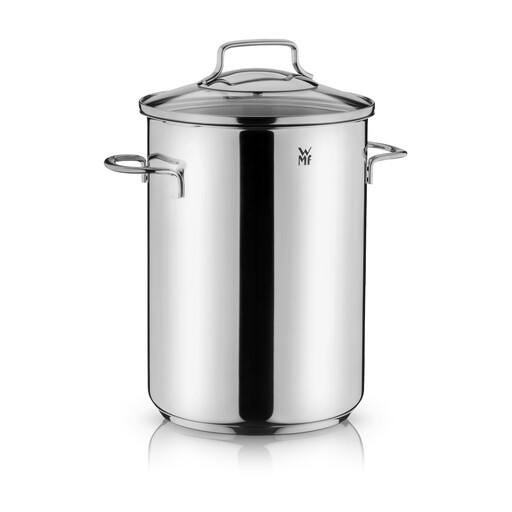
Why this product suits the profile: The tall, narrow shape with wire basket insert is designed for asparagus, spaghetti, pasta and vegetables. The glass lid lets you keep an eye on the contents while cooking.
The specialist shape is not treated as a universal replacement for every cooking pot. Instead, it is used specifically for long ingredients and for lifting them out with the insert.
4.5-litre capacity; basket insert; according to the product details, suitable for all hob types, the oven and the dishwasher.
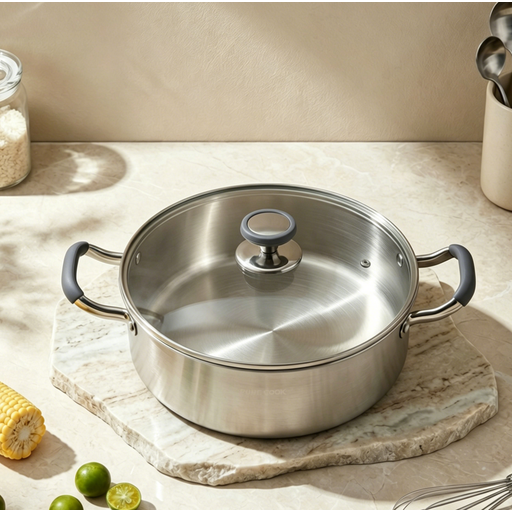
Why this product suits the profile: This 28 cm soup pot is intended for family-sized portions and meals for three to eight people. The glass lid and double silicone handles support everyday use.
The product details specify the material, lid, compatible hob types and cleaning instructions. This makes it easier to compare key features with your own household needs before buying.
304 stainless steel without a coating; glass lid; according to the product description, suitable for induction, gas and ceramic hobs, as well as for the dishwasher.
We have put together a complete, regularly updated list of products that fully meet these strict selection criteria and the safety regulations applicable in the EU.
For soups, stews and pasta, 4 to 5 litres is often practical. However, the right size depends on the recipes, the amount of leftovers you want and the height of the ingredients. If you regularly batch-cook, a larger pot may be useful.
No. A stainless steel cooking pot needs a magnetic base and must be explicitly labelled as suitable for induction. Also check that the base diameter matches the cooking zone and that the pot sits flat.
A braising pot usually offers a larger, shallower surface for searing. A cast-iron pot retains heat for a long time and is well suited to slow braising. Your decision should be based on the weight, capacity, oven use and care requirements.