
Lieferung heute & morgen

Qualitätsgarantie

Willkommens-Angebote freischalten: KOSTENLOSE Lieferung | Bis zu 80 % RABATT | Kostenlose 30-Tage-JoyPlus-Testphase
App herunterladen
Cookware is part of every kitchen’s daily equipment and is often used for many years. That makes it all the more important not to focus solely on design, brand name or supposed special offers when buying. The key considerations are hob compatibility, material, capacity, care instructions and whether the cookware is genuinely suitable for your intended use.
When buying frying pans, saucepans and casserole dishes in particular, three common pitfalls can arise:
Stainless steel cookware is popular in many households because it does not rely on a traditional non-stick coating and is suitable for soups, pasta, sauces and searing. Multi-layer constructions, such as Tri-Ply designs, can improve heat distribution. Discolouration or white deposits after cooking are not unusual with stainless steel. Depending on the manufacturer’s instructions, these can often be removed with vinegar or a suitable stainless-steel cleaner.
An enamelled cast-iron pot, also known as a Dutch oven, retains heat for longer. This is useful for slow-cooked dishes, bread, soups and one-pot recipes. However, its greater weight should be taken into account. Enamelled surfaces can be damaged by strong impacts or sudden changes in temperature.
A non-stick frying pan makes it easier to cook delicate foods. With coated models, suitable kitchen utensils made from wood, silicone or plastic are essential for proper use. Metal utensils and abrasive cleaners can damage the surface.
A household with an induction hob requires an induction frying pan or an induction-compatible saucepan. According to the product information, many models are also suitable for gas, electric and ceramic hobs. Check these details against your own hob before buying.
If you want to move cookware straight from the hob into the oven, check that it is oven-safe and note the permitted maximum temperature. The temperature limit is determined not only by the body of the pot, but also by the handles, lid knob and glass lid. A plastic handle can restrict oven use, even when the pan body itself is oven-safe.
For two people, smaller saucepans or a frying pan measuring around 20 to 24 cm in diameter are sufficient for many dishes. For families, soups or larger quantities, a soup pot with a greater capacity is a sensible choice. A saucepan with lid helps prevent splashes and retains heat and liquid in the vessel more effectively.
A 30-cm wok provides plenty of space for vegetables, rice dishes or larger portions. However, on small hobs, a very wide base may heat unevenly. With a cast-iron casserole dish, you should also check its empty weight: a full pot is considerably heavier than its unfilled weight.
The following products are assessed based on the stated materials, dimensions, capacities, hob compatibility and care instructions. Coating information is taken from the manufacturer details available in each case.
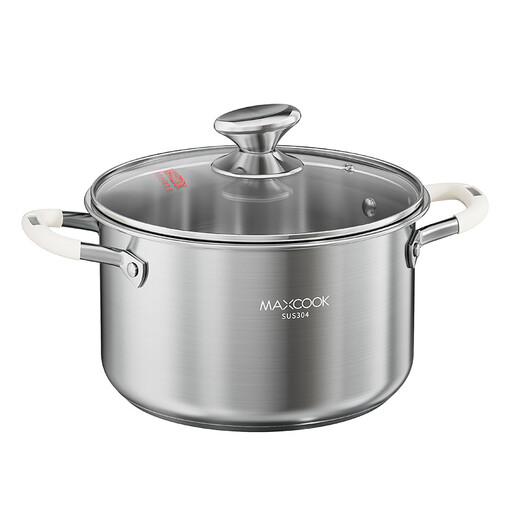
Why this product suits the profile: The 3,2-litre soup pot covers everyday tasks such as boiling, making soups and braising. According to the product information, it is suitable for induction, gas, electric and ceramic hobs.
The specific dimensions, capacity and compatible hob types are stated. This makes it easier to compare the size with your own household before buying.
304 stainless steel, glass lid and encapsulated base. According to the supplier, it should be washed by hand.
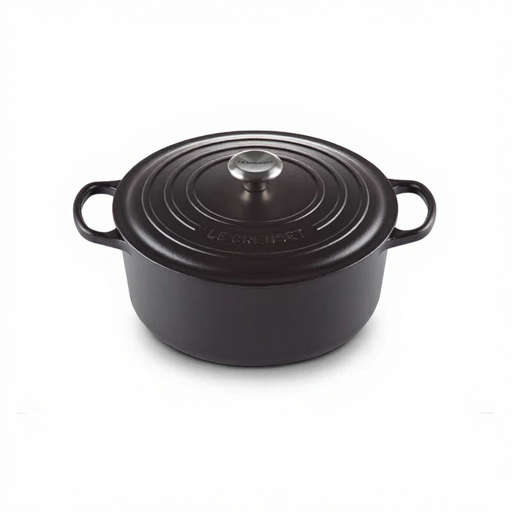
Why this product suits the profile: The enamelled cast-iron pot is designed for braising, roasting, baking bread and one-pot dishes. According to the product description, it is suitable for induction, gas, electric and ceramic hobs, as well as use in the oven.
The enamel coating means that pre-seasoning is not required. Nevertheless, sudden temperature changes and hard impacts should be avoided.
4,2 l capacity, lid and versatile hob and oven compatibility. The stated weight is 4,305 kg.
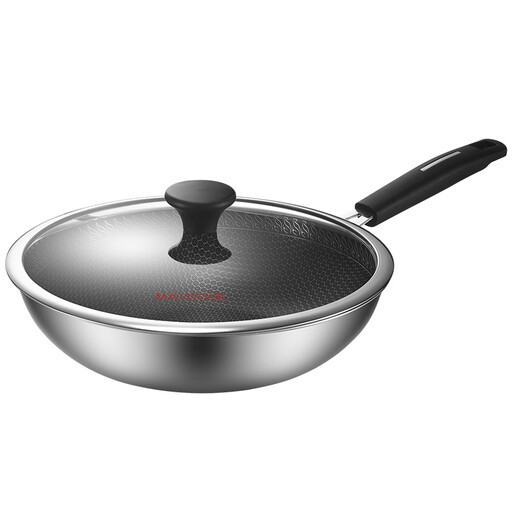
Why this product suits the profile: The 30-cm wok is aimed at households that frequently sauté, braise, boil or prepare larger portions. According to the product information, its three-layer construction and flat base are suitable for several hob types.
The details specify the diameter, material, compatible hob types and hand-wash care instructions. This makes the space required and cleaning effort clear.
304 stainless steel, ceramic non-stick coating, glass lid and 30-cm format. Suitable for induction, gas, electric and ceramic hobs.
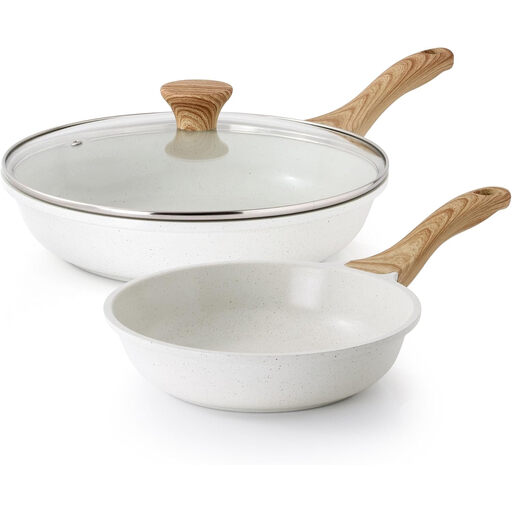
Why this product suits the profile: The set combines a small egg pan with a larger, covered frying pan. According to the manufacturer, the coating is free from intentionally added PFAS, PTFE, PFOA, PFOS, APEO, lead and cadmium.
The care instructions specify hand washing and non-abrasive kitchen utensils. This reduces the risk of damaging the ceramic surface through incorrect cleaning.
Two frying pans, glass lid and suitability for induction, gas and electric hobs. The stated maximum oven temperature is 550 °F.
Lifespan depends on more than just the material. A few basic rules apply to almost every type of product:
We have put together a complete, regularly updated list of products that fully meet these strict selection criteria and the safety regulations applicable in the EU.
Saucepans and frying pans with a magnetic base are suitable. Look for the “suitable for induction” label and compare the base diameter with the size of the cooking zone. Stainless steel only works on induction when the base is magnetic.
There is no single lifespan that applies in every case. It depends on the temperature, cleaning method, utensils used and frequency of use. Overheating, heating an empty pan, metal cutlery and abrasive sponges can damage the coating more quickly.
A Dutch oven made from enamelled cast iron can be used for soups, slow-cooked dishes, roasts and one-pot recipes. Because of its considerable weight and slow heating, it is particularly useful if you regularly prepare larger or slow-cooked meals. Heat-resistant oven gloves and gentle cleaning are essential.