
Lieferung heute & morgen

Qualitätsgarantie

Willkommens-Angebote freischalten: KOSTENLOSE Lieferung | Bis zu 80 % RABATT | Kostenlose 30-Tage-JoyPlus-Testphase
App herunterladen
When buying cookware, design is only part of the decision. What really matters is whether a frying pan, saucepan or wok suits your hob, cooking style and cleaning routine. A frying pan may not be suitable for induction, an inexpensive cookware set may contain more pieces than you need day to day, and a coated pan can lose its performance more quickly if used incorrectly.
This buying guide helps you avoid common purchasing mistakes and choose suitable products for frying, boiling, braising and grilling.
“Suitable for all hob types” is only genuinely useful when the product description provides specific information about induction, gas, electric and ceramic hobs. Induction cookware must react magnetically and sit flat on the cooking surface. A base that is too small or uneven can impair heat transfer.
Stability is also important on gas hobs. A wok with a round base may require a suitable support ring, while a flat base is generally easier to use.
A non-stick coating can reduce food sticking, but it is not automatically suitable for high temperatures or metal utensils. Low to medium heat, soft kitchen utensils and hand washing are often gentler ways to use these products. Information such as “PFOA-free” refers to specific substances and does not replace checking the rest of the product information.
A stainless-steel frying pan or wok does not have a conventional non-stick coating. Instead, using the right preheating technique and a suitable film of oil is more important. With a cast-iron frying pan or casserole, you need to take its weight, slow heating and surface care into account.
A 24 cm frying pan is often suitable for smaller portions, while a 28 cm pan provides more space for family meals. A large saucepan is useful for soups and pasta, but requires more storage space and water. Cast-iron products are also heavier in themselves.
Before buying, you should therefore compare the diameter, capacity, weight and handle design with the storage space available and the size of your hob.
Induction cookware should be explicitly labelled as suitable for induction. For use with several hob types, a flat, encapsulated or multi-layer base is practical because it makes cooking on gas, electric and ceramic hobs easier. With ovenproof cookware, you must also check whether the stated temperature applies to the entire item or whether handles, lids and accessories need to be removed.
Dishwasher suitability cannot be assessed in the same way for every material. Stainless steel is often easy to care for, while non-stick pans and cast-iron products may retain their surface properties for longer when washed by hand. With cookware sets featuring removable handles, check the locking mechanism, clean the connections carefully and make sure the set can be handled safely before every use.
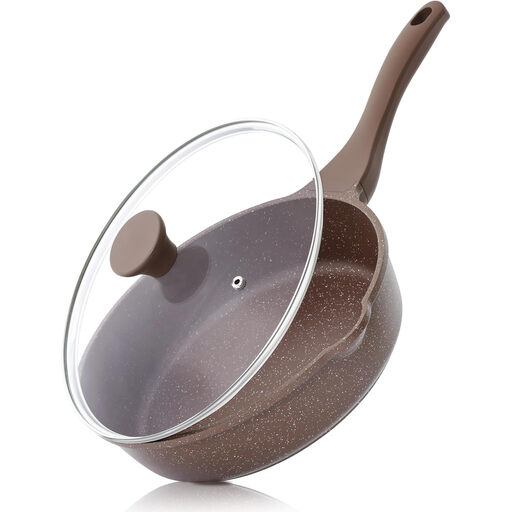
Why this product suits this profile: The deep aluminium frying pan with lid is designed for sautéing, frying, boiling and one-pan dishes. It is specified as suitable for gas, electric and induction hobs.
The product information specifies the coating features, hob compatibility and a hand-washing recommendation. Metal utensils should be avoided.
3.5-quart capacity, glass lid and ergonomic handle; according to the product information, free from PFOA, PFOS, lead and cadmium.

Why this product suits this profile: The set combines a cocotte, braising pan and cast-iron frying pan. It is aimed at households that regularly braise, fry and continue cooking dishes in the oven.
The product data specifies use up to 260 °C and suitability for gas, electric and induction hobs. Its considerable weight should be taken into account before buying.
Cast iron retains heat; the three pieces can be used for braising, frying, steaming and baking.
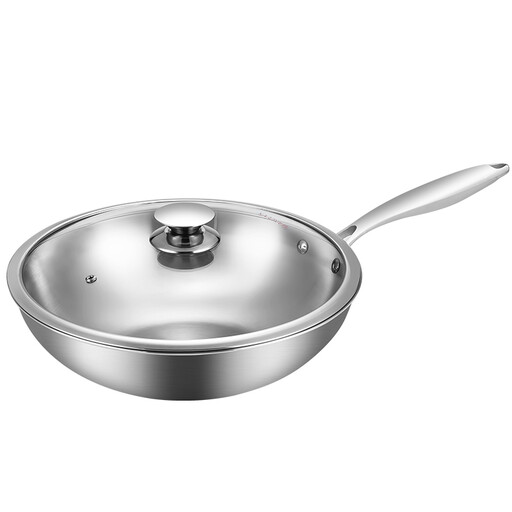
Why this product suits this profile: The flat stainless-steel wok without a non-stick coating is suitable for stir-fries, high-heat searing and everyday use on gas, induction, electric and ceramic hobs.
As there is no coating, there is no need to worry about coating damage. Preheating, adding cold oil and using low to medium heat can help prevent food from sticking.
304 stainless steel, encapsulated bonded base and glass lid; according to the product information, dishwasher-safe.

Why this product suits this profile: The set brings together several saucepans and frying pans, glass lids, kitchen utensils and removable handles. It can provide a basic set-up for households with several daily cooking tasks.
The pieces are specified as suitable for induction, gas and electric hobs. Before buying, check whether not being suitable for oven use is acceptable for your household.
13 pieces, stackable design thanks to the removable handles and, according to the product information, a coating free from PFOA, PFOS, lead and cadmium.
We have put together a complete, regularly updated list of products that fully meet these strict selection criteria and the safety regulations applicable in the EU.
Cookware that is explicitly labelled as induction-compatible and has a magnetic, preferably flat base is suitable. The manufacturer’s specification should apply to each individual piece, particularly with sets containing different frying pans and saucepans.
Its service life depends on the quality of the coating, temperature, utensils and cleaning method. Medium heat, hand washing and suitable kitchen utensils can help protect the surface. The pan should be replaced if there is visible flaking, serious damage or deformation.
Stainless steel is generally easy to care for, but incorrect temperatures or hard water can cause marks. White deposits can often be removed with a little vinegar or lemon juice. The surface should then be rinsed thoroughly and dried.