
Lieferung heute & morgen

Qualitätsgarantie

Willkommens-Angebote freischalten: KOSTENLOSE Lieferung | Bis zu 80 % RABATT | Kostenlose 30-Tage-JoyPlus-Testphase
App herunterladen
A 24 cm stainless steel stockpot with lid is a useful size for many households: it’s ideal for soups, stews, pasta, porridge and family meals for around three to five people. However, bold product claims don’t automatically mean you’re making the right choice. What matters is the material, the base construction, hob compatibility and how easy the pot is to clean day to day.
The term 304 stainless steel describes a commonly used grade of stainless steel for products that come into contact with food. It can indicate good corrosion resistance, but it’s still important to look at the overall construction. Also check:
A 304 stainless steel cooking pot with an uncoated interior is different to an aluminium pot with a non-stick coating, both in terms of care and use.
A pot should be clearly stated as suitable for induction, gas and ceramic hobs. Induction requires a magnetic base. A simple magnet test can give you an indication, but it doesn’t replace the manufacturer’s specifications.
The size of the cooking zone matters too: a 24 cm pot may heat up more slowly and less evenly on a much smaller induction zone. Ideally, the base should sit flat and match the size of the cooking zone.
A dishwasher-safe stainless steel stockpot can go in the dishwasher, but harsh detergents, high temperatures and salt residue can affect the stainless steel surface or an exterior coating over time. For a pot with a ceramic exterior coating, a gentle dishwasher cycle or hand-washing with a soft sponge is usually kinder to the material.
An uncoated stainless steel interior is practical for everyday use, as there’s no non-stick coating to flake off. Stainless steel can become discoloured by salt, starch or hard water. White or rainbow-coloured marks are often deposits or changes caused by heat, rather than a material defect. Gentle cleaning with a suitable stainless steel cleaner or a little vinegar can help.
For a product labelled “304 stainless steel”, check the details for the pot body, lid, base and handles separately. Silicone, glass and stainless steel all have different care requirements.
A multi-layer or encapsulated base usually distributes heat more evenly than a very thin, single-layer base. Good heat retention is useful for soups and stews, while the hob’s power and the contact between the base and cooking surface remain important when bringing food to the boil.
A cooking pot for induction and gas should have a flat base. On a gas hob, the flame shouldn’t extend beyond the base of the pot. This reduces unnecessary heat around the sides and helps protect the handles and exterior.
An induction pot with a glass lid lets you keep an eye on your food without lifting the lid too often. A stainless steel rim can provide extra protection around the glass lid. The lid should still fit securely, as escaping steam can cause scalds.
A 24 cm pot is a popular size for three to five people. However, its actual capacity depends on its height and shape. A tall pot is handy for soups and pasta, while a wider body can be useful for reducing sauces.
Stainless steel pots with silicone handles are often more comfortable to hold during longer cooking sessions. However, silicone isn’t automatically oven-safe. Check the manufacturer’s temperature limits before using the pot in the oven.
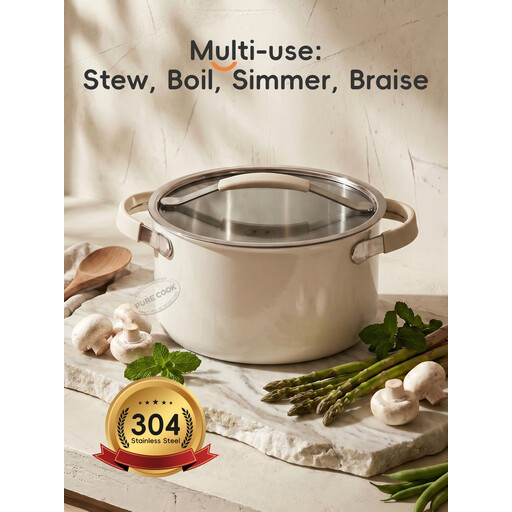
Why this product suits this profile: This 24 cm pot is designed for everyday family meals and, according to the product description, is suitable for induction, gas and ceramic hobs.
The materials list specifies 304 stainless steel, a magnetic composite base and a glass lid. This makes the key details you need to know easy to check.
24 cm diameter, uncoated interior, glass lid and heat-insulating silicone covers on the handles.
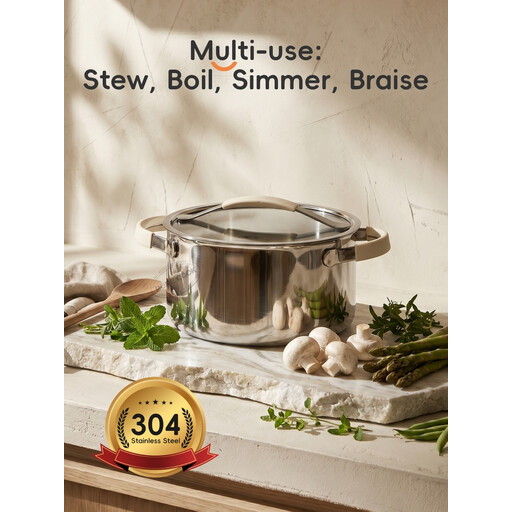
Why this product suits this profile: Its stated capacity of 5.3 litres gives you plenty of room for larger portions of soup and stew for the family.
The product description sets out the base construction, compatible hob types and individual materials, rather than relying on a general size claim.
5.3 L capacity, 24 cm size, composite base and glass lid with a stainless steel rim, according to the seller.
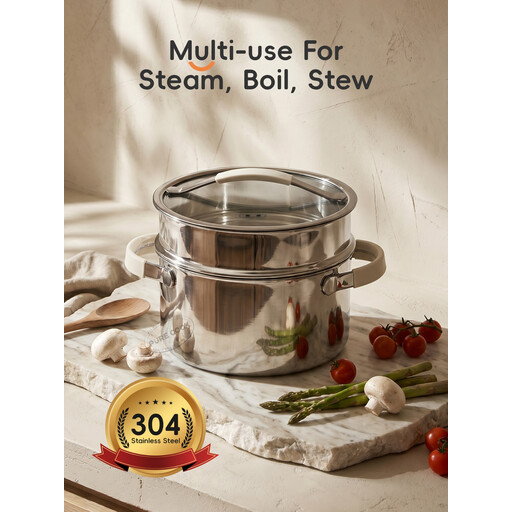
Why this product suits this profile: Its two-part design combines a stockpot with a removable steamer insert, making it a versatile choice for households that cook a wide range of meals.
The product contents list the pot, steamer insert and glass lid separately. So you can see that this is more than just a standard stockpot.
Two tiers for steaming and simmering, a 24 cm opening, glass lid and suitability for gas, induction and ceramic hobs, according to the product details.
We’ve put together a complete, regularly updated list of products that meet these strict selection criteria and fully comply with the safety regulations in force in the EU.
It depends on the pot’s height and capacity. Models with a capacity of around five litres are often big enough for three to five people when making soups, pasta and stews. For very large portions or batch cooking, check the stated capacity in litres as well as the diameter.
Yes, as long as the base is magnetic and the manufacturer states that it’s suitable for induction. A cooking pot for induction and gas should also sit flat on the hob. If you’re unsure, a magnet test on the base can give you a first indication.
It isn’t possible to give a reliable guarantee of a specific lifespan. It depends on the thickness of the base, how the handles are attached, the quality of the lid, how often you use the pot and how you care for it. An uncoated interior is less prone to the typical damage that affects coated surfaces, but exterior coatings and silicone parts still need to be cleaned in a way that’s suitable for their materials.