
Lieferung heute & morgen

Qualitätsgarantie

Willkommens-Angebote freischalten: KOSTENLOSE Lieferung | Bis zu 80 % RABATT | Kostenlose 30-Tage-JoyPlus-Testphase
App herunterladen
A cookware set can make equipping your kitchen easier when the pots, pans and lids are designed to work well together. But unclear size information, vague claims about coatings and a lack of guidance on hob or oven use can often lead to the wrong purchase. Whether you’re a keen home cook, part of a family or couple, or living alone, it’s worth checking the technical details rather than relying on marketing terms.
A large pot set isn’t automatically versatile. What matters is whether the diameters and capacities suit your household. Someone living alone will usually need different sizes from a family that regularly cooks pasta, soups or casseroles. Small pots are handy for sauces and single portions, while a large cooking pot is useful for preparing several portions at once.
Look for specific capacities such as 1.5 litres, 3 litres or 5 litres, and check whether lids can be used with more than one piece. A space-saving cooking pot set with stackable components may also be more useful than a larger set with specialist pieces you’ll rarely use.
For an induction pot set, the base must be magnetic. The product details should explicitly confirm that “suitable for all hob types” includes gas, electric, ceramic and induction hobs. The size of the pot base matters too: if it’s much smaller than the induction zone, the pot may not heat evenly.
If you’d like to move your cookware from the hob to the oven, check that the pot body, lid and handles are oven-safe. The maximum temperature may vary between components.
Coated cookware can help prevent food from sticking and make cleaning easier. However, a coating isn’t necessarily suitable for high temperatures, metal utensils or the dishwasher. For ceramic coatings, follow the manufacturer’s specific care instructions.
An uncoated stainless steel pot set is generally versatile and durable, but getting the temperature and amount of fat right is important when searing food. Cast iron cookware retains heat for a long time, but is considerably heavier and should be left to cool slowly to help prevent stress in the material.
Stainless steel 18/10 is often used for robust, hygienic, uncoated pots. A multi-layer base with an aluminium core can help distribute heat. Cast iron, on the other hand, is valued for its heat retention. Aluminium is lightweight and heats up quickly, but may need a suitable coating or surface treatment, depending on its construction.
It’s not just the material of the pot body that matters: check whether the handles, lids and coating are heat-resistant too. Rivets, silicone coverings and plastic parts may have different temperature limits.
For everyday use, the cookware’s compatibility with your hob should be clearly stated. An induction pot set will usually also work on electric and ceramic hobs, provided the manufacturer confirms this. For oven use, look for a specific temperature rating, such as 180 °C, 210 °C or 250 °C.
Take extra care with glass lids: don’t put hot parts straight into cold water. Metal handles can become very hot in the oven, even if they stay relatively cool on the hob.
Dishwasher-safe cookware can make cleaning easier, but polished surfaces, coatings and enamel may change in appearance over time. That’s why some manufacturers recommend hand-washing, even when their cookware is dishwasher-safe.
Useful details include wide pouring rims, internal measurement markings, stackable shapes and lids with built-in straining holes. Compact mini pots are particularly useful for small kitchens or households of one. For camping, a small packed size is more important: camping cookware with nesting pieces saves space in your rucksack or campervan.
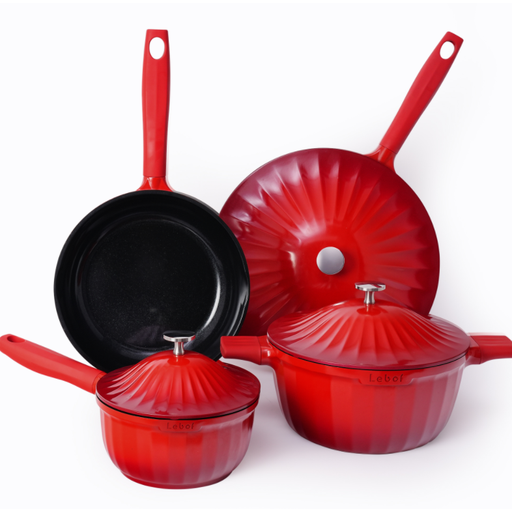
Why it suits this profile: This 7-piece set combines two frying pans, two lidded pots and a Dutch oven. It’s a good choice for households looking to cover a range of cooking tasks with one set.
The product details explicitly state that the set is compatible with induction and other hob types. They also make clear that it isn’t oven-safe – an important point to know before you buy.
Ti-ceramic coating that’s free from PFAS, PFOA and PTFE, according to the product details; dishwasher-safe and supplied with pots in several sizes.
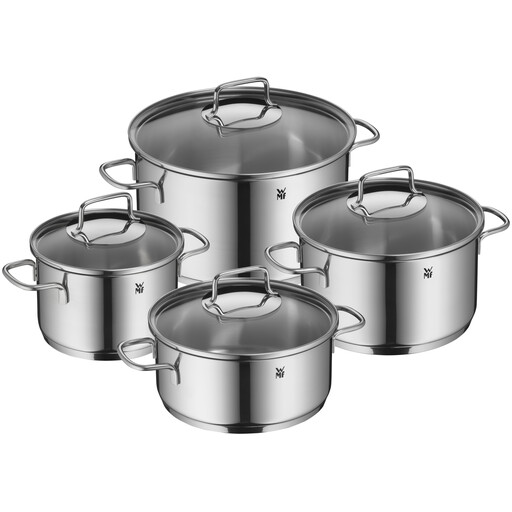
Why it suits this profile: With three cooking pots and a frying pan, this stainless steel set covers everyday tasks, from heating small amounts to preparing larger meals.
The product details list hob compatibility, dishwasher suitability and oven temperatures separately. The pots are rated up to 250 °C and the lids up to 180 °C.
18/10 Cromargan stainless steel, TransTherm base and glass lids, with capacities from 1.9 to 5.7 litres, according to the manufacturer.
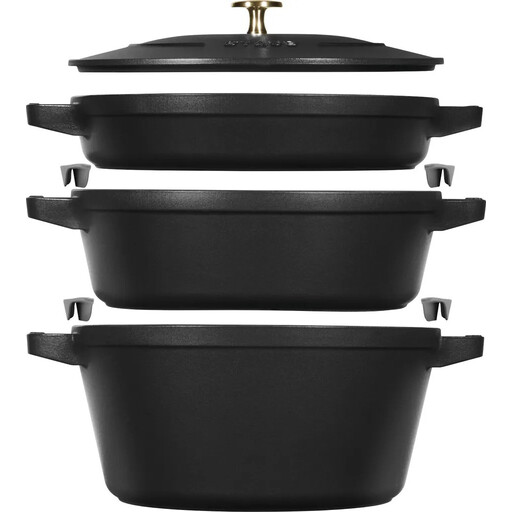
Why it suits this profile: This enamelled cast iron set is aimed at cooks who regularly braise, sear and prepare oven dishes, and are happy to work with heavier cookware.
The technical details state that the set weighs around 10 kg. You’ll know before buying that lifting and washing it regularly will take more effort.
Suitable for all hob types, including induction, and oven-safe. It’s also dishwasher-safe, although hand-washing is recommended to protect the enamel.
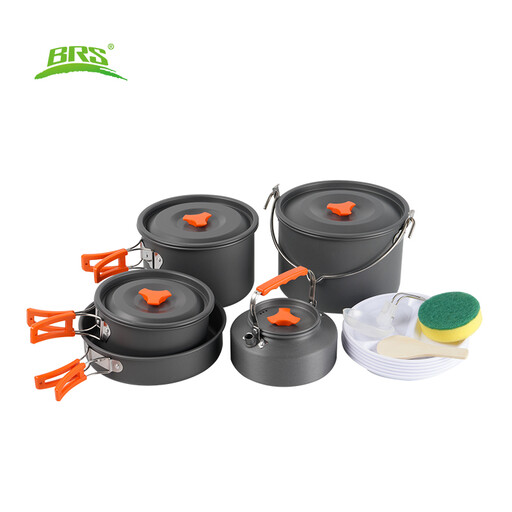
Why it suits this profile: Designed for outdoor meals, road trips and picnics, this nesting camping cookware set includes several pots, a frying pan and a water bottle.
The set is specifically designed to pack away compactly. The safety information also warns that handles can get hot and that it should be used on stable, well-ventilated cooking surfaces.
Specially treated aluminium, a nesting design and a range of pieces for frying, stir-frying, boiling and braising, according to the product description.
We’ve put together a comprehensive, regularly updated list of products that meet these strict selection criteria and fully comply with the safety regulations in force in the EU.
A suitable induction pot set should be explicitly described as induction-compatible in the product details. For stainless steel, the base must be magnetic. Many sets designed for induction will also work on gas, electric and ceramic hobs, but you should check that this is confirmed.
How long it lasts depends on the material, construction, temperature and care. Stainless steel and enamelled cast iron can last a long time when used correctly. Coatings may be more sensitive to high temperatures, sharp-edged kitchen utensils and abrasive cleaners. Always follow the manufacturer’s instructions for the specific product.
Being dishwasher-safe makes cleaning easier, but it doesn’t mean you can ignore the care instructions. Polished stainless steel, enamel and coatings may be affected visually by harsh detergents or frequent dishwasher cycles. Let pots and lids cool before washing, and avoid steel wool or scouring products on delicate surfaces.