
Lieferung heute & morgen

Qualitätsgarantie

Willkommens-Angebote freischalten: KOSTENLOSE Lieferung | Bis zu 80 % RABATT | Kostenlose 30-Tage-JoyPlus-Testphase
App herunterladen
Warm summer nights can significantly disrupt sleep. The feeling of overheating or sweating under a standard blanket often leads to restless nights and fatigue the next day. A cooling blanket is designed to address this exact problem. It uses special materials and technologies to dissipate body heat, creating a drier and more comfortable sleeping environment.
This article serves as a guide. It explains how a cooling blanket works, outlines key selection criteria, and presents a selection of models with different features to help you make an informed decision.
Choosing the right blanket depends on your individual needs. The following criteria will help you objectively compare the features of different products.
The core feature of a self-cooling blanket is its ability to absorb and dissipate heat. This is often quantified by the Q-Max value, which measures the instant cool-to-the-touch sensation upon skin contact.
Look for this specification in product descriptions to objectively assess the cooling performance.
Many cooling blankets feature a dual-sided design to extend their use beyond the summer months:
This versatility makes the blanket a practical lightweight summer blanket that can also be used in spring or autumn. The construction, such as the type of stitching, is also relevant as it prevents any filling from shifting and becoming unevenly distributed.
Technical fibres often require special care to maintain their function and longevity. Always check the manufacturer's care instructions before purchasing.
Here is a selection of products that cater to various requirements—from high cooling performance to traditional comfort.

Why It Stands Out: This model combines high cooling performance with a thoughtful design. The specified Q-Max value of over 0.45 signals a strong, immediate cooling effect.
Pros:
Who It's For: Individuals who are prone to overheating and are looking for an effective blanket for night sweats with maximum cooling power.
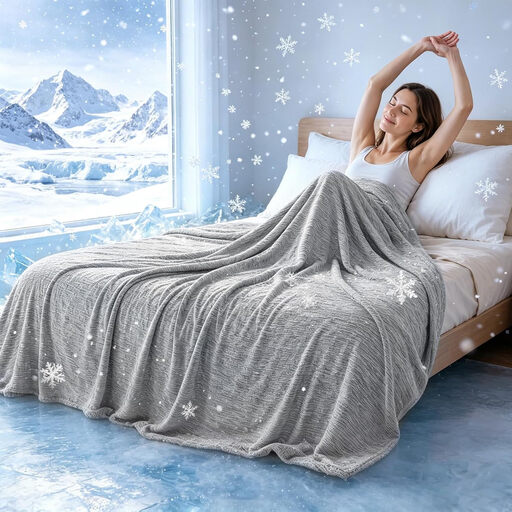
Why It Stands Out: This blanket also boasts a high Q-Max value of over 0.45 and is specifically designed to wick away moisture. Its silky texture and low weight make it particularly versatile.
Pros:
Who It's For: Users looking for a very lightweight, self-cooling blanket with a silky feel that provides cooling comfort both at home and while travelling.

Why It Stands Out: This model is not a technical cooling blanket but a classic, soft flannel blanket. It offers an alternative for those who don't need active cooling but prefer a lightweight yet cozy blanket for cooler summer evenings or air-conditioned rooms.
Pros:
Who It's For: People looking for a traditional, very soft, and lightweight summer blanket who do not require an active cooling effect. Ideal for cozy hours on the sofa or as an extra layer on nights that aren't too hot.
The selection presented here covers specific use cases. If you are looking for other materials, sizes, or designs that better suit your personal preferences, it's worth exploring a wider range.
Discover more models in our lightweight quilts category.
A cooling blanket doesn't actively generate cold. Instead, it uses materials with high thermal conductivity. These fabrics, often featuring technologies like Arc-Chill, absorb body heat more quickly and conduct it away from the skin. At the same time, they are breathable and promote moisture-wicking (sweat). The result is a lasting cooler and drier sensation on the skin.
The Q-Max value is a metric for the "Instant Cool Sensation"—the immediate feeling of coolness when a fabric touches the skin. The higher the value, the stronger this initial cooling effect. A value of Q-Max > 0.4 is generally considered clearly noticeable and is a good indicator of effective cooling performance.
Yes, many models are designed for it. Dual-sided blankets offer a cooling side for summer and a warmer side (e.g., made of cotton or microfibre) for transitional seasons like spring and autumn. In winter, it may not be warm enough on its own, but it can be used as a bottom layer in combination with a warmer blanket to reduce night sweats.