To store voice recordings without using the cloud, choose a USB stick with a connection, file system and file access that work with both your source and destination devices. Base the capacity on your existing files and planned recordings. An extra local copy is no substitute for the original or for checking the transferred files. If your recordings are confidential, also plan for encryption that works on the devices you need to use.
Who is a USB stick suitable for?
Learners with recordings on multiple devices
If you want to move audio files between your phone and computer without using the cloud, check the available connections and file access on your mobile device. Apple Support lists file system and partitioning requirements for using external storage with an iPhone.
Learners building a local archive of recordings
If you want to keep a local copy of your recordings as well as the original and open them again later, choose a capacity that suits your existing collection and the new files you plan to add. Germany’s Federal Office for Information Security lists USB sticks as a possible personal backup medium and points out that storage media have a limited lifespan.
People with confidential conversation recordings
If you’re carrying recordings that include other people’s voices, plan how to restrict access and consider the recording and its use separately. Germany’s Federal Commissioner for Data Protection and Freedom of Information describes encryption as an important safeguard for portable storage devices.
What should you look for when buying?
| What you need |
What to check before buying |
Who is this especially relevant to? |
| Keeping a local copy |
Germany’s Federal Office for Information Security lists USB sticks as a possible personal backup medium. Keep the original, open a few files from the copy to check them, and store another copy separately. |
If I want to keep my recordings and open them again later, a backup I can check is my top priority. Around 33% of consumers share this main concern. |
| Connecting devices |
Check the connections and file access on both devices. Apple Support lists file system and single data partition requirements for external storage on an iPhone. |
If you want to transfer recordings directly between a phone and computer, check that both devices are compatible. Around 27% of consumers put device compatibility first. |
| Keeping files confidential on the move |
Check how you can encrypt and unlock files on all the devices you need to use. Germany’s Federal Commissioner for Data Protection and Freedom of Information highlights encryption as an important safeguard when carrying portable storage devices. |
If my recordings contain confidential material and I’m taking the stick with me, I need access protection that works on my devices. Around 20% of consumers put confidentiality first. |
| Capacity and transfer time |
Compare the size of your recordings folder with the capacity and leave room for new files. If you transfer files frequently, check the write speed of the exact model rather than relying on its read speed alone. |
If you’re storing a growing collection or regularly copying larger files, consider the space you need and write performance together. Around 20% of consumers put storage needs and transfer time first. |
Common buying and usage mistakes
-
Using the USB stick as your only copy
Germany’s Federal Office for Information Security points out that storage media have a limited lifespan. If the stick is damaged or lost, any recordings stored only on it could be lost.
Keep the original, store another copy separately and try opening files after copying them.
If the stick is damaged or lost, you may have to obtain or make the recordings again.
-
Assuming a dual connector guarantees mobile device compatibility
Having two types of connector doesn’t guarantee that your phone, recording device or app can access the files. Transcend specifically states that USB-OTG support is required to use the JetFlash 930C with mobile devices; external storage on an iPhone also has additional requirements.
Before choosing a stick, check the connections, file access and file system on the devices you’ll actually use to transfer files.
Depending on the device connection, you may need a suitable adapter or another way to transfer files.
-
Using the read speed to estimate transfer time
A stated read speed doesn’t tell you how quickly recordings will be written to the stick. F.A.Z. Kaufkompass lists different performance figures for different capacity variants.
If you transfer files frequently, check the write speed of the exact variant and the connection on the computer you’ll use.
-
Assuming that avoiding the cloud protects your files
Storing recordings locally doesn’t automatically protect confidential files from access if the stick is lost. Germany’s Federal Commissioner for Data Protection and Freedom of Information describes encryption as an important safeguard for portable storage devices.
For sensitive recordings, plan to use encryption that works on the devices you need, and store another copy separately.
If an unprotected stick is lost, confidential material could be exposed.
Brands to consider
Kingston
The DataTraveler Exodia S is a USB-A option for computers with a compatible port.
- Kingston lists capacities from 64 to 512 GB and USB 3.2 Gen 1 for the Exodia S range.
- The USB standard alone doesn’t tell you how long copying will take for each capacity.
SanDisk
The Ultra Dual Drive Go is designed for supported devices with USB-A and USB-C ports.
- SanDisk lists two connector types and a swivel design.
- A peak read speed listed for certain capacities is not a measured write speed or a guarantee for every transfer.
Transcend
According to the manufacturer, the JetFlash 930C offers USB-A and USB-C when you need both types of connection.
- Transcend lists peak speeds of up to 420 MB/s for reading and 400 MB/s for writing. These are manufacturer figures, not everyday speeds measured here.
- Transcend states that USB-OTG support is required for mobile devices; the two connectors can’t be used at the same time.
Verbatim
According to Verbatim, its dual USB stick with USB-C and USB-A is designed for local file transfers without a wireless connection.
- The product listing for the dual USB stick specifies 128 GB and two types of connection.
- The write speed of up to 25 MB/s listed for the Verbatim MyDual applies to that different model and can’t be assumed for the dual USB stick.
Hama
The 64 GB Classic is a USB-A option for computers with a compatible port.
- For item 00181053, Hama lists 64 GB and a read speed of 70 MB/s when used with a suitable USB 3.2 Gen 1 interface.
- The stated read speed doesn’t confirm a similar write speed.
Joybuy products
The products below include USB sticks for local file transfers, with a range of connection types and capacities. Before buying, check that the connections and features suit your devices.
 No image available
Kexin 2-in-1 USB stick, 2 × 32 GB, USB 2.0, USB-A and USB-C, pack of 2
For transferring files between devices with USB-A and USB-C ports. For mobile devices, also check for OTG support and file access.
The product title specifies two sticks, each with 32 GB, and USB 2.0.
Joybuy
 No image available
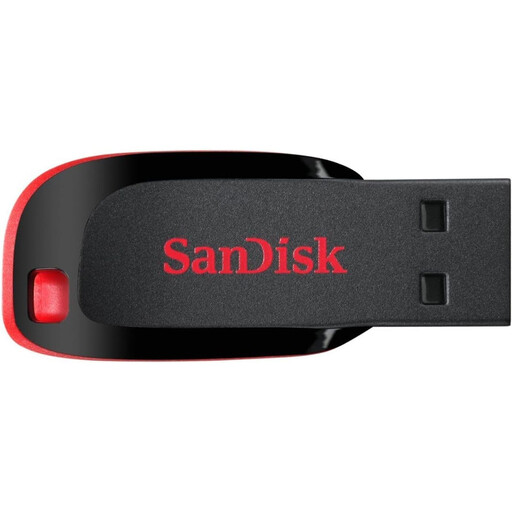
SanDisk Cruzer Blade SDCZ50-032G-B35, 32 GB, USB 2.0
For storing voice files locally. Before buying, check that the connection and file access work with your devices.
The product title specifies 32 GB and USB 2.0.
Joybuy
 No image available
MOVESPEED YSUSP05-128GSR, 128 GB, USB 3.2 Gen 1 and USB-C
For transfers between supported devices when you need USB-A and USB-C. Check the ports on both devices.
The product title specifies 128 GB, USB 3.2 Gen 1 and a read speed of 570 MB/s. It doesn’t give a write speed.
Joybuy
 No image available
MOVESPEED YSUYC-256GSN, 256 GB, USB 3.2 Gen 1 and USB-C, silver
For local file transfers when the listed connection types and access protection are suitable for your devices.
The product title specifies fingerprint access and encryption, as well as read speeds of 550 MB/s and write speeds of 500 MB/s. According to the product information, encrypted data can’t be recovered if both the administrator password and fingerprint access fail.
Joybuy
 No image available
Lexar D40E LJDD40E128G-BNSNG, 128 GB, dual USB 3.2 Gen 1 and USB-C
For file transfers between supported devices. Check that the connections and file management features meet your needs.
The file encryption described uses security software. Check in advance that the software works with your devices.
Joybuy
Frequently asked questions
Can I copy recordings from my iPhone to a USB stick without using the cloud?
Yes, provided your iPhone recognises the external storage and the recording is in an app you can access. Apple Support lists requirements for external storage, including a single data partition and supported file systems such as exFAT. Check that your specific device meets these requirements.
How can I prevent files being corrupted when removing a USB stick in Windows?
Wait for the transfer to finish, then select “Safely Remove Hardware” before unplugging the USB drive. Microsoft recommends this to help prevent data loss. Afterward, try opening one of the copied recordings.
Do I need a cloud subscription for a local backup?
No. Germany’s Federal Office for Information Security lists USB sticks as one option for personal data backups. Keep the original and check that you can read the extra copy.
Am I allowed to copy voice recordings to a USB stick in Germany?
It depends on how the recording was made and what you intend to use it for. Section 53 of the German Copyright Act (UrhG) allows individual copies of protected works for private use, subject to certain conditions. Section 201 of the German Criminal Code (StGB) covers, among other things, the unauthorised recording of another person’s non-public spoken words and the use of a recording made in this way. A USB stick doesn’t give you the right to record or use recordings.


