
Lieferung heute & morgen

Qualitätsgarantie

Willkommens-Angebote freischalten: KOSTENLOSE Lieferung | Bis zu 80 % RABATT | Kostenlose 30-Tage-JoyPlus-Testphase
App herunterladen
A sudden loss of tire pressure is always inconvenient—whether on your morning commute, a long road trip, or a weekend bike ride. A cordless air compressor promises a quick and straightforward solution. However, the market is flooded with devices making bold promises. Many users discover after their purchase that their new gadget fails them at the critical moment.
As your Joybuy Product Recommendation Officer, I'm here to help you separate the wheat from the chaff. We'll highlight the three most common pitfalls that lead to a bad buy and show you which technical features truly matter.
Many marketing claims focus on high pressure ratings and compact designs. However, the real weaknesses only become apparent during practical use. Pay attention to these three points to avoid disappointment:
To avoid a bad purchase, you should focus on objective performance data. These three criteria are decisive for the functionality of a portable compressor.
The choice of power source depends directly on your use case.
As mentioned, the inflation speed (L/min) is more important than the maximum pressure. A good portable compressor for car tires should have an inflation speed of at least 15 L/min. Devices with 20 L/min or more offer a noticeable speed advantage. For an electric bike pump or inflating balls, this value is less critical. A maximum pressure of 8-10 bar (approx. 120-150 PSI) is more than sufficient for most applications (car, motorcycle, bicycle).
Modern devices are often more than just an air pump. These features offer real added value:
Based on the criteria above, we have identified a few models that represent a smart choice for specific user groups.
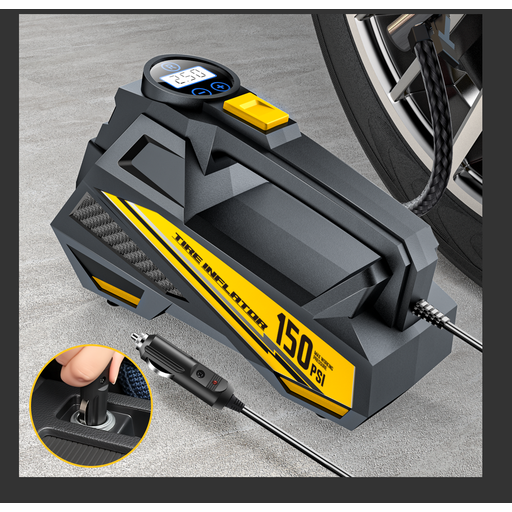
Why This Fits Their Persona: This model is a pragmatic choice for drivers who want a reliable emergency solution without paying for a battery they'll rarely use. It's easily stored in the trunk and ready for immediate use when needed.
By using a direct 12V connection, it completely bypasses the unreliable battery performance trap. Its power is consistent and not dependent on an ageing battery.
Unlimited runtime with the engine on; digital display with auto-shutoff function; often more affordable to purchase.
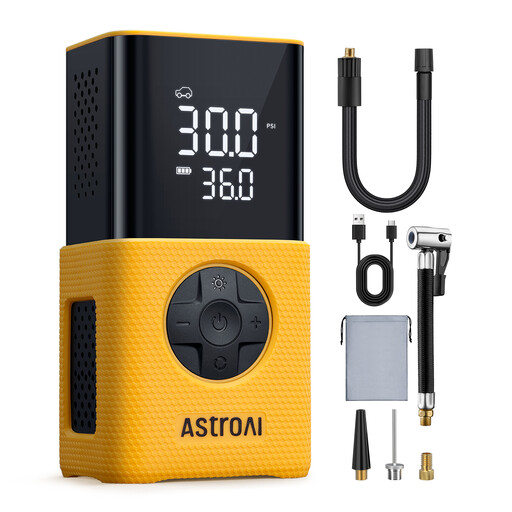
Why This Fits Their Persona: Perfect for tech-savvy users looking for a versatile device for their car, motorcycle, and bike. The combination of its compact size, battery operation, and power bank function makes it a practical companion for daily life and leisure.
With an inflation speed of 17 L/min (according to the manufacturer), it's one of the faster models in its class, avoiding the slow inflation speed trap. The 4000mAh battery provides solid capacity for multiple uses.
Good balance of portability and performance; integrated power bank function; 5 preset modes for easy operation.
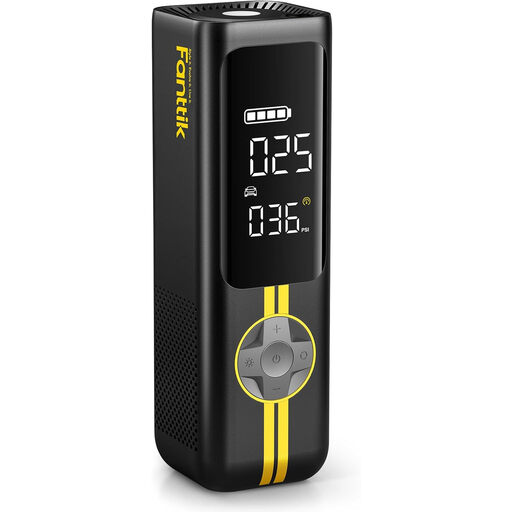
Why This Fits Their Persona: For campers, owners of multiple vehicles, or users who value high speed and endurance. This device is designed for frequent and demanding use, delivering convincing performance even with larger tires.
It addresses all three pitfalls: its high inflation speed (approx. 56 seconds for 28-33 PSI on a 26.3-inch tire, per Fanttik) and long battery life of up to 40 minutes of continuous operation set it apart. A cooling system also helps prevent overheating.
Very high inflation speed; long battery life for continuous use; can also be used as an emergency air source for pneumatic nailers, according to the manufacturer.
We've compiled a complete, up-to-date list of products that fully meet these strict selection criteria and safety regulations.
1. How accurate is the auto-shutoff feature on a cordless compressor? The accuracy varies depending on the quality of the sensor. For most brand-name models, the tolerance is around ±0.1 bar (±1.5 PSI), which is sufficiently precise for personal use. However, it's still advisable to occasionally check the pressure with a separate, calibrated tire pressure gauge, especially after using a new device for the first time.
2. Can I use a mini compressor to inflate the tires of an RV or truck? Generally, no. Most portable cordless compressors are designed for car, motorcycle, and bicycle tires. Tires on RVs, vans, or trucks often require significantly higher pressure and a much larger volume of air. Using an unsuitable mini compressor would cause the device to overheat and become damaged. Always check the manufacturer's specifications for compatibility.
3. How long does the battery of a portable compressor last, and how do I maintain it? The lifespan of a lithium-ion battery depends on charge cycles and storage conditions. Typically, they can handle several hundred charge cycles. To maximize lifespan, you should not store the battery completely discharged for long periods. Storing it at a 50-80% charge level in a cool, dry environment is ideal. Briefly charge the device every 2-3 months, even if it's not in use, to prevent deep discharge.