
Lieferung heute & morgen

Qualitätsgarantie

Willkommens-Angebote freischalten: KOSTENLOSE Lieferung | Bis zu 80 % RABATT | Kostenlose 30-Tage-JoyPlus-Testphase
App herunterladen
A flat tire never happens at a convenient time. Whether you're on your way to work, on the motorway, or on a weekend bike tour, relying on the nearest gas station or repair shop is often impractical and time-consuming. A cordless air compressor promises independence and peace of mind in these situations. However, the market is flooded with devices making bold claims. Before you make a purchase, it's crucial to understand the common pitfalls that often lead to disappointment and a useless device.
As a Joybuy Product Recommendation Officer, I analyse product data to provide you with objective, real-world guidance. This guide will help you distinguish marketing hype from genuine performance features and make an informed choice.
Many buyers regret their decision because they fell for exaggerated advertising claims. Pay special attention to these three points:
To avoid a bad purchase, you should focus on verifiable technical specifications. These three core parameters determine the real-world usability of a cordless compressor.
The maximum pressure, measured in Bar or PSI (Pounds per Square Inch), indicates the highest pressure to which a tire can be inflated. While a car tire typically requires 2.2 to 2.8 Bar, an electric bike pump for road bikes often needs up to 8 Bar.
Just as important is the airflow rate, measured in litres per minute (L/min). It determines how quickly the desired pressure is reached. A device with a high pressure rating but a low airflow rate (e.g., under 15 L/min) will take a very long time for a car tire. For an efficient cordless car tire inflator, a balanced ratio of both metrics is crucial.
The battery capacity, specified in milliampere-hours (mAh), determines the device's endurance. A higher capacity doesn't automatically mean more power, but it is a good indicator of how many tires you can inflate on a single charge. Look for manufacturer claims that describe performance in a concrete scenario (e.g., "inflates 4 car tires from 2.0 to 2.5 Bar").
A modern USB-C port is now standard and allows for flexible charging via power banks, laptops, or common power adapters. This increases flexibility compared to proprietary charging cables.
If you are considering a multi-function device, check its specifications carefully:
Instead of making a one-size-fits-all recommendation, we have identified models tailored to specific use cases.
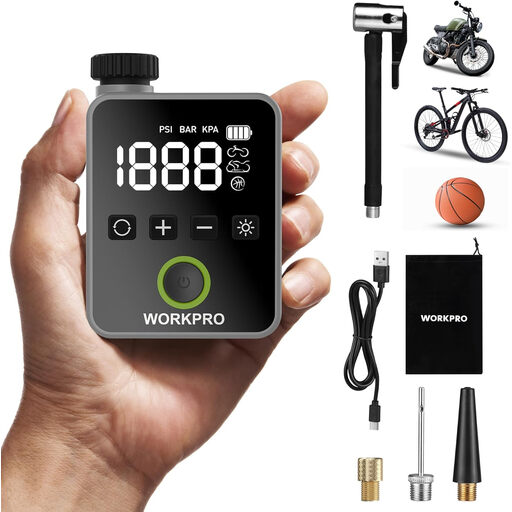
Why This Fits Their Persona: Ideal for cyclists or as an emergency backup in the glove compartment. Weighing just 270g and with a pocket-sized design, this mini-compressor is built for quick use on bicycles, balls, or for topping off car tires without adding bulk.
The device doesn't make unrealistic performance claims. It's clearly positioned as a compact solution, not for inflating large truck tires, thereby keeping performance expectations realistic.
Extremely lightweight and compact; doubles as a power bank; preset modes for easy operation.
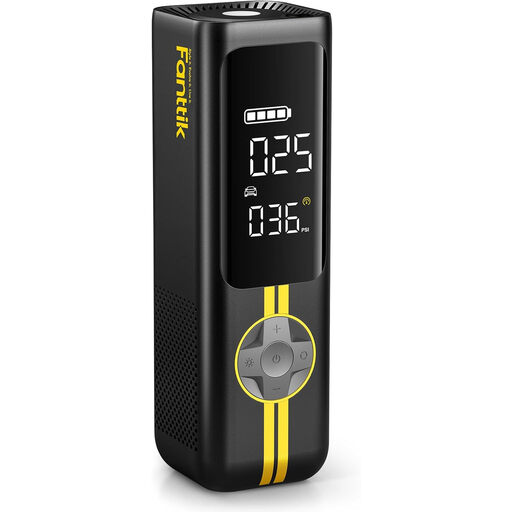
Why This Fits Their Persona: For drivers who value efficiency and reliability. This model offers a great balance of speed and battery performance for regular tire pressure checks and is powerful enough for emergencies with cars and SUVs.
Instead of vague promises, the manufacturer provides concrete performance data, such as inflating a tire from 28 to 33 PSI in 56 seconds. The specified 40-minute continuous runtime is a verifiable metric.
High inflation speed; long battery life for multiple uses; dual display for excellent readability even in sunlight.
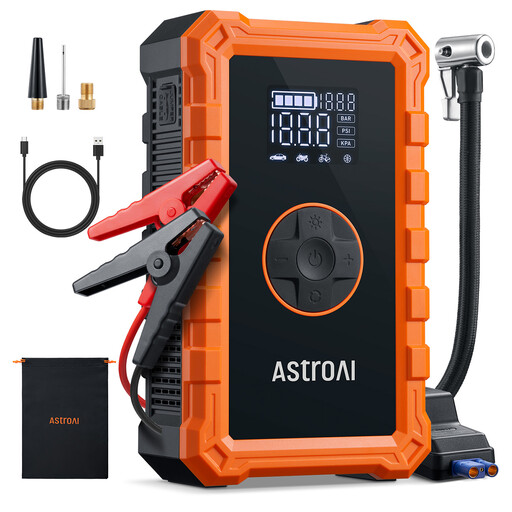
Why This Fits Their Persona: For users who want a single device for all contingencies. This model combines a powerful compressor with a full-fledged jump-starting function, making it the ideal companion for long trips and drivers of larger vehicles.
The jump-start function is clearly specified: 1500A peak current for gasoline engines up to 6.0L and diesel engines up to 3.0L. This distinguishes the device from weaker models and ensures a practical emergency function.
True all-in-one solution: Combines a powerful jump starter with a 150 PSI compressor; large, easy-to-read display.
We have compiled a complete, up-to-date list of products that fully meet these strict selection criteria and all relevant safety regulations.
Battery life heavily depends on the capacity (mAh) and usage. A good device should be able to inflate several car tires on a single charge. For long battery life, it's recommended to recharge it after use and avoid storing it completely discharged for extended periods. Self-discharge is low in modern lithium-ion batteries, so a charge can be maintained for several months.
Yes, most high-quality cordless compressors are capable of this. However, the process takes significantly longer than simply topping off the air. The time required depends on the compressor's airflow rate (L/min) and the tire size. A powerful model can inflate a standard car tire from 0 to the target pressure in about 5 to 10 minutes.
A dedicated cordless air compressor or a portable tire inflator is specialized solely for inflation. A jump starter with a compressor is a multi-function device that also includes clamps and the necessary power to jump-start a dead car battery. These units are typically larger and heavier but offer more comprehensive emergency preparedness. When choosing one, ensure it has a sufficiently high peak current (A) for your vehicle.