
Lieferung heute & morgen

Qualitätsgarantie

Willkommens-Angebote freischalten: KOSTENLOSE Lieferung | Bis zu 80 % RABATT | Kostenlose 30-Tage-JoyPlus-Testphase
App herunterladen
A flat tyre on the way to work or a tyre pressure warning light just before a long road trip—these are situations where a reliable cordless air compressor is worth its weight in gold. These portable helpers promise independence from the nearest petrol station and quick assistance in an emergency. But the market is flooded with devices making tempting claims that often don't hold up in practice.
As your Joybuy Product Recommendation Officer, I'm here to help you separate the wheat from the chaff. We'll highlight the most common pitfalls when buying and show you which technical specs really matter, so you can make an informed decision and not fall for exaggerated marketing.
Many buyers focus on the big numbers on the packaging, but this is where the most expensive mistakes are made. Two marketing traps are particularly common:
To avoid a bad purchase, you should focus on the parameters that determine practical performance.
As mentioned, maximum pressure isn't everything. The key metric for speed is the air delivery rate, often listed in litres per minute (L/min).
A good device offers a balanced combination of sufficient pressure for all common applications and a solid air delivery rate for swift inflation.
The battery performance determines how many times you can use the compressor before it needs to be plugged in again.
Modern cordless compressors are more than just pumps. Smart features significantly enhance safety and convenience.
Instead of making a blanket recommendation, we have selected models that suit different user profiles.
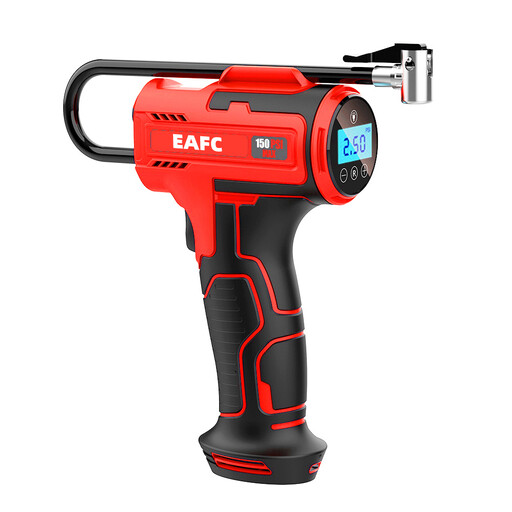
Why it's a match: Ideal for drivers looking for a straightforward and budget-friendly solution for regular tyre pressure checks and minor emergencies. The 4000 mAh battery (2x 2000 mAh) is sufficient for occasionally topping up car or bike tyres.
It delivers a clear function without exaggerated promises. The combination of 150 PSI and a 4000 mAh battery is a balanced foundation for standard applications, avoiding the trap of devices with underpowered batteries.
Cordless flexibility and an integrated LED light for use in the dark at an accessible price point.
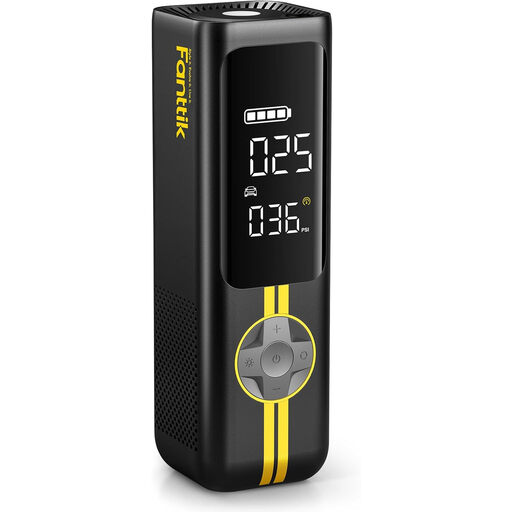
Why it's a match: Perfect for commuters or professional drivers for whom time and reliability are critical. According to the manufacturer, its high inflation speed and long continuous runtime of up to 40 minutes minimise downtime.
Directly addresses the weakness of slow devices. While many models only advertise pressure, this unit delivers a high air delivery rate that significantly speeds up car tyre inflation, thus bypassing the "empty promises" trap.
Very fast inflation time and a cooling feature that, according to the manufacturer, allows for longer, uninterrupted operation.
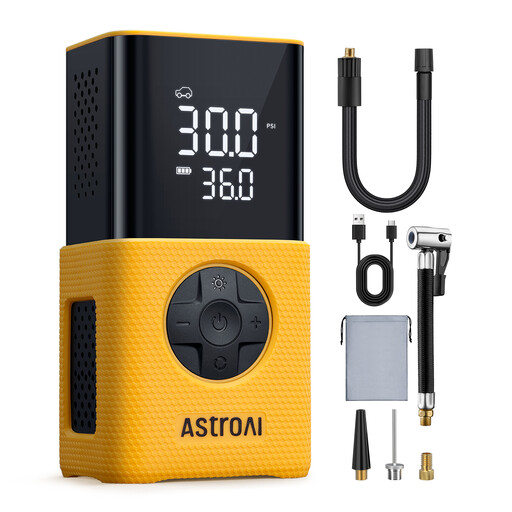
Why it's a match: Weighing just 460g and featuring compact dimensions, it's the ideal companion for bike tours, camping, or stowing in motorcycle luggage. The power bank function offers added utility far from any power outlet.
It escapes the trap of bulky and unwieldy devices. The design prioritises portability without compromising on core features like a 4000 mAh battery and 150 PSI pressure.
Extremely lightweight and compact, combined with a useful power bank function via its USB port.
We have compiled a comprehensive, up-to-date list of products that fully meet these strict selection criteria and relevant safety standards.
Performance varies greatly depending on battery capacity, tyre size, and the pressure difference. A mid-range model with around 4000-6000 mAh can typically top up four to five car tyres by a few PSI or fully inflate several bicycle tyres. More powerful models with over 7000 mAh can, according to manufacturers, also inflate a completely flat car tyre.
Yes, most models can handle it, but it's a challenge. Inflating a completely flat car tyre can take 10 to 20 minutes, depending on the device's air delivery rate, and may completely drain the battery. They are an emergency solution for such cases. Their real strength lies in regular tyre pressure correction and fixing minor pressure losses.
The accuracy of the built-in digital gauges can vary. On high-quality devices, the deviation is usually small (often under 0.1 bar / 1.5 PSI). It's good practice to initially check the pressure displayed by the compressor against a separate, calibrated tyre pressure gauge. The auto-shutoff feature is directly dependent on the accuracy of this sensor, which is why choosing a model from a reputable manufacturer is a smart move.