
Lieferung heute & morgen

Qualitätsgarantie

Willkommens-Angebote freischalten: KOSTENLOSE Lieferung | Bis zu 80 % RABATT | Kostenlose 30-Tage-JoyPlus-Testphase
App herunterladen
A flat tire is never convenient. Whether you're on your way to work, out on a bike ride, or on a camping trip, a reliable cordless compressor can resolve the situation quickly and easily. But the market is flooded with devices whose performance claims often don't hold up in practice. Many buyers invest in an electric air pump only to have it fail when they need it most.
This guide will walk you through the most common pitfalls and highlight the key technical features you should look for to make an informed decision. We'll focus on the objective parameters that define a quality device.
To avoid a bad purchase, you should focus on three verifiable core specifications. These determine the actual performance and reliability of your electric car tire pump or electric bike pump.
The maximum pressure (rated in Bar or PSI) indicates the highest pressure a tire can be inflated to. A typical car tire requires about 2.5 bar, while a road bike tire might need up to 8 bar. Just as important is the airflow rate (measured in Liters Per Minute, L/Min). This determines how quickly the target pressure is reached.
Battery capacity determines its mobile runtime. A cordless tire inflator should provide enough power for multiple uses.
Modern cordless compressors are more than just pumps. Features that enhance user convenience and safety are crucial.
Based on these objective criteria, we have compiled a selection of devices suitable for different user profiles.

Why This Fits Their Persona: Ideal for drivers who value speed and reliability. The high airflow rate and large battery make regular tire pressure checks and emergency inflation fast and hassle-free.
With a stated airflow of 35 L/Min and a 7500 mAh battery, this device sidesteps empty performance claims. It delivers the power needed to inflate even larger car tires quickly without the battery giving out immediately.
High inflation speed; Large battery capacity with power bank function; 4 preset modes for easy operation.
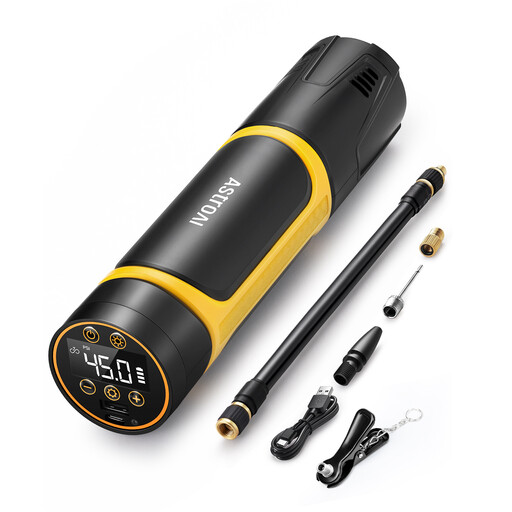
Why This Fits Their Persona: Designed for mobile use on bike or motorcycle tours. Its compact design, specific modes for two-wheelers, and included adapters make it a versatile companion.
This model solves the adapter problem by explicitly including adapters for Presta and Schrader valves. Its 5 smart modes, including dedicated bike and motorcycle settings, ensure the correct pressure is reached with precision.
Compact, cordless design; Includes Presta and Schrader adapters; Specific modes for bikes and motorcycles.
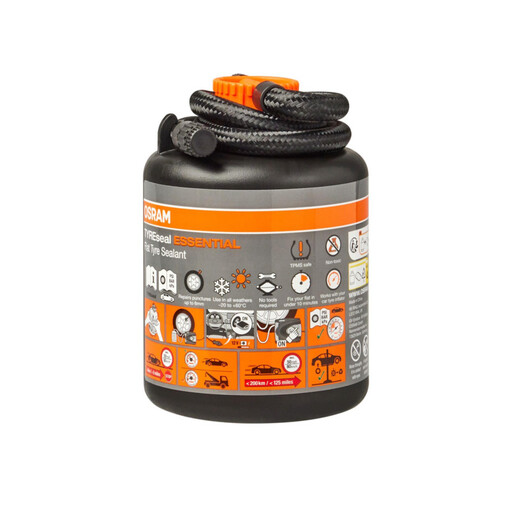
Why This Fits Their Persona: This isn't a compressor, but the perfect companion to one. For drivers seeking a complete flat tire solution, this tire sealant enables the temporary repair of punctures, allowing you to continue to the nearest garage.
A compressor alone can't fix a hole in a tire. This sealant, manufactured to OE specifications, seals punctures up to 6 mm. It is applied directly through the valve and is compatible with Tire Pressure Monitoring Systems (TPMS).
Repairs punctures up to 6 mm; Quick, tool-free application; TPMS-compatible; Can be easily rinsed out after use.
We've compiled a complete, up-to-date list of products that fully meet these strict selection criteria and safety regulations.
1. How long does the battery of a cordless compressor last? The battery life heavily depends on its capacity (mAh), the tire size, and the target pressure. A model with 6000-7500 mAh should be able to inflate four to five car tires from 2.0 to 2.5 bar or fully inflate one flat tire. For occasional use and top-offs, this is typically more than sufficient.
2. Can I also inflate bike tires with a cordless compressor? Yes, most cordless compressors are versatile. The key is that the device includes the correct valve adapters for your bicycle. The most common types are Schrader (like on a car) and Presta (typical for road and mountain bikes). Before buying, check if the necessary adapters are included in the box.
3. What is the difference between a cordless compressor and a tire sealant? A cordless compressor (or an air pump for car tires) fills a tire with air but cannot repair a hole. A tire sealant, on the other hand, is a liquid that is injected into the tire to temporarily seal a puncture. For comprehensive roadside emergency preparedness, the combination of both products is ideal: first, apply the sealant to seal the hole, and then use the compressor to bring the tire back to the correct pressure.