
Lieferung heute & morgen

Qualitätsgarantie

Willkommens-Angebote freischalten: KOSTENLOSE Lieferung | Bis zu 80 % RABATT | Kostenlose 30-Tage-JoyPlus-Testphase
App herunterladen
Correct tyre pressure is crucial for driving safety and fuel efficiency. But finding a working air pump at a petrol station is often a hassle. A cordless air compressor offers a convenient, off-the-grid solution. However, the market is flooded with devices making bold promises that often fail to deliver in practice.
As your Joybuy Product Recommendation Officer, I'm here to help you separate the wheat from the chaff. Instead of falling for marketing hype, we'll focus on the facts. This guide reveals the three most common purchasing traps and the technical specifications you really need to pay attention to.
Many buyers regret their decision because they trusted exaggerated advertising claims. Pay close attention to these three points to avoid a bad purchase:
To ensure your new portable compressor performs its job reliably, you should check three core technical values.
Maximum pressure indicates the pressure the device can theoretically achieve. For car, motorcycle, and bicycle tyres, values around 150 PSI (approx. 10.3 Bar) are more than enough. Far more important for practical use, however, is the air delivery rate, measured in litres per minute (L/min). It determines how quickly the tyre inflates.
Battery capacity, measured in milliampere-hours (mAh), determines the device's endurance. A higher capacity means you can inflate more tyres or recharge the device less frequently.
A reliable auto shut-off feature is an indispensable convenience and safety feature. You set the target pressure, start the process, and the compressor stops automatically once the value is reached. This prevents tyre damage from over-inflation.
Based on the criteria above, we have put together a selection of devices suitable for different user profiles.
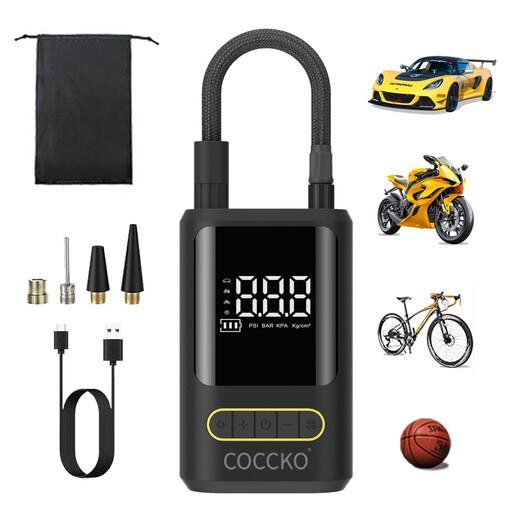
Why it's a good fit: Ideal for routine tyre pressure checks on cars and bicycles. It's compact, weighs under 500g, and offers all the essential functions without unnecessary extras. A solid choice for the glove compartment.
The 4000 mAh battery provides enough capacity for multiple uses, avoiding the weak battery trap. The reliable auto shut-off also prevents inaccurate inflation.
A great balance of portability and performance. The 5 preset modes and clear LCD display make it very easy to use.
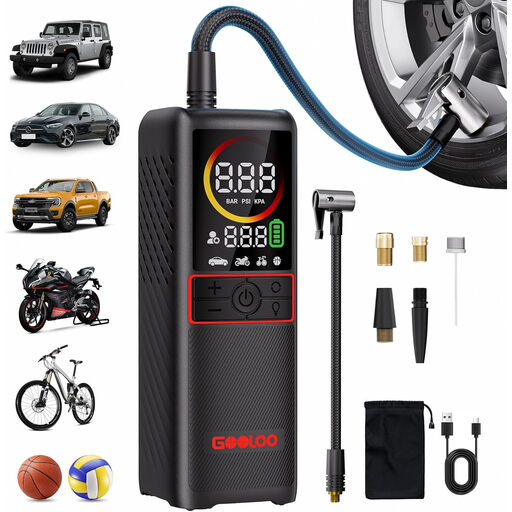
Why it's a good fit: For drivers of larger vehicles like SUVs or those who frequently travel long distances. Speed and endurance are key here, ensuring it doesn't falter with larger tyres or repeated use.
With an air delivery rate of 35 L/min and a powerful 7500 mAh battery, this device effectively counters the two main pitfalls—weak performance and poor endurance.
The high battery capacity not only allows for extended operation but also lets the device function as a power bank for other electronic gadgets.
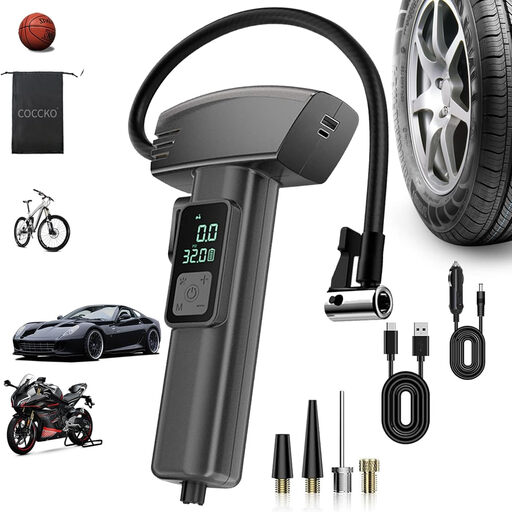
Why it's a good fit: For users looking for a multifunctional emergency tool. This device is not just an electric air pump but also a vital piece of safety equipment for the car.
It offers solid inflation performance (35 L/min, 4000 mAh battery) and combines it with genuinely practical extra features instead of pure marketing gimmicks.
Integrated emergency window breaker and seatbelt cutter. This combination turns the device into a comprehensive safety tool for any vehicle.
We have compiled a complete, up-to-date list of products that fully meet these strict selection criteria and safety regulations.
The runtime heavily depends on the battery capacity (mAh) and usage. A solid mid-range model with 4000–6000 mAh can typically increase the pressure in four to six car tyres by a few tenths of a Bar or fully inflate several bicycle tyres. The lifespan of the battery itself is influenced by the number of charge cycles and proper storage (cool and dry).
Technically, it's possible, provided the maximum pressure is sufficient. However, models primarily designed as an electric bike pump often have a very low air delivery rate (L/min). Inflating a car tyre would take an extremely long time and put a heavy strain on the device. For flexible use, it's advisable to choose a combination model explicitly designed for both vehicle types.
Accuracy can vary. For most devices from established manufacturers, the deviation is around ±1 to ±2 PSI (approx. ±0.1 Bar). For high-precision measurements, such as for sports cars or after a tyre change, it may be wise to double-check the pressure with a separate, calibrated tyre pressure gauge. The functionality of the tyre inflator with auto shut-off is directly dependent on the accuracy of this sensor.