
Lieferung heute & morgen

Qualitätsgarantie

Willkommens-Angebote freischalten: KOSTENLOSE Lieferung | Bis zu 80 % RABATT | Kostenlose 30-Tage-JoyPlus-Testphase
App herunterladen
A flat tire on the way to work or a weak bike pump before a ride—these are situations where a reliable cordless air compressor is worth its weight in gold. These portable lifesavers promise a quick fix, but the market is flooded with devices making exaggerated advertising claims. Many users invest in a portable compressor only to have it fail when they need it most. To make sure this doesn't happen to you, we'll show you what really matters and how to avoid the typical pitfalls.
Before you decide on a model, you should be aware of the most common problems that often only become apparent after the purchase.
To avoid a bad purchase, focus on verifiable technical specifications that are relevant to your intended use.
Maximum pressure is important, but the airflow rate (litres per minute) is more critical for speed. A good electric tire inflator for cars should deliver at least 20 L/min to take a standard tire (e.g., 195/65 R15) from 2.0 to 2.5 Bar in just a few minutes. For an electric bike pump, especially for road bikes, achieving a high pressure (up to 8 Bar) is more important than the airflow rate.
A battery capacity of at least 4000-5000 mAh is a good benchmark for inflating multiple tires or completely filling one car tire. Models that can also be operated via a 12V connection to the car's cigarette lighter socket offer maximum flexibility and peace of mind if the battery is dead. A USB-C port is now standard and often allows the device to be used as an air compressor with a power bank to charge your smartphone.
Look for practical details that make operation easier:
We have selected a few models based on objective features for typical user profiles.
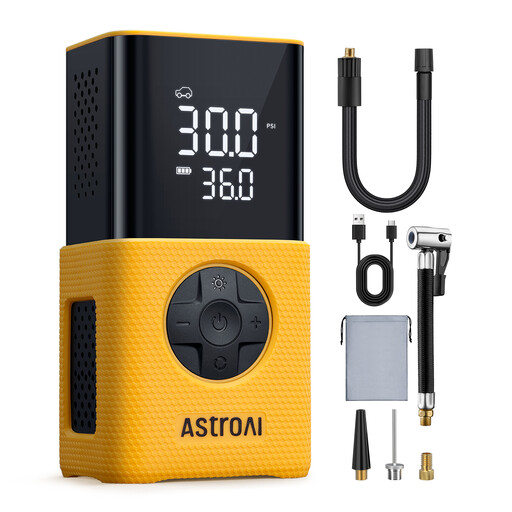
Why This Fits Their Persona: Ideal for users seeking a lightweight (460g) and compact device for occasional pressure top-ups on cars, bikes, or balls. It's straightforward to use and easy to store in a backpack or glove compartment.
The 4000 mAh battery provides a solid foundation for multiple small inflation tasks, thus avoiding the pitfall of insufficient battery life for sporadic use.
Very lightweight and portable; 5 preset modes for easy operation; power bank function via USB.
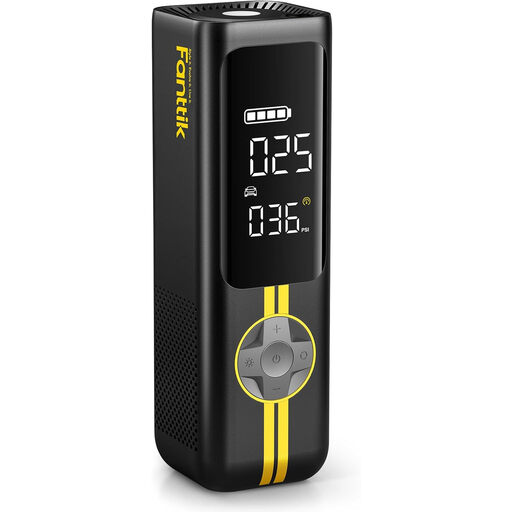
Why This Fits Their Persona: Designed for drivers and SUV owners who prioritise speed and endurance. It's suitable for regular maintenance of larger tires and for situations where time is critical.
Addresses the pitfalls of slow inflation and overheating. According to the manufacturer, the device can run continuously for up to 40 minutes and can top up a mid-sized car tire by several PSI in under a minute.
High inflation speed; long continuous runtime thanks to its cooling system; robust design with a long hose for flexibility.
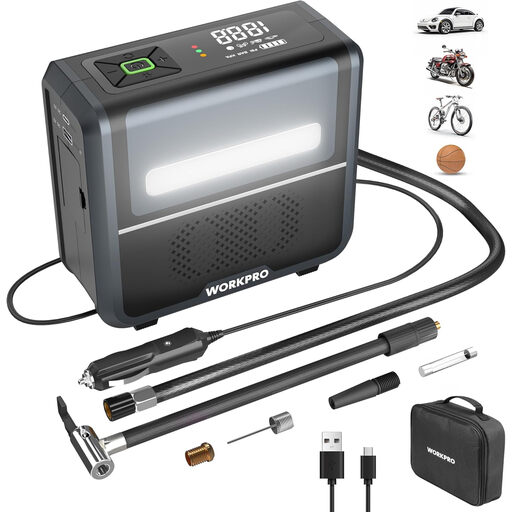
Why This Fits Their Persona: Perfect for users who appreciate a multifunctional device for any eventuality. Whether camping, on long road trips, or at home, this model combines a compressor, power bank, and flashlight in one well-designed unit.
The dual power supply (battery and 12V cable) completely solves the problem of a dead battery in an emergency. The clever storage for cables and adapters also prevents essential accessories from getting lost.
Dual power supply for maximum operational reliability; large 7500 mAh battery (3x2500mAh); integrated compartments for accessories and cables.
We have compiled a complete, up-to-date list of products that fully meet these strict selection criteria.
Battery life depends heavily on the battery capacity (mAh), the device's efficiency, and the required pressure. A good model with 5000-7500 mAh should be able to fully inflate a completely flat standard car tire (approx. 35-litre volume) or top up 4-5 tires by 0.3-0.5 Bar (approx. 4-7 PSI). Check the manufacturer's specifications, which are often based on specific tire sizes.
Yes, most modern cordless compressors are designed for this. However, it takes significantly longer and consumes more battery power than a simple top-up. A high airflow rate (L/min) and good thermal management are crucial here to prevent the device from overheating and shutting down during the extended inflation process.
Store the compressor in a dry place and avoid extreme temperatures. In the summer, it shouldn't be left permanently on the dashboard in direct sunlight, and in the winter, severe cold can temporarily reduce battery performance. It's advisable to check the battery's charge level every 2-3 months and top it up if necessary to ensure it's ready for an emergency.