
Lieferung heute & morgen

Qualitätsgarantie

Willkommens-Angebote freischalten: KOSTENLOSE Lieferung | Bis zu 80 % RABATT | Kostenlose 30-Tage-JoyPlus-Testphase
App herunterladen
Correct tire pressure is crucial for driving safety, fuel efficiency, and the lifespan of your tires. But making a trip to the nearest gas station is often a hassle. A cordless air compressor offers a flexible and convenient solution. However, many models on the market simply aren't worth the money. Before you make a purchase, it's essential to understand the common pitfalls that often lead to disappointment.
This guide will help you separate the wheat from the chaff. We'll highlight the critical features that define a reliable portable compressor and show you how to spot exaggerated marketing claims.
Many buyers are swayed by marketing promises that don't hold up in practice. Pay close attention to these three points to avoid a bad purchase:
To find a powerful and durable cordless compressor, you should focus on objective technical data. These three criteria are crucial for making the right choice:
The maximum pressure, often listed in Bar or PSI, indicates the compressor's power. For car tires, which typically require 2.0 to 3.0 Bar, the compressor should have a maximum output of at least 7 Bar (approx. 100 PSI). This ensures the device isn't constantly running at its performance limit, which can cause overheating.
The airflow rate, measured in litres per minute (L/min), determines the inflation speed. A value of over 20 L/min is recommended for car tires to achieve reasonable inflation times. For an electric bike pump, lower values are sufficient since the tire volume is smaller.
The battery capacity, specified in milliampere-hours (mAh), is the heart of any cordless device.
As a fail-safe, some models offer a 12V compressor mode. They can be plugged directly into the vehicle's cigarette lighter socket, guaranteeing unlimited runtime in an emergency.
A compressor with a digital display is standard today and offers significantly better reading accuracy than analog gauges. The most important feature here is the automatic shut-off (auto-stop). You set the desired target pressure, and the compressor stops automatically once it's reached. This prevents dangerous over- or under-inflation and makes operation simple and safe. Preset modes for cars, motorcycles, bicycles, and balls make it even more user-friendly.
Based on the criteria above, we have identified several models that are well-suited for different types of users.
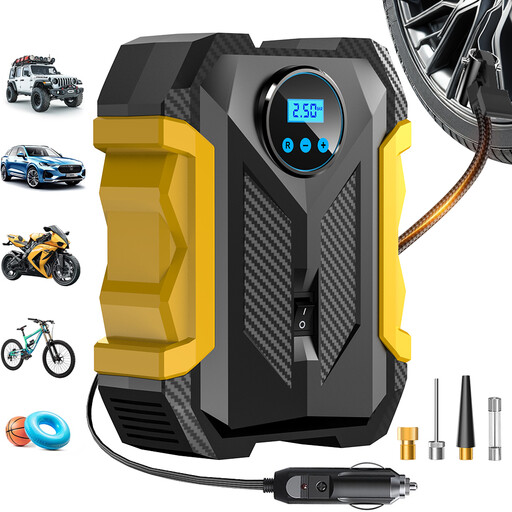
Why This Fits Their Persona: Ideal for drivers who need a reliable, cost-effective solution for emergencies and occasional pressure checks. The lack of a battery makes the device more affordable and maintenance-free.
This model completely bypasses the insufficient battery capacity trap by drawing power directly from the car's 12V outlet. This ensures it's always ready to use in an emergency.
Reliable Power Source: Always works as long as the car battery has power. Compact Design: Easy to store in the trunk or glove compartment.
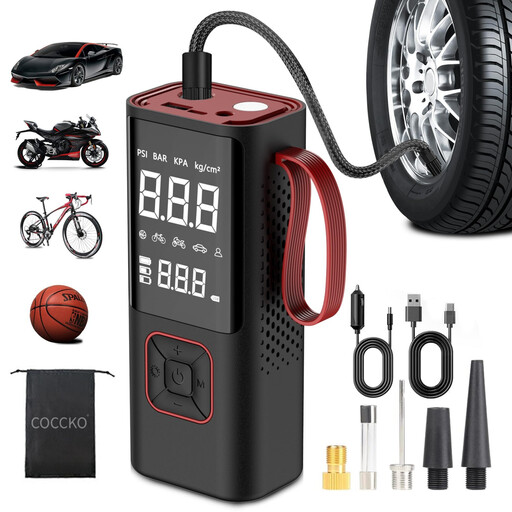
Why This Fits Their Persona: Perfect for users who value flexibility. The powerful battery and multiple adapters can inflate car, motorcycle, and bicycle tires, as well as sports balls and air mattresses, without needing a power outlet. The power bank function is a handy bonus on the go.
With a 6000 mAh battery, this model offers solid runtime, escaping the trap of weak batteries. The precise digital display with auto-shutoff also prevents inaccurate inflation.
High Battery Capacity: The 6000 mAh battery ensures long, cordless readiness. Multifunctional: Serves as an air pump, emergency LED light, and power bank.
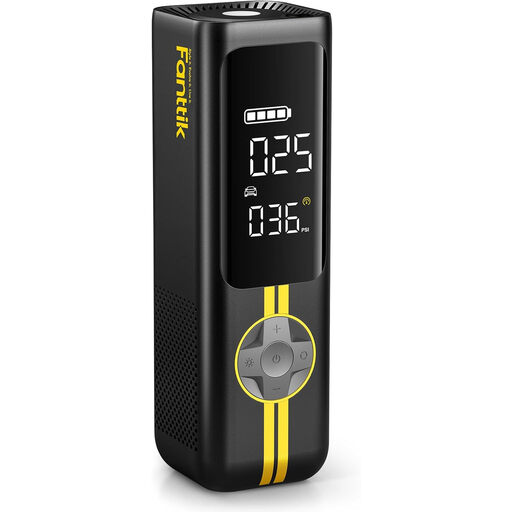
Why This Fits Their Persona: For drivers of larger cars or SUVs and anyone who prioritizes speed and efficiency. This device is designed for fast inflation times and continuous operation without losing performance.
This model directly addresses the pitfall of unrealistic performance claims. It's designed for rapid inflation and, according to the manufacturer, features a cooling system that allows for up to 40 minutes of continuous operation.
High Inflation Speed: Fills tires significantly faster than many competing models, according to the manufacturer. Continuous Operation: The cooling system allows for inflating multiple tires in a row.
We have compiled a complete, up-to-date list of products that fully meet these strict selection criteria and rigorous safety standards.
Battery life depends heavily on the capacity (mAh) and the task. A model with 4000–6000 mAh can typically top off several car tires by 0.2–0.3 Bar (3-4 PSI) or fully inflate a bicycle tire multiple times. Fully inflating a flat car tire consumes the most energy. Models with an additional 12V power option are highly recommended as they offer unlimited runtime in an emergency.
Yes, most high-quality models can. However, it takes significantly longer than just topping off the pressure. A mini compressor with a high airflow rate (e.g., over 25 L/min) and a good cooling system is better suited for this task. Pay attention to the manufacturer's specified maximum continuous runtime to avoid overheating the device.
No, consumer-grade portable compressors are generally not designed to be calibrated. The built-in digital sensors are factory-set. However, it's good practice to occasionally compare the displayed pressure with a separate, calibrated tire pressure gauge to ensure the readings remain accurate. Minor deviations are normal, but they shouldn't exceed 0.1 Bar (approx. 1.5 PSI).