
Lieferung heute & morgen

Qualitätsgarantie

Willkommens-Angebote freischalten: KOSTENLOSE Lieferung | Bis zu 80 % RABATT | Kostenlose 30-Tage-JoyPlus-Testphase
App herunterladen
A flat tire always happens at the worst possible time—whether on your way to work, during a road trip, or out on a bike ride. A cordless air compressor promises a quick and easy solution. However, the market is flooded with devices whose performance claims often don't hold up in practice. Before you make a purchase, it's crucial to understand the common pitfalls that can quickly turn a supposed lifesaver into a bad investment.
As your Joybuy Product Recommendation Officer, I'm here to help you cut through the noise. In this guide, I'll show you which technical specifications truly matter and how to find a device that will perform reliably when you need it most.
Many marketing claims focus on impressive numbers while hiding critical weaknesses. Pay close attention to these three points:
To avoid a bad purchase, you should focus on the following three core aspects. These determine the real-world usability and reliability of your future cordless air compressor.
The maximum pressure, often listed as 150 PSI (approx. 10.3 Bar), is more than sufficient for most applications, from cars to bicycles. However, the air flow rate, measured in liters per minute (L/min), is far more important. It determines how quickly the air is actually pumped into the tire.
A good car tire inflator, therefore, combines high maximum pressure with a solid air flow rate.
The battery capacity, specified in milliampere-hours (mAh), is the heart of any cordless air pump. It determines how many tires you can inflate on a single charge.
Also, look for modern charging ports like USB-C, which allow for fast and convenient charging. Good thermal management (a cooling system) prevents the aforementioned overheating during extended use.
A modern mini compressor is often more than just a pump. These features offer real added value:
We have matched some models from our range to different user groups based on the criteria mentioned above.
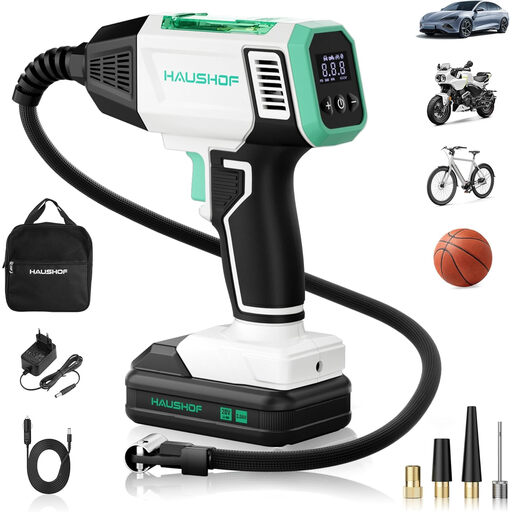
Why This Fits Their Persona: Ideal for users looking for a reliable device for regular tire pressure checks on their car or bike without spending a fortune. Its operation is straightforward and focused on the essentials.
The digital display with auto-shutoff prevents the problem of inaccurate readings. The 22 L/min air flow rate is sufficient for everyday adjustments and avoids the frustration of extremely slow inflation.
Preset modes for cars, motorcycles, bikes, and balls simplify operation. The device can be used cordlessly with its 2000 mAh battery or powered via the 4m long 12V cable.
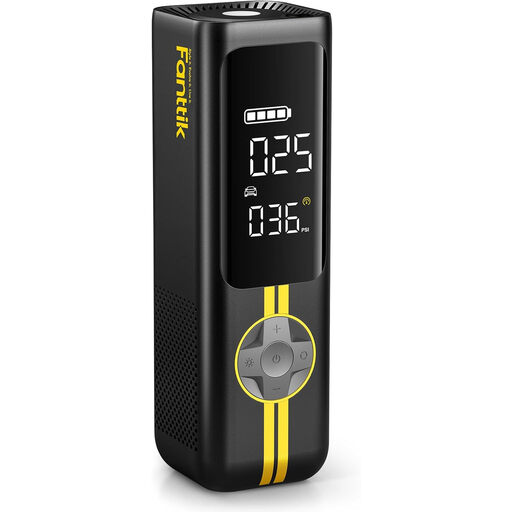
Why This Fits Their Persona: Perfect for owners of larger vehicles (SUVs, MPVs) or drivers who value speed and efficiency. This model is designed to inflate multiple tires quickly and without forced cooldown breaks.
According to the manufacturer, it inflates a mid-sized car tire in under a minute. The long battery life of up to 40 minutes and a dedicated cooling system actively counteract the pitfalls of overheating and weak battery performance.
High inflation speed and long continuous runtime. The dual LED display is clear and easy to read, and operation is very simple with preset modes. Also functions as a power bank.
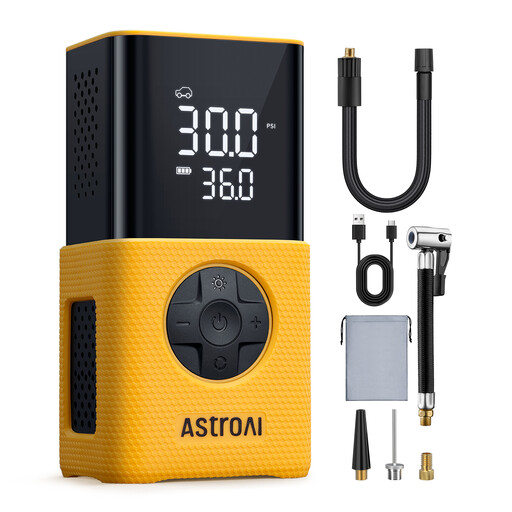
Why This Fits Their Persona: For users who appreciate a compact, lightweight, and versatile gadget for e-bikes, motorcycles, balls, and their car. The focus here is on the combination of precision, portability, and extra features.
It addresses the pitfall of inaccurate pressure readings with improved sensors for high measurement accuracy. The 4000 mAh battery provides solid runtime, preventing the device from running out of power when inflating multiple smaller tires.
Very light and compact (460g), ideal for backpacks or bike bags. Serves as a multifunctional tool with a 3-mode flashlight and a power bank function via USB-C.
We've compiled a complete, up-to-date list of products that fully meet these strict selection criteria and all relevant safety standards.
1. How accurate are the digital pressure gauges on a cordless compressor? Modern devices typically offer high accuracy, with a deviation of only ±1 to ±2 PSI. The auto-shutoff function relies on the precision of this sensor. Therefore, models with clear digital displays and the ability to set a target pressure are a great choice to minimize the risk of incorrect inflation.
2. How long does the battery of a portable compressor last, and how often does it need to be charged? The runtime depends directly on the battery capacity (mAh). A battery with 4000 to 6000 mAh can typically top up 4-5 car tires or fully inflate one flat tire. To ensure it's ready for an emergency, it's recommended to check the charge level every 2-3 months and recharge the battery as needed, even if it hasn't been used.
3. Can I use a mini compressor to inflate the tires of a large SUV or RV? Most compact cordless air compressors are designed for standard cars, motorcycles, and bicycles. While they can often reach the necessary pressure (PSI), they typically lack the air flow rate (L/min) and battery capacity for the very large tires found on RVs or trucks. Always check the manufacturer's specifications for the maximum recommended tire size. Some models explicitly exclude use with such vehicles.