
Lieferung heute & morgen

Qualitätsgarantie

Willkommens-Angebote freischalten: KOSTENLOSE Lieferung | Bis zu 80 % RABATT | Kostenlose 30-Tage-JoyPlus-Testphase
App herunterladen
A cordless air pump can save valuable space when you’re on the go and make it easier to inflate tyres and leisure equipment. But not every compact model is equally suited to car tyres, bike valves, balls or air mattresses. Vague performance specifications, missing accessories or a battery with too little capacity can easily lead to the wrong purchase.
This buying guide from the Joybuy Product Recommendation Officer explains what drivers, cyclists, motorcyclists, campers and outdoor enthusiasts should look for.
Figures such as 150 PSI or 160 PSI primarily describe the maximum pressure the pump can produce. In practice, you should also consider the airflow rate, motor power and suitability for the type of tyre. A high maximum pressure alone tells you little about how quickly the pump will inflate a flat car tyre.
An electric tyre inflator works at higher pressure, but is often less suitable for items that need a large volume of air. Air mattresses, inflatable boats and inflatable furniture need a high airflow at lower pressure instead. So don’t confuse a portable tyre inflator with a cordless pump designed for camping equipment.
A small battery-powered compressor is handy in the glove compartment or a rucksack. However, when inflating several tyres, starting from a low pressure or using it frequently, a compact model may reach its thermal and electrical limits sooner. Check the battery capacity, charging time and recommended operating time before you buy.
For car, motorbike and bike tyres, the pressure you need is often well below the advertised maximum. What matters is whether the pump can reliably reach the tyre pressure recommended by the vehicle manufacturer.
Models with a digital display and automatic shut-off reduce the risk of exceeding your target pressure. When inflating car tyres, check the pressure when the tyres are cold, if possible. Always follow the vehicle manufacturer’s recommended pressure.
Airflow is often given in L/min. A higher figure can be useful for air mattresses and other large-volume inflatables. For tyres, the combination of pressure build-up, cylinder size and motor power is more important.
Always read the product specifications in the context of how you plan to use the pump. An electric bike pump may be fine for topping up a tyre, while a flat car tyre will take considerably more time and battery power to inflate.
USB-C ports are convenient because you can use them with many vehicles, power banks and chargers you already own. Also look for:
A pump supplied with several adapters is more versatile, but you should still check that it supports the specific valve type you need.
The models below vary in pressure range, design, accessories and intended use. The technical details are taken from the respective product descriptions.
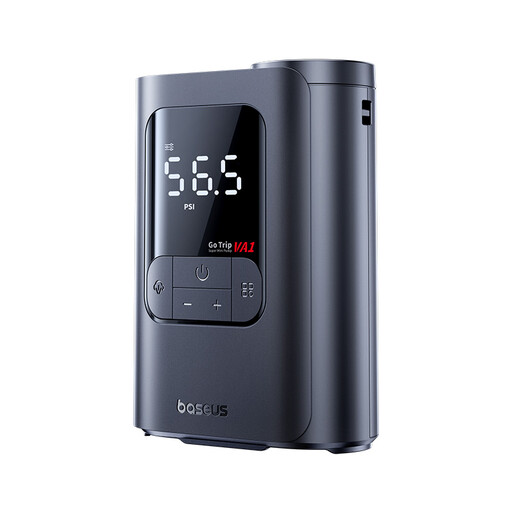
Why it suits this type of user: According to the product details, this compact model weighs around 459 g and has a 2,500 mAh battery, a USB-C input and five inflation modes. It’s suitable for car, motorbike and bike tyres, as well as balls and other inflatables.
The five modes and stated pressure accuracy of ±0.05 bar make it easier to select your target pressure than relying on a PSI figure alone.
Lightweight design, USB-C charging and three air nozzles included.
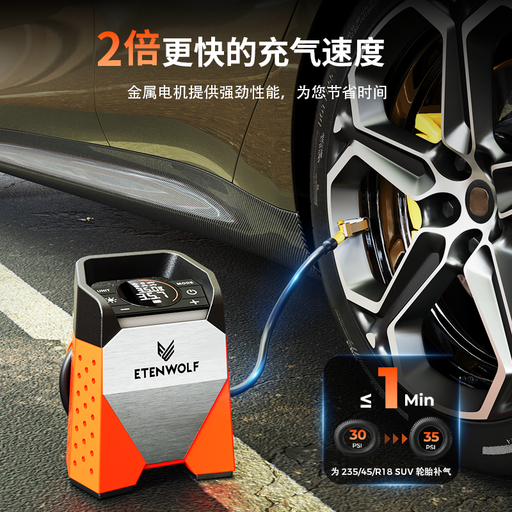
Why it suits this type of user: According to the product description, this battery-powered compressor is designed for cars, SUVs, bikes and balls. It has a stated maximum operating pressure of 160 PSI, power of 132 W and an airflow rate of 1.25 CFM.
The product details give the power and airflow rate as well as the pressure rating, making it easier to assess whether the pump is suitable for your needs.
Supplied with a lithium-ion battery, air hose, Presta adapter, ball needle and conical nozzle.
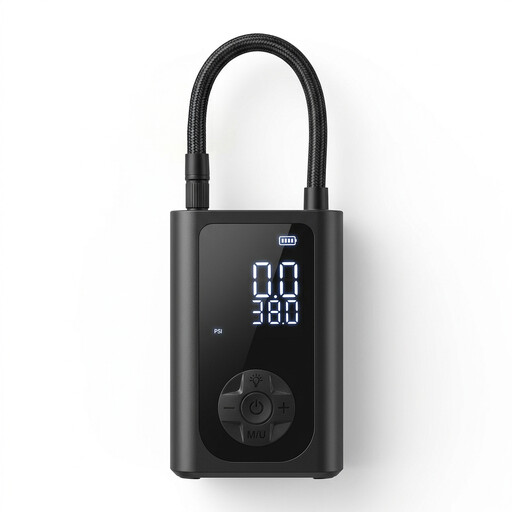
Why it suits this type of user: According to the product details, this portable compressor has a 4,000 mAh battery, five modes for cars, motorbikes, bikes, balls and custom settings, and a maximum pressure of 150 PSI.
Alongside the maximum pressure, the product details specify running time, charging time, airflow rate and top-up time. This makes it easier to plan for several uses.
Stated running time of up to 25 minutes, two-mode LED light and power bank output.
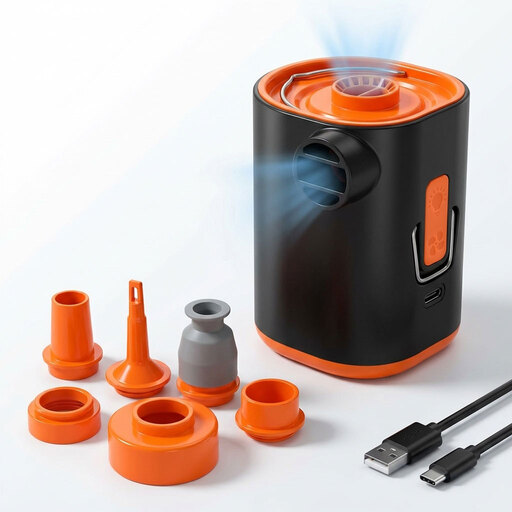
Why it suits this type of user: This compact electric air pump is designed for large-volume outdoor inflatables and, according to the product description, offers an inflation and deflation rate of 300 L/min.
Its clear focus on air mattresses and other inflatables helps prevent a low-pressure pump from being mistakenly used as a tyre inflator.
Two 1,800 mAh batteries, LED lighting and a metal hook for outdoor use on the go.
We’ve put together a complete, regularly updated list of products that meet these strict selection criteria and the safety regulations in force in the EU.
How long it runs depends on the battery capacity, tyre pressure, outside temperature and the tyre’s starting condition. Treat the manufacturer’s running-time figures as a guide. If you regularly need to inflate several vehicles, a model with a larger battery or an additional 12-volt power supply may be more practical.
It depends on the model. Some portable tyre inflators are designed for car tyres, according to their product details, but may take several minutes to inflate a completely flat tyre. Before buying, compare the airflow rate, battery running time, hose connection and permitted operating time.
With a rechargeable model, the main cost is the electricity used to recharge the battery. This is usually low under normal use. Models with replaceable batteries, on the other hand, will need regular battery purchases. You should also allow for wear and tear on parts such as the air hose, valve adapters and seals.