
Lieferung heute & morgen

Qualitätsgarantie

Willkommens-Angebote freischalten: KOSTENLOSE Lieferung | Bis zu 80 % RABATT | Kostenlose 30-Tage-JoyPlus-Testphase
App herunterladen
A cordless air pump can save you plenty of space in the car, on your bike, when riding a motorbike or while camping. But not every compact device is suitable for every use. If you focus only on a high PSI rating or a particularly small design, you could overlook important details such as limited battery life, inaccurate pressure readings or incompatible connectors.
This buying guide explains which technical specifications to look for before you buy, and which products may suit different needs.
Many manufacturers prominently advertise the maximum pressure. A rating of 150 PSI may sound impressive, but it tells you little about how quickly the pump will work. For a car tyre, airflow, cylinder size and motor power are also important.
A mini compressor with a low air volume may take much longer to inflate a completely flat tyre than to top one up. So it’s worth distinguishing between these situations:
A high mAh rating is only meaningful when considered alongside voltage, motor power and charging time. Ambient temperature, tyre pressure and the number of tyres you need to inflate also affect how long the pump will run.
Fully charge a cordless air pump before your first journey. If you drive regularly, it’s also worth checking how many tyres it can inflate on a charge and whether it switches off automatically. If you’re planning to use it for longer periods, check whether it has a USB-C port, a charger or an alternative power supply.
A tyre inflator needs to fit securely onto the valve. Car tyres usually require a Schrader connector, while some bikes use Presta valves. Balls and inflatable leisure products need additional adapters.
So check whether the pump includes:
A tyre pressure gauge, or an integrated digital pressure gauge, should show both the current pressure and the target pressure. A wide pressure range is useful if you plan to use the pump for your car, bike, motorbike and balls. For everyday use, though, it’s most important that you can set the target pressure in a unit you understand, such as PSI, BAR or kPa.
The tyre pressure recommended by your vehicle manufacturer is usually listed on the B-pillar, inside the fuel flap or in the owner’s manual. Check and inflate car tyres when they’re cold, if possible. The figures on the tyre sidewall don’t necessarily indicate the recommended pressure for everyday use.
An electric air pump works under heavy load when inflating tyres. The casing and hose can get warm. Follow the breaks specified in the instructions and don’t block any ventilation openings.
If you plan to use the pump frequently, check the following:
A mains-powered car compressor with a 12-volt connection doesn’t need to be charged in advance, making it particularly suitable for keeping in your vehicle. A cordless air pump, on the other hand, is more flexible for use with a bike, while camping or away from a power socket.
The right option depends on where you’ll use it:
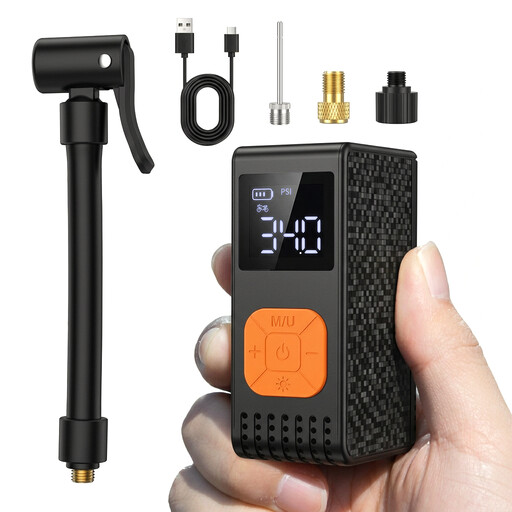
Why it suits this type of user: This compact electric bike pump is designed for bike and motorbike tyres, as well as balls. According to the product specifications, it measures approximately 85 × 52 × 43 mm.
Three preset modes make it easy to choose the right setting for a bike, motorbike or ball. However, actual run time still depends on tyre pressure and how you use the pump.
A 1600-mAh battery, USB-C charging port, LED light and a stated inflation time of around 70 seconds for a bike tyre from 0 to 2,06 BAR.
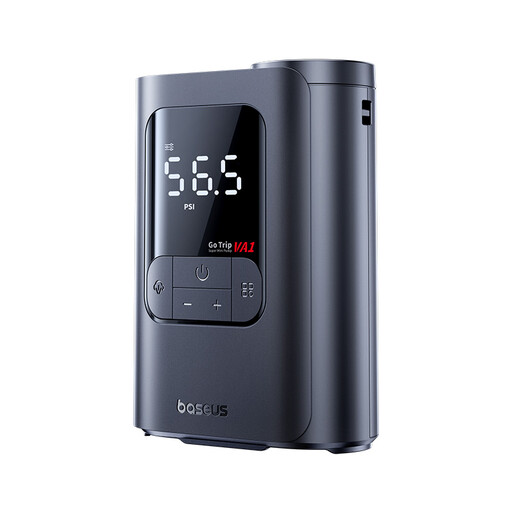
Why it suits this type of user: This cordless air pump is designed for car, motorbike and bike users who need a versatile device with several pressure modes.
The product specifications list five inflation modes, automatic shut-off and pressure accuracy of ±0,05 BAR.
A 2500 mAh battery, 82-W motor, three included nozzles and a weight of around 459 g, according to the manufacturer.
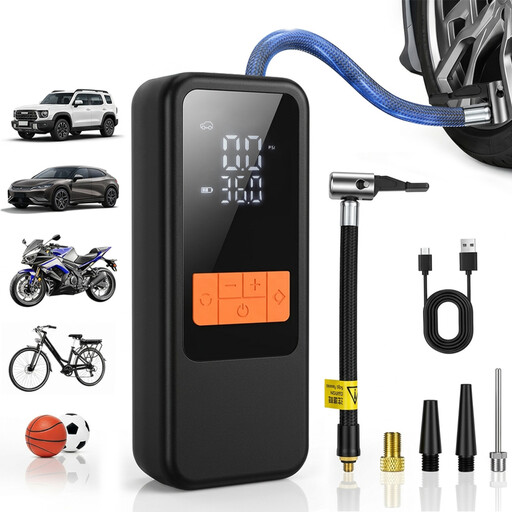
Why it suits this type of user: This mini compressor is designed for drivers and outdoor enthusiasts who want a portable air pump with five modes and a power bank function.
The stated specifications include an airflow of 26 l/min, automatic pressure measurement and a run time of up to 25 minutes.
A 4000-mAh battery, a stated maximum pressure of 150 PSI, a USB-C port and modes for cars, motorbikes, bikes, balls and custom settings.
We’ve put together a complete, regularly updated list of products that meet these strict selection criteria and fully comply with the safety regulations in force in the EU.
Run time depends on battery capacity, motor power, tyre size, starting pressure and ambient temperature. A compact cordless air pump is usually sufficient for quick top-ups. If you need to inflate several completely flat car tyres, check the manufacturer’s run-time specifications and fully charge the device beforehand.
That depends on the airflow and the model. Some portable devices give specific inflation times for certain tyre sizes, but these figures should be understood as manufacturer claims under particular conditions. If you’ll be using it regularly on car tyres, a suitable hose connection, enough battery capacity in reserve and overheat protection are especially important.
The electricity used for occasional top-ups is low compared with that of larger household appliances. The main factors are how often you charge it, battery capacity and the price of electricity. A mains-powered air compressor doesn’t need battery charging, while a cordless air pump gives you more flexibility away from your vehicle.