
Lieferung heute & morgen

Qualitätsgarantie

Willkommens-Angebote freischalten: KOSTENLOSE Lieferung | Bis zu 80 % RABATT | Kostenlose 30-Tage-JoyPlus-Testphase
App herunterladen
A flat tire never happens at a convenient time. Whether you're on your way to work, out on a bike ride, or about to start a vacation, a sudden loss of pressure is more than just an annoyance. A modern cordless air pump promises a quick and easy solution, without needing to find the nearest gas station. However, the market is flooded with devices whose performance claims often don't hold up in practice. As your Joybuy Product Recommendation Officer, I'll help you separate the wheat from the chaff and find a model that truly fits your needs.
Many buyers are swayed by marketing promises that later prove impractical. Pay close attention to these three pitfalls to avoid a bad investment:
To make the right choice, you should focus on the technical specs that make a difference in everyday use.
A high Maximum Pressure (PSI/Bar) is important for inflating the tires of racing bikes or vans. For the average car tire, pressures around 2.5 Bar (approx. 36 PSI) are standard. However, the more crucial factor for speed is the Air Flow Rate (L/min). A good portable compressor for car tires should have a flow rate of at least 20 L/min. This allows a standard car tire to be inflated from 0 to the target pressure in under 10 minutes. For just topping off 0.2-0.3 Bar, 30-60 seconds is often enough.
The battery's capacity, measured in milliampere-hours (mAh), determines how many tires you can inflate on a single charge.
Some models offer a dual power supply: they work both cordlessly via the battery and corded via the 12V mini compressor port in the car. This provides maximum reliability for emergencies.
A reliable auto-shutoff feature is a must-have. You set the desired target pressure, and the pump stops automatically once it's reached. This prevents dangerous over-inflation. Other useful features include:
Here are some recommendations tailored to different user profiles that avoid the pitfalls mentioned above.
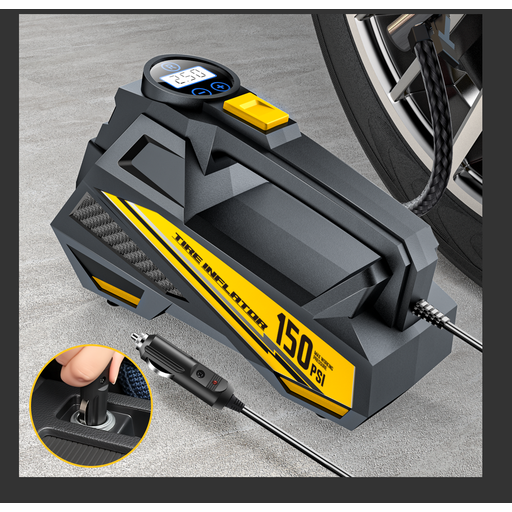
Why This Fits Their Persona: Ideal for drivers who want a reliable emergency device that is always ready to go without any battery maintenance. Perfect for the glove compartment or trunk.
This model completely bypasses the "dead battery" trap by drawing power directly from the vehicle's 12V socket. It's always ready to use when the engine is running.
Reliable power directly from the car; digital display with auto-shutoff for precise inflation.
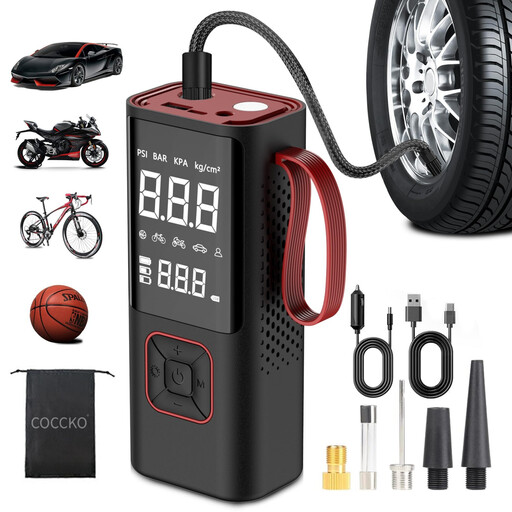
Why This Fits Their Persona: For commuters and tech-savvy users looking for a powerful, cordless all-in-one device for their car, motorcycle, and recreational activities. The power bank function and LED light make it a multifunctional companion.
With an air flow rate of 35 L/min and a 6000 mAh battery, this model tackles the pitfalls of slow inflation and weak battery performance. The smart modes and auto-shutoff also prevent inaccuracies.
High battery capacity (6000 mAh) for multiple uses; fast inflation and 5 smart modes for easy operation.
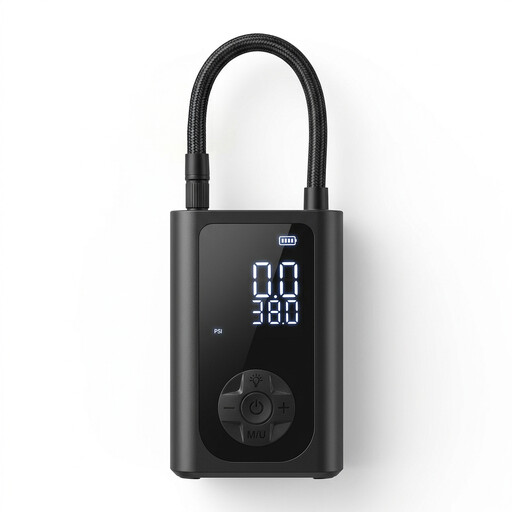
Why This Fits Their Persona: This model is extremely compact and lightweight, fitting easily into a backpack or saddle bag. It's the ideal electric bike pump for on-the-go use, while still being powerful enough for motorcycle or car tires.
Despite its small size, it offers a solid air flow rate of 26 L/min and a 4000 mAh battery. It avoids the trap of underpowered mini-pumps and delivers reliable results.
Very compact and lightweight design; good balance of performance (26 L/min) and battery capacity (4000 mAh); power bank function.
We have compiled a complete, up-to-date list of products that fully meet these strict selection criteria and safety regulations.
Yes, powerful models with a high air flow rate (over 20 L/min) and sufficient battery capacity (at least 4000 mAh) are capable of this. According to the manufacturer, the Porbi Q19 model, for example, can inflate two empty 195-series car tires on a single charge, with the process taking about 7-8 minutes per tire. Note that the motor can get hot during prolonged use and may require breaks to cool down.
Accuracy is a key quality indicator. Models from established brands typically offer high precision, often with a deviation of only ±1 PSI. The integrated auto-shutoff feature ensures that the preset pressure is reached exactly. However, it is still advisable to occasionally double-check the pressure with a separate, calibrated pressure gauge.
The self-discharge rate of lithium-ion batteries is relatively low. A fully charged device should still have enough power for an emergency even after several months in storage. However, it is recommended to check the charge level every 2-3 months and top it up if necessary to ensure full performance in a real emergency. Store the pump in a cool, dry place to maximize battery life.