
Lieferung heute & morgen

Qualitätsgarantie

Willkommens-Angebote freischalten: KOSTENLOSE Lieferung | Bis zu 80 % RABATT | Kostenlose 30-Tage-JoyPlus-Testphase
App herunterladen
A clean car interior isn't just about looks—it's about your comfort and well-being. Crumbs on the seats, dust in the air vents, or pet hair on the carpet can significantly detract from your driving experience. A cordless car vacuum cleaner promises a quick and hassle-free solution. However, the market is flooded with devices making lofty claims. Many buyers soon discover their new device fails to meet expectations.
As your Joybuy Product Recommendation Officer, I'm here to help you identify the common pitfalls and make an informed decision. We'll focus on the technical facts that truly matter and cut through the marketing hype.
Before you invest, you should be aware of the design flaws and exaggerated advertising claims that often lead to disappointment.
To avoid a bad buy, you should focus on three verifiable technical specifications. These determine the actual performance and longevity of your device.
Suction power, measured in Pascals (Pa), is a key indicator of cleaning performance. For everyday cleaning of loose dirt and dust, values between 5,000 and 8,000 Pa are often sufficient. However, if you want to remove stubborn dirt, sand, or pet hair from floor mats, a car vacuum with strong suction power of over 10,000 Pa is recommended. Look for models with a brushless motor. These are typically more efficient, durable, and quieter than conventional brushed motors and deliver more consistent performance.
Battery capacity is specified in milliampere-hours (mAh). A higher mAh value doesn't automatically mean a longer runtime, as the voltage (V) and motor efficiency also play a role. As a realistic benchmark: a battery with 4000 mAh to 6000 mAh should provide a continuous runtime of at least 15 to 25 minutes in standard mode. This is sufficient for a full interior clean of an average car. Also, check the charging time and method (e.g., USB-C), which offers more flexibility.
A good handheld vacuum for the car should have a multi-stage filtration system with a washable HEPA filter. This filters even the smallest particles like pollen and fine dust from the air and is especially important for allergy sufferers. A transparent and easy-to-empty dustbin with a volume of at least 0.4 litres saves you from frequent interruptions. Make sure the small vacuum for the car is ergonomically designed and comes with useful attachments (crevice tool, brush nozzle).
Based on these objective criteria, we have identified a few models that are well-suited for specific needs and budgets.
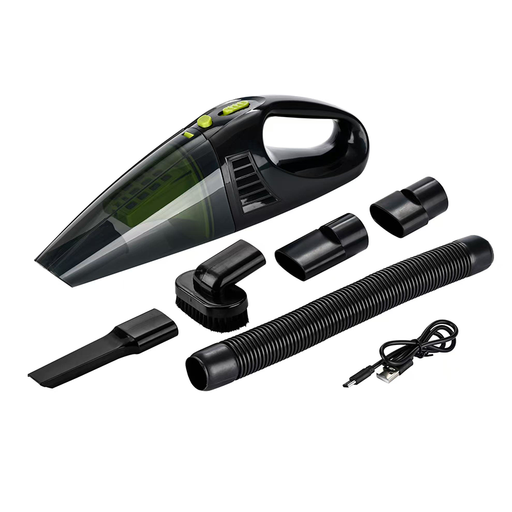
Why it's a good fit: Ideal for those who want a simple, cost-effective solution for quick removal of crumbs and surface dust. Perfect for occasional clean-ups without making a large investment.
The device advertises realistic specs (3500–4000 Pa suction, 14–16 minute runtime). It makes no exaggerated promises, ensuring user expectations are met.
Very lightweight body made of ABS material and straightforward operation. The dustbin is removable and the HEPA filter is washable.
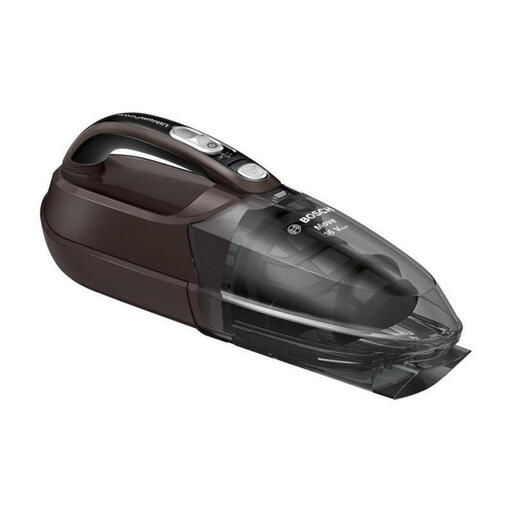
Why it's a good fit: For commuters and families looking for a reliable device from an established brand for the regular upkeep of their vehicle. The proven battery technology ensures consistent performance.
Bosch focuses on the durability and reliability of its lithium-ion battery technology rather than unrealistic peak suction values. This sidesteps the pitfall of inadequate battery performance.
A powerful 16V lithium-ion battery (2000 mAh) provides extended runtime and consistent power. The lightweight, cordless design makes it easy to handle in tight car interiors.
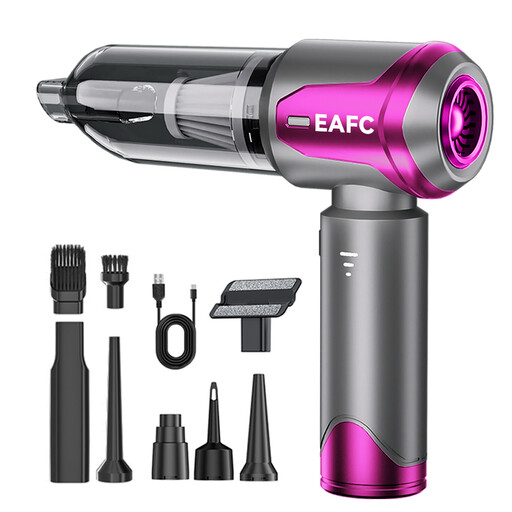
Why it's a good fit: With its very high suction power and large battery, this device is designed for demanding tasks like removing pet hair, sand, and deep-seated dirt from carpets and upholstery.
The high suction power of 16,000 Pa is backed by a brushless motor—a verifiable technology that makes such performance plausible and promises durability. This counters the pitfall of exaggerated marketing claims.
The large 6000 mAh battery ensures a long runtime. The 4-in-1 functionality (vacuum, blow, inflate, deflate) makes it a versatile tool for the car and home.
We've compiled a full, up-to-date list of products that fully meet these strict selection criteria and UK/EU safety regulations.
For removing surface dust and crumbs from smooth surfaces, 5,000 to 8,000 Pa is often sufficient. For a deep clean of carpets, upholstery, and for removing pet hair or sand, models with a suction power of 10,000 Pa or more are significantly more effective.
Most modern devices use washable HEPA filters. To maintain suction power, the filter should be regularly rinsed under clean water after use. It is crucial to let the filter completely air-dry before reinserting it. A damp filter can impair motor performance and lead to mould growth.
Yes, absolutely. Due to their compact design, these devices are excellent as a small vacuum cleaner for quick cleaning jobs around the house. They are ideal for sofa crevices, drawers, computer keyboards, or other hard-to-reach areas where a large vacuum would be cumbersome.