
Lieferung heute & morgen

Qualitätsgarantie

Willkommens-Angebote freischalten: KOSTENLOSE Lieferung | Bis zu 80 % RABATT | Kostenlose 30-Tage-JoyPlus-Testphase
App herunterladen
A cordless combi drill combines three functions: driving screws, drilling and hammer drilling. That makes it suitable for assembling furniture, renovation work, woodworking and occasional drilling into masonry. However, there’s a wide range to choose from. If you focus only on voltage or maximum torque, you could end up with a tool that doesn’t suit the jobs you need it for.
A high torque figure may sound impressive at first. In practice, speed control, gear settings, torque settings and the chuck are important too. A powerful drill that’s difficult to control can be tricky to use when driving screws into small components or building furniture.
So don’t just look at the maximum torque. Check how many settings the drill offers and whether you can adjust the speed precisely using the trigger.
Many products are sold as ‘bare units’, which means they don’t come with a battery or charger. This can be useful if you already own compatible batteries for an established battery platform, as you can save money. If you’re new to the system, a drill driver with battery and charger can make it easier to work out the total cost.
Before you buy, check:
A cordless combi drill is suitable for occasional drilling into masonry. For lots of holes in concrete or hard mineral building materials, a rotary hammer with a dedicated tool holder is usually more suitable. The hammer function doesn’t replace an SDS chuck and isn’t designed for every building material.
Torque is measured in newton metres (Nm). Figures such as 63 Nm or 73 Nm describe the force stated by the manufacturer under specific conditions. They aren’t automatically a measure of performance for every application.
A two-speed gearbox usually offers a low speed with higher torque for driving screws, as well as a higher speed for drilling. Several torque settings are useful for controlled screwdriving. Figures such as ‘20 + 2’ or ‘17 + 1’ typically refer to adjustable torque settings, plus separate settings for drilling or hammer drilling.
A 13 mm keyless chuck can hold many commonly used drill bits and screwdriver bits. A metal chuck may indicate a more robust design for frequent use, but it’s still worth checking its grip and compatibility with your accessories.
Also compare the maximum drilling diameters stated by the manufacturer for:
Treat these figures as a guide: performance also depends on the quality of the drill bit, the material, the battery charge and how much pressure you apply.
An 18V cordless combi drill is a versatile choice for many DIY and installation jobs. Check whether the battery platform also powers other tools, such as saws, angle grinders or lights. A brushless cordless drill is designed to work without carbon brushes, but this alone shouldn’t be taken as a blanket guarantee of longer life or better performance.
Also check:
A cordless drill driver without a hammer function is suitable for wood, metal and driving screws. If you’ll occasionally need to drill into masonry, a combi drill is a better choice. A cordless impact driver, on the other hand, is designed to deliver high torque to screws and nuts; it isn’t automatically a substitute for a drill. The terms are often confused, even though the tools are designed for different jobs.
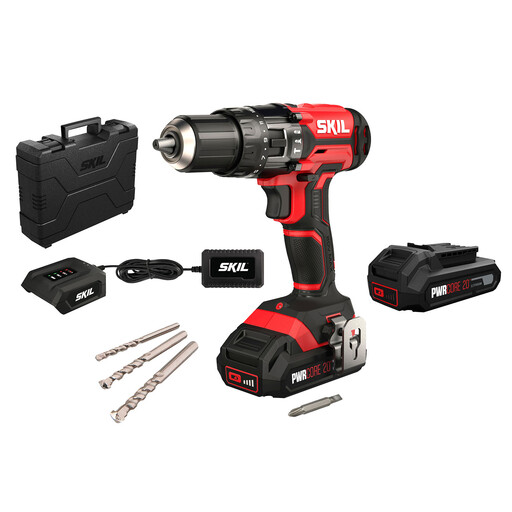
Why this product suits this user: Three functions in one tool – driving screws, drilling and hammer drilling – cover typical jobs such as assembling furniture, DIY projects and light renovation work.
Separate settings for drilling and hammer drilling make it easier to select the right function for the material. Before buying, check whether the battery and charger are included in the offer you’re considering.
13 mm Auto-Lock chuck, 17 torque settings plus drilling and hammer drilling settings, and an LED work light.
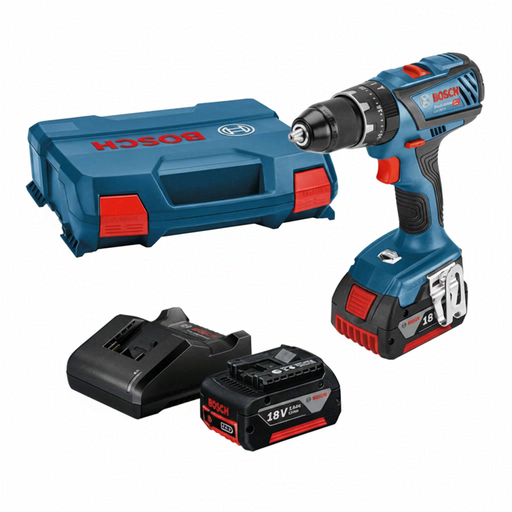
Why this product suits this user: This 18V model is for users who value a metal chuck, two batteries and a well-matched charging and transport system.
According to the product details, the package includes two 3.0 Ah batteries, a GAL-18V-20 charger and an L-Case. This makes it easier to see what’s included than with a bare unit.
63 Nm hard torque, 1,900 min⁻¹ in second gear, 13 mm metal chuck and manufacturer-stated drilling capacities of up to 38 mm in wood and 13 mm in steel and masonry.
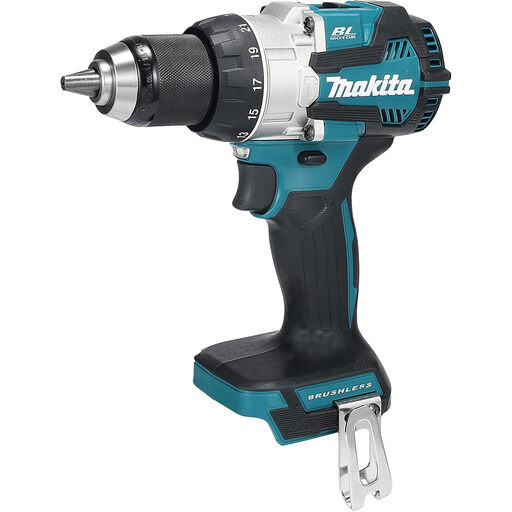
Why this product suits this user: This model is a good fit for users of the Makita 18V LXT system who already own batteries and want a brushless tool for working with wood, metal and masonry.
The ‘Z’ designation indicates that this offer is for the tool without a battery or charger. If you already use the battery platform, you can choose the package that best suits your needs.
73 Nm maximum torque, brushless motor, two-speed gearbox, 13 mm chuck, and XPT and deep-discharge protection according to the product details.
We’ve put together a complete, regularly updated list of products that meet these strict selection criteria and the safety regulations in force in the EU.
Runtime depends on battery capacity, material, drill bit diameter, torque and how you use the tool. A 3.0 Ah battery may be enough for short screwdriving jobs, while a spare battery can reduce interruptions if you’re drilling frequently. Store lithium-ion batteries in a dry place, away from excessive heat, and follow the manufacturer’s instructions.
The hammer function may be sufficient for occasional plug holes in brick or light masonry. For concrete, lots of holes or larger diameters, a rotary hammer with the right drill bit is usually the more practical choice. Always wear suitable safety glasses and ear protection, and use appropriate respiratory protection when working in dusty conditions.
Running costs mainly come from the electricity used for charging, replacement batteries and consumables such as drill bits and screwdriver bits. The electricity used for each charge is usually a small expense compared with the purchase price. You can get more value from the system if you can use the batteries and chargers with several compatible tools.