
Lieferung heute & morgen

Qualitätsgarantie

Willkommens-Angebote freischalten: KOSTENLOSE Lieferung | Bis zu 80 % RABATT | Kostenlose 30-Tage-JoyPlus-Testphase
App herunterladen
A cordless combi drill is part of the basic equipment in many households. It is useful for assembling furniture, renovating, fixing items to walls and carrying out everyday screwdriving tasks. The range extends from a compact cordless drill for occasional use to a cordless impact drill for more demanding drilling work.
However, technical specifications are not always directly comparable. For example, a high speed rating does not automatically mean more power when screwdriving. A seemingly inexpensive cordless combi drill set can also become more expensive if the battery, charger or suitable drill bits are not included.
Many 18V models are what are known as bare tools. They are supplied without a battery or charger. This makes sense if you already have a compatible battery system, but it can result in additional costs for beginners.
Before buying, make sure you know:
A drill driver with battery and charger is suitable for getting started straight away. With tools from Bosch, Makita or Greenworks, however, system compatibility is particularly important. For example, a Makita cordless combi drill will not automatically work with every 18V battery from another manufacturer.
Speed is stated in revolutions per minute and describes how quickly the chuck rotates. Torque, measured in Newton metres (Nm), indicates the power available for screwdriving and drilling.
In practice:
Maximum values generally apply under specific conditions. They should therefore not be considered in isolation. The gearbox, chuck, battery and design also affect how the tool performs in real-world use.
A conventional cordless drill driver is designed for wood, plastic and many metalworking tasks. For regular drilling in concrete or hard masonry, a cordless impact drill or cordless rotary hammer with a suitable chuck is more appropriate.
The manufacturer’s stated maximum drilling diameter is also important. For example, the Greenworks DD345 model specifies up to 30 mm in wood and 10 mm in steel. These figures are product-specific limits, not a general recommendation for every material and drill bit.
An 18V cordless combi drill often offers a greater power reserve than compact 12V models. However, a 12V tool can be easier to handle when assembling furniture, putting up shelves and carrying out minor repairs. The Bosch EasyDrill 1200 has a 12V lithium-ion battery with 1.5 Ah and is designed to be compact.
Battery capacity is measured in ampere-hours (Ah). A higher capacity can allow longer periods of work, but it often also increases the weight and charging time. A smaller battery is sufficient for occasional jobs; for longer renovation projects, a spare battery or two batteries in the set can be useful.
A keyless chuck allows you to change drill bits and screwdriver bits without tools. Check the maximum chuck capacity, such as 10 mm or 13 mm, and make sure it is suitable for the attachments you plan to use.
A single-sleeve keyless chuck is practical for assembly work, as bits can be changed quickly. For delicate screwdriving tasks, finely graduated torque settings are also helpful.
A brushless cordless combi drill operates without conventional carbon brushes. This can offer design advantages in terms of maintenance requirements, runtime and overall size. However, the intended use and total weight remain the key considerations.
An integrated LED work light improves visibility in dark corners, but it does not replace adequate room lighting. Also pay attention to the grip, weight, balance, gear selection and an easily accessible forward/reverse switch.
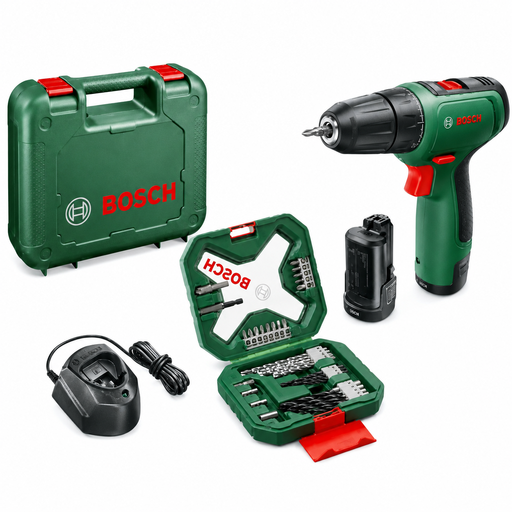
Why this product suits this profile: This compact 12V model is supplied with a 1.5-Ah battery and a 34-piece set. Beginners can use it straight away for typical screwdriving and drilling tasks around the home.
The battery and charging base are listed as included. This reduces the risk of having to buy essential components separately after purchase.
Compact design, keyless chuck and an extensive accessory set for a range of household tasks.
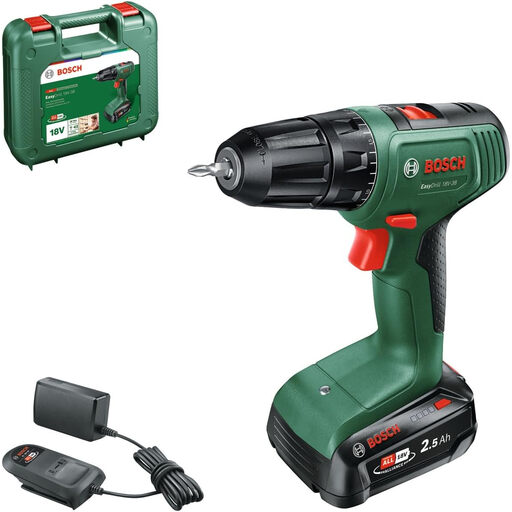
Why this product suits this profile: This 18V drill driver combines two gears with 20 torque settings and a 10-mm keyless chuck. It is designed for controlled screwdriving and drilling in wood, metal and plastic.
The contents and 18V system compatibility can be checked before purchase. This makes it easy to confirm whether the battery and charger match the equipment you already own.
38 Nm maximum torque, LED work light and a stated weight of 1.2 kg with battery.
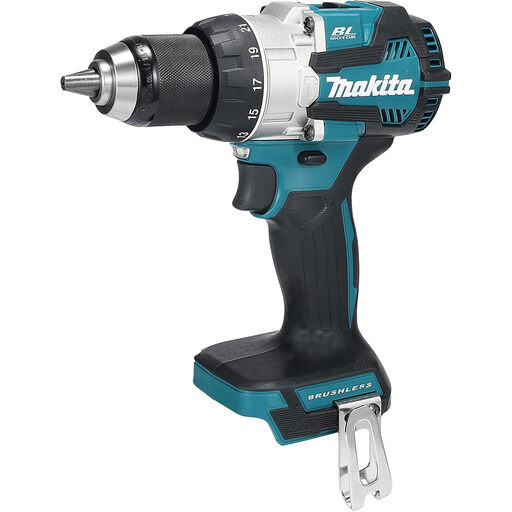
Why this product suits this profile: This tool is designed for users of the Makita 18V LXT system who drill and screw regularly and also need an impact drilling function.
The product information clearly states that the battery and charger are not included. If you already own Makita 18V batteries, you can take this requirement into account straight away.
73 Nm maximum torque, 13-mm chuck, two gears and integrated LED work light.
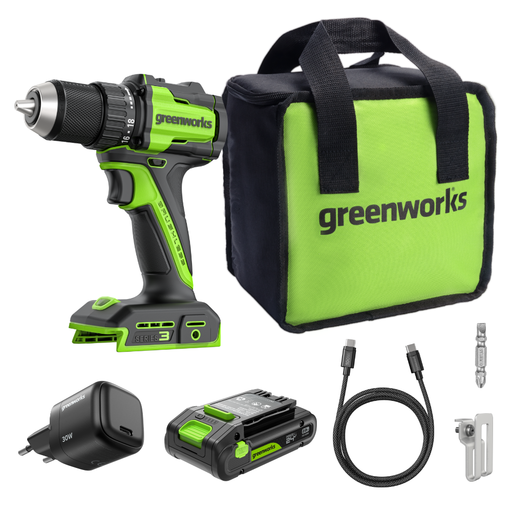
Why this product suits this profile: This model features a brushless motor, 45 Nm of torque and is supplied with a 2.0-Ah battery, charger and bag. It is suitable for users who want to use the Greenworks 24V POWERALL system.
The battery and charger are listed as included. Compatibility with Greenworks 24V POWERALL tools is also clearly stated.
18+1 settings, 0–450 and 0–2,000 U/min, LED work light and a stated drilling capacity of up to 30 mm in wood.
We have put together a complete, regularly updated list of products that fully meet these strict selection criteria and the safety regulations applicable in the EU.
For a long service life, the battery should be charged and stored in a dry place in accordance with the manufacturer’s instructions. Remove the battery before changing bits or carrying out maintenance. Keep the ventilation slots and chuck free from dust.
When working, safety glasses and, during extended drilling tasks, hearing protection are advisable. The workpiece should be securely fastened. Only use drill bits and screwdriver bits that are suitable for the material, speed and chuck.
For assembling furniture, a compact model with several torque settings, an LED work light and a keyless chuck is usually sufficient. 12V tools are easy to handle, while 18V models often provide more reserve power for additional drilling work.
Runtime depends on battery capacity, material, drill bit diameter, torque and load. A higher Ah rating can allow longer periods of work. For regular use, a second compatible battery is often more practical than having to take a long break to recharge.
If you mainly work with wood, plastic and metal, a standard cordless combi drill will usually be sufficient. For occasional drilling in masonry, a cordless impact drill may be suitable. For frequent or deep drilling in concrete, you should use a tool designed for that purpose.