
Lieferung heute & morgen

Qualitätsgarantie

Willkommens-Angebote freischalten: KOSTENLOSE Lieferung | Bis zu 80 % RABATT | Kostenlose 30-Tage-JoyPlus-Testphase
App herunterladen
A cordless compressor for car tyres can be useful in the boot, on a motorbike or in a rucksack when tyre pressure needs adjusting while you are out and about. Many devices look similar at first glance. However, they differ in terms of battery, air output, operation and accessories.
If you only look at a high PSI figure, you may end up buying a device that is suitable for bicycle tyres but takes considerably longer to inflate a car tyre. An integrated display is not automatically a reliable digital tyre pressure gauge either. The following criteria can help you avoid common buying mistakes.
Figures such as 150 PSI or 160 PSI describe the maximum pressure possible under certain conditions. On their own, they say little about how quickly a tyre will inflate in everyday use. For car tyres, air flow rate, motor power and the intended tyre size are also relevant.
A 150 PSI tyre inflator may therefore be very suitable for bicycle tyres but reach its thermal limits when inflating several car tyres one after another. Look for specific information about inflation times, permitted use and any required cooling breaks.
A cordless tyre pump needs to be charged regularly. Capacity is usually stated in mAh, but this figure is only meaningful when considered alongside voltage, motor power and tyre size. A small battery may be sufficient for occasional pressure adjustments, while frequent users may need a higher capacity and a well-designed cooling system.
Check the charge level before longer journeys. For extended use, a 12-volt compressor with a cable can be a practical alternative, as it does not rely solely on the integrated battery.
Car tyres normally use Schrader valves, while bicycles often use Presta valves. An adaptor or nozzle is usually needed for balls and other inflatables. Therefore, check whether adaptors are included and whether the air hose is long enough.
Some models are specifically intended for bicycles only. According to the product description, the Fanttik X9 Ace Mini Bike Pump must not be used for car or motorbike tyres. This kind of restriction should be taken into account before buying.
For regular pressure adjustments on passenger cars, information such as air flow rate and specific inflation times is more useful than maximum pressure alone. For example, models offering around 35 l/min are described in product data as providing short inflation times for certain passenger-car tyres. These figures apply to the specified tyre size and starting and target pressures, and cannot be automatically transferred to every vehicle.
Also check the vehicle class. Compact cars, motorbikes, e-bikes and bicycles have different requirements. A small portable air compressor may be unsuitable for heavy vans, motorhomes or lorries, even if its PSI rating appears high.
An easy-to-read display should show both the current and preset pressure. Several units, such as PSI, bar and kPa, are useful because vehicle handbooks and tyre information may use different measurements.
The automatic shut-off stops inflation once the set target value has been reached. This reduces the need to stand beside the pump throughout the process. However, the connection at the valve should still be airtight, and the pressure should be checked after removing the hose. A separate digital tyre pressure gauge can be used for particularly accurate checks.
A USB-C port makes charging at home, in the vehicle or via a power bank easier. Figures such as 4,000 mAh, 5,000 mAh or 7,500 mAh provide a rough indication, but they do not replace the manufacturer's information about the possible number of tyre inflations.
Look out for:
An LED emergency light function with steady, flashing or SOS mode can make you more visible and make operation easier during a breakdown in the dark. However, it is an additional feature and not a substitute for a high-visibility vest or the legally required vehicle equipment.
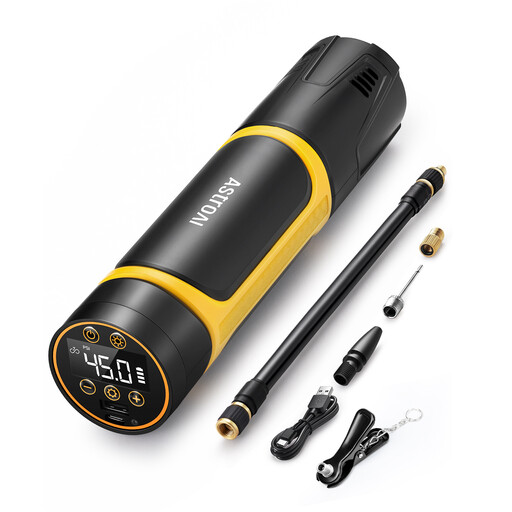
Why this product suits the profile: The cordless model is described as suitable for bicycles, motorbikes, cars and balls, and its compact dimensions make it easy to store in a vehicle or rucksack.
Five modes and four pressure units make the intended uses clear. The automatic shut-off limits inflation to the preset value.
150 PSI maximum pressure, LCD display, integrated LED light, plus USB-C input and USB output according to the product description.
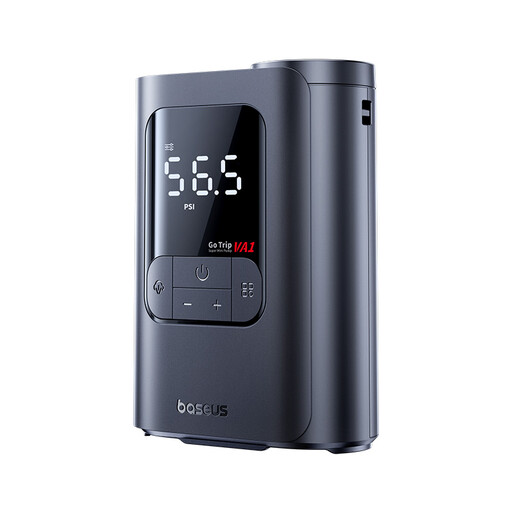
Why this product suits the profile: The model combines a weight of around 459 g with five inflation modes and a stated pressure accuracy of ±0.05 bar.
The technical data specifies the battery, motor power, charging port and accessories. This makes it easier to check the actual contents of the package before buying.
2,500 mAh battery, USB-C input, three nozzles and five modes according to the product details.
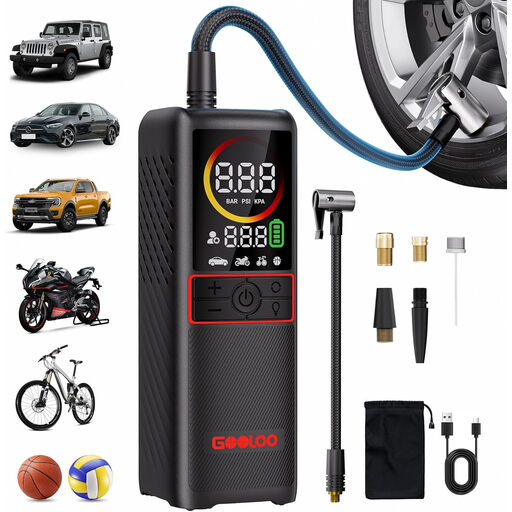
Why this product suits the profile: The stated battery capacity of 7,500 mAh and air flow rate of 35 l/min are aimed at users who want to inflate several tyres or different inflatables.
The product data lists specific modes, pressure ranges, charging functionality and automatic shut-off rather than focusing solely on maximum pressure.
160 PSI maximum pressure, four preset modes, manual mode, LED lighting and power bank function according to the supplier's information.
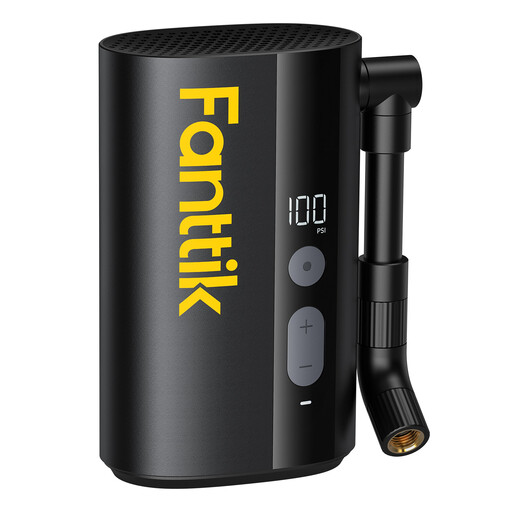
Why this product suits the profile: The device is specifically intended for mountain bikes, road bikes and e-bikes, combining a compact design with support for Presta and Schrader valves.
Its clear limitation to bicycles prevents false expectations about using it as an air compressor for cars and motorbikes.
150 PSI, integrated hose, 5,000 mAh battery and automatic shut-off according to the product description.
We have put together a complete, regularly updated list of products that fully meet these strict selection criteria and the safety regulations applicable in the EU.
Before using the compressor for the first time, read the vehicle information on the recommended tyre pressure. This value is often shown on the door pillar, inside the fuel flap or in the owner's manual. Inflate and measure car tyres when they are cold wherever possible, as heat can alter the pressure.
Connect the hose securely to the valve and select the appropriate unit. After inflating, replace the valve cap. Allow the compressor to cool down after longer periods of use, as instructed in the manual. Store it in a dry place, protected from excessive heat. This helps you use the battery and motor within their intended limits.
The correct tyre pressure depends on the vehicle, its load and the axle. The vehicle manufacturer's specifications are the deciding factor, not the compressor's maximum pressure. PSI, bar and kPa are different units; many devices can switch between them.
This depends on the battery capacity, tyre size, starting pressure, target value and device temperature. Manufacturers' figures for the possible number of tyre inflations provide guidance for the specified tyre size. During longer periods of storage, the battery should be recharged regularly.
A suitable model can inflate car tyres for pressure adjustments or certain breakdown situations. Whether it can also inflate a completely flat tyre quickly enough depends on the air output, tyre size and operating time. For heavy vehicles or frequent inflation of several tyres, the intended area of use should be checked particularly carefully.