
Lieferung heute & morgen

Qualitätsgarantie

Willkommens-Angebote freischalten: KOSTENLOSE Lieferung | Bis zu 80 % RABATT | Kostenlose 30-Tage-JoyPlus-Testphase
App herunterladen
A cordless cutting tool can make work easier when sewing, crafting, renovating or cutting wood. However, the key consideration is whether the design, blade and battery performance suit the material. A device for fabric and cardboard is not automatically suitable for wood; a cordless circular saw performs very different tasks from an electric fabric scissors.
If you focus only on speed or a low price, you can easily overlook important details. Three common purchasing problems occur particularly often:
For precise cutting of wood, fabric, cardboard and plastic, the blade is crucial. A round blade is often suitable for longer, flowing cuts in textiles, felt or thin cardboard. A pointed blade can offer advantages when working around corners and edges.
With an electric cutter for leather and carpet, you should also check whether the blade is designed for denser materials. Descriptions such as stainless steel, carbon steel or tungsten steel refer to the blade material, but they do not replace checking the permitted material thickness.
Woodworking generally requires a different category of tool: a cordless circular saw has a larger saw blade, a defined cutting depth and usually a guide rail or fence option. A 24 V circular saw should therefore not be considered equivalent to a compact cordless fabric cutter.
The voltage alone says little about actual cutting performance. A 4.2-volt device is designed for light cutting tasks, while a 24-volt cordless circular saw is intended for wood and heavier cutting loads. Look at the combination of battery voltage, capacity, motor power and intended application.
A USB-C cordless cutter can be charged flexibly using a suitable power adapter, computer, power bank or vehicle. Even so, check before buying whether the charging cable is included and which power source the manufacturer recommends. With system tools such as the Greenworks saw, the battery and charger may need to be purchased separately.
A low weight can be helpful during longer sewing or crafting sessions. A non-slip handle, an easily accessible control button and a secure blade cover are equally important. An integrated lock function to prevent accidental start-up is particularly relevant for handheld cutting tools.
Before changing the blade, the device must be switched off, disconnected from the charger and, with system tools, have the battery removed. Safety glasses and suitable work gloves may be advisable depending on the material and application. With circular saws, you may also need hearing protection and a suitable dust mask.
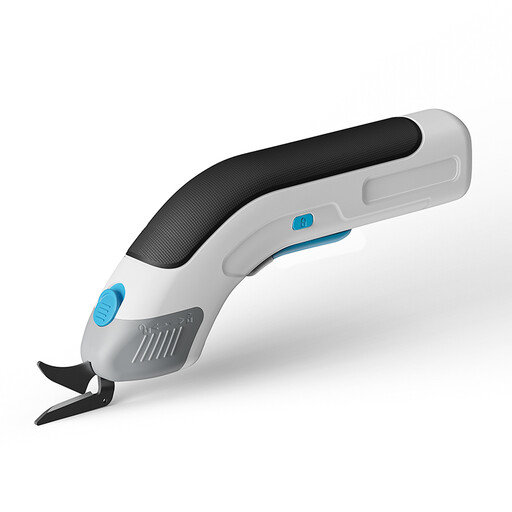
Why this product suits this profile: The compact cordless cutter is designed for fabric, felt, cardboard, leather, carpet and plastic and weighs 0.2 kg according to the product details. This makes it suitable for occasional sewing, crafting and DIY projects.
The pointed blade is explicitly designed for edges and corners. A battery level indicator makes it easier to plan around the stated runtime of up to 45 minutes per charge. Even so, check the availability of replacement batteries and blades before buying.
4.2 V lithium-ion battery, USB-C charging, 11,000 rpm and a tungsten steel blade that is rust-resistant according to the product details.
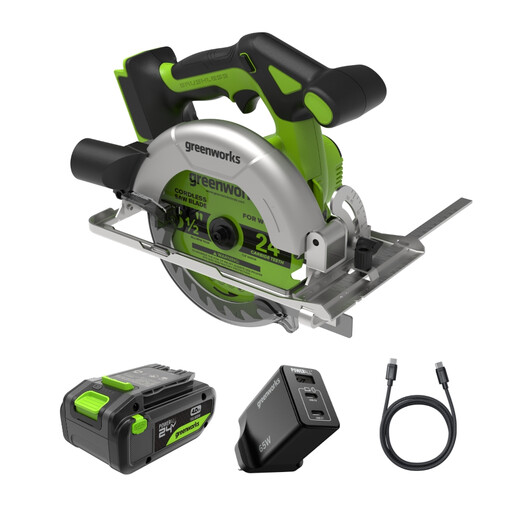
Why this product suits this profile: For renovation, furniture building and precise wood cutting, this cordless circular saw offers defined technical specifications rather than general claims about material suitability.
The maximum cutting depth is 57 mm at 90 degrees according to the product details. Mitre cuts from 0 to 45 degrees are also possible. Important: the battery and charger are not included and must be compatible with the Greenworks 24 V system.
Brushless motor, 165 mm carbide-tipped blade, LED lighting, spindle lock and connection for 35 mm extraction hoses.
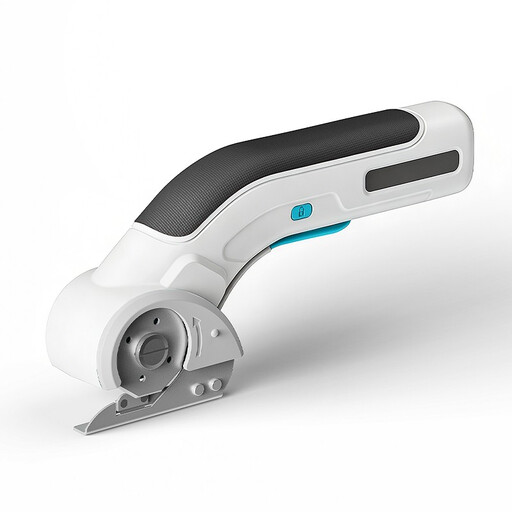
Why this product suits this profile: The round blade and low weight of 0.39 kg according to the product details are aimed at users who regularly work with fabric, felt, leather, carpet, cardboard or plastic.
The product details state up to two hours of continuous cutting time. As only one blade is supplied, frequent users should consider their need for replacement blades and check availability before buying.
11,000 rpm, USB-C charging port, tool-free blade change and integrated blade lock; the stated noise level is below 70 dB.
We have put together a complete, regularly updated list of products that fully meet these strict selection criteria and the safety regulations applicable in the EU.
With a cordless electric cutter, ongoing costs mainly arise from replacement blades and, where necessary, an additional battery. You should therefore check:
Material residue should be removed after every use. The device should be stored in a dry place and charged only with the specified power source. With a cordless circular saw, you should also regularly check the saw blade, blade guard, dust outlet and guide mechanism for dirt or damage.
For fabric, felt and thin cardboard, electric fabric scissors or a cordless fabric cutter with a round blade are often suitable. A pointed blade may be more appropriate for corners and short, detailed work. The key factors are material thickness, blade shape and the ability to source replacement blades.
Runtime depends on battery capacity, material, pressure and cutting speed. The product data for the 4.2-volt devices featured ranges from up to 45 minutes to up to two hours. These figures should be treated as general guidance and not as a guaranteed runtime for every application.
For straight cuts in planks, panels or squared timber, a cordless circular saw with a suitable cutting depth is the more practical category of tool. A small cordless cutter for fabric, leather and cardboard is not designed for this purpose. Before buying, the blade diameter, cutting depth, mitre angle, battery and charger system must all be compatible.