
Lieferung heute & morgen

Qualitätsgarantie

Willkommens-Angebote freischalten: KOSTENLOSE Lieferung | Bis zu 80 % RABATT | Kostenlose 30-Tage-JoyPlus-Testphase
App herunterladen
Cordless devices promise freedom from cables and greater flexibility in your daily life, in the garden, and for urban mobility. But the market is saturated, and not every wireless device lives up to its advertising. Unmet expectations for battery life or hidden follow-up costs from incompatible systems often lead to disappointment.
As your Joybuy Product Recommendation Officer, I'll help you identify the crucial features. This guide will show you what to look for to bypass marketing traps and make an informed decision on durable, practical, and rechargeable technology.
Before we dive into the technical details, let's look at the most common issues that can lead to buyer's remorse.
To avoid these pitfalls, focus on objective, technical metrics. These three parameters are crucial for the performance and longevity of your battery-powered devices.
These two values are fundamental to a device's performance.
The total energy of a battery is measured in Watt-hours (Wh) and is calculated by Voltage (V) × Capacity (Ah). This value is the most honest benchmark for comparing overall endurance.
Modern cordless devices almost exclusively rely on the lithium-ion battery. The advantages over older technologies like NiCd or NiMH are significant:
Look for brand-name products that use high-quality cells from reputable manufacturers, as this significantly impacts the cycle life (the number of possible charge and discharge cycles) and safety.
The charging method has a huge impact on everyday usability. While devices like a robotic lawn mower or an e-bike often have a permanently installed battery that charges via a special station, other devices offer more flexibility. Rechargeable batteries or smaller devices with an integrated USB-C port can be conveniently charged using power banks, laptops, or existing power adapters. This reduces the number of specialised chargers you need and simplifies on-the-go use.
Here are some recommendations tailored to specific use cases that take the above criteria into account.
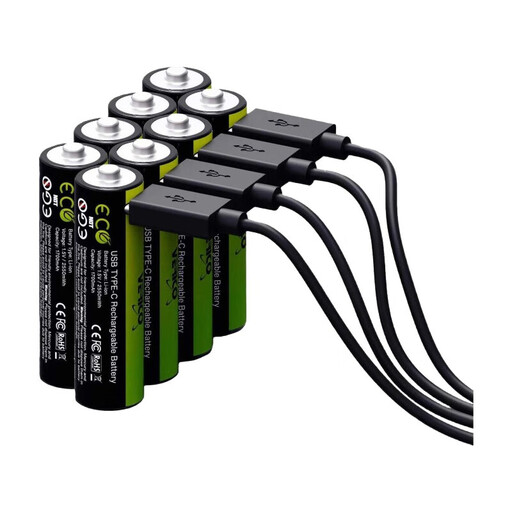
Why This Fits Their Persona: Ideal for users who are tired of the constant cost and waste of disposable batteries in remote controls, controllers, or children's toys and are looking for a sustainable, straightforward solution.
Bypasses the cost trap of disposable batteries. According to the manufacturer, one rechargeable battery replaces up to 1,000 alkaline batteries, quickly paying for itself.
Integrated USB-C charging port for maximum flexibility without a special charger. Constant 1.5 V voltage ensures stable device performance.
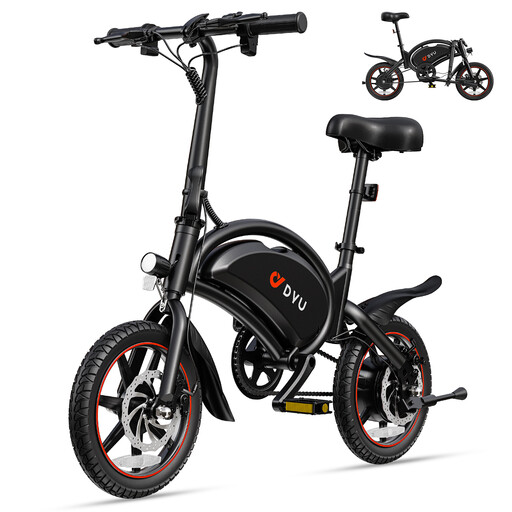
Why This Fits Their Persona: Perfect for city commuters who need a flexible "last mile" solution. Its compact design allows it to be easily carried on public transport or stored in the office.
Solves the problem of bulky devices for urban mobility. Instead of a large, unwieldy e-bike, this model offers a solution optimised for foldability and portability.
Compact 14-inch format and folding mechanism. The 36V 10Ah battery offers a solid balance of range and weight for city traffic.
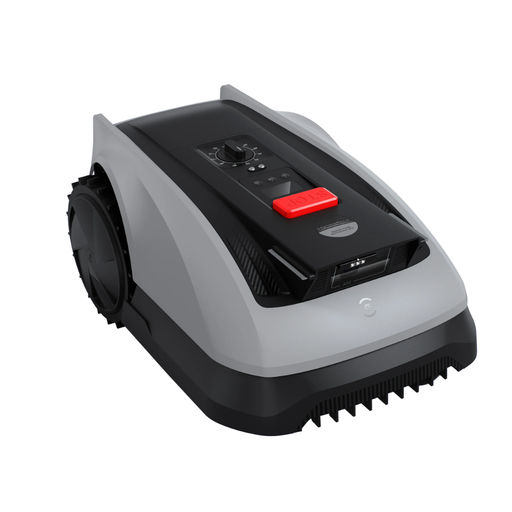
Why This Fits Their Persona: For homeowners with gardens up to 600 m? who are looking for a time-saving and technologically advanced lawn care solution and value a precise, even cut.
This model bypasses the complex installation of boundary wires, a common hurdle with conventional robotic mowers. Setup is done entirely virtually via an app.
Wire-free RTK navigation for centimetre-level positioning. Intelligent AIVI obstacle avoidance makes it one of the most advanced smart garden devices available.
We have compiled a complete, up-to-date list of products that fully meet these strict selection criteria and all relevant safety regulations.
1. How should I store lithium-ion batteries correctly, especially in winter? Store batteries in a cool, dry place at temperatures between 10°C and 20°C. Avoid frost and direct sunlight. For long-term storage, a charge level of around 40–60% is ideal. Never charge a frozen battery, and do not fully discharge it before storing.
2. What do "Ah" (Ampere-hours) and "V" (Volt) mean on a battery? Volts (V) is the unit for electrical voltage and can be thought of as the "power" of the device. Ampere-hours (Ah) indicate the capacity, i.e., how long the battery can supply a certain current. A higher Ah value generally means a longer runtime for the device.
3. Are batteries from different manufacturers compatible with each other? In most cases, batteries are not cross-compatible between manufacturers. Many brands use their own patented connectors and electronics to lock customers into their ecosystem. However, there are alliances like the "Power for All Alliance," where multiple manufacturers use the same battery standard. Always check this before buying a device for an existing system.