
Lieferung heute & morgen

Qualitätsgarantie

Willkommens-Angebote freischalten: KOSTENLOSE Lieferung | Bis zu 80 % RABATT | Kostenlose 30-Tage-JoyPlus-Testphase
App herunterladen
A reliable cordless drill is the cornerstone of any DIYer's toolkit. But the market is crowded and full of tempting offers that often prove inadequate later on. Many buyers invest in tools that are either over- or underpowered for their projects, or they end up frustrated with low-quality accessories and incompatible battery systems. This guide will help you identify the crucial features and make an informed choice that truly fits your needs.
Before we dive into the technical details, it's important to recognize the most common marketing traps. Seeing through them will save you not only money but also frustration on future projects.
To find the right cordless drill driver, you should focus on three core technical areas. These determine the tool's power, control, and versatility.
These three values must always be considered together:
A high-quality cordless drill driver features a 2-speed gearbox. The first gear offers high torque at low speed—ideal for precise screw driving. The second gear delivers high speed for fast drilling. Additionally, an adjustable torque clutch (e.g., 20+1 settings) allows you to dose the power exactly, preventing you from over-tightening screws or damaging delicate materials.
A good cordless drill with a case protects the tool during storage and transport. Check the contents carefully:
Based on these objective criteria, we have identified some models that are well-suited for specific user profiles.
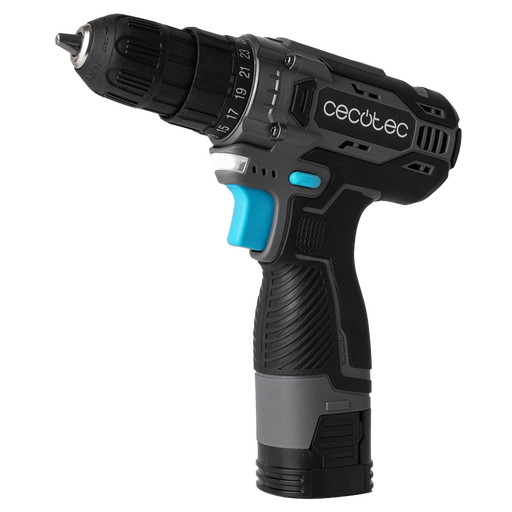
Why This Fits Their Persona: Ideal for people who occasionally tackle DIY projects and want a complete, ready-to-go solution without a large budget. The set covers many basic applications.
This cordless drill set avoids the trap of incomplete accessories. It includes two batteries, a case, and a wide selection of bits and drill heads, making additional purchases unnecessary to get started.
Comprehensive package with two 2.0 Ah batteries for uninterrupted work and 38 Nm of torque, which is sufficient for most standard tasks.
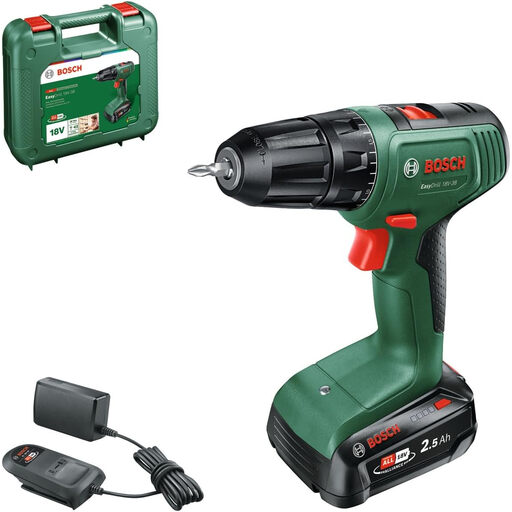
Why This Fits Their Persona: Perfect for DIYers who regularly tackle more demanding projects around the house and garden and plan to expand their tool collection. This Bosch cordless drill provides a solid foundation.
This tool solves the "battery dead-end" problem. As part of the 18V POWER FOR ALL ALLIANCE, its battery is compatible with numerous tools from various brands, offering maximum flexibility.
A future-proof investment thanks to the cross-brand battery system. The 2-speed gearbox and 20 torque settings allow for precise adjustments for any drilling or driving task.
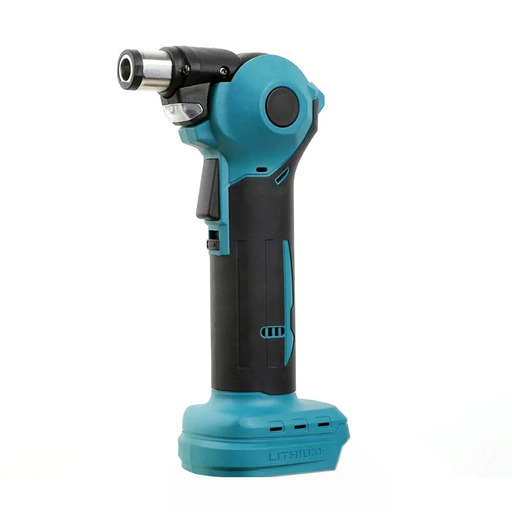
Why This Fits Their Persona: For experienced users who already own tools from the Makita 18V system and need a cost-effective addition for drilling into harder materials like masonry.
This tool is sold as a bare tool (without a battery or charger). It avoids the trap of having to buy into another unnecessary battery system by leveraging compatibility with an existing, widespread one.
Offers a hammer drill function for harder materials and is an economical expansion for users who have already invested in the Makita 18V ecosystem.
For demanding drilling in brick or concrete, you'll need specialized drill bits. We've curated a selection of suitable products that meet strict criteria.
For soft stone or brick, a powerful cordless drill driver with a suitable masonry bit may be sufficient. However, it is not recommended for hard concrete. For that, you need a hammer drill driver or a rotary hammer, as these tools generate the necessary axial impact to advance through the material.
The voltage, specified in volts (V), is an indicator of a cordless tool's power class. An 18V cordless drill belongs to the most common and versatile class for DIYers. It offers a great balance of power, runtime, and weight for most drilling and driving tasks in wood, metal, and plastic. 12V models are typically lighter, more compact, and suited for less demanding jobs.
The lifespan of a modern lithium-ion battery is measured in charge cycles and can last for several hundred cycles. The actual longevity depends heavily on usage and storage. To maximize its life, the battery should be stored in a cool, dry place and not be left fully discharged or fully charged for extended periods. A charge level of around 50-70% is ideal for storage.