
Lieferung heute & morgen

Qualitätsgarantie

Willkommens-Angebote freischalten: KOSTENLOSE Lieferung | Bis zu 80 % RABATT | Kostenlose 30-Tage-JoyPlus-Testphase
App herunterladen
Choosing a cordless drill driver can quickly become overwhelming. Countless models advertise high voltage ratings, huge accessory kits, and supposed professional features. However, not every one of these features is truly necessary for everyday household use or DIY projects. Often, these exaggerated marketing promises lead to poor purchases, where you end up paying for functions you will never use.
This guide will help you identify the crucial criteria. We'll highlight the most common traps and show you what really matters when selecting a reliable and durable tool.
To make an informed decision, you should focus on a few essential technical specifications. These determine the performance, durability, and practical usability of your cordless drill driver.
These two values define the fundamental performance of the tool.
The motor is the heart of the tool. In recent years, one technology has emerged that offers significant advantages.
A cordless screwdriver with battery and charger is the standard package. However, pay attention to whether the battery is part of a larger system. Manufacturers like Bosch (POWER FOR ALL ALLIANCE) or Makita (LXT system) offer hundreds of tools that are all compatible with the same battery type. This saves money in the long run and reduces the number of chargers and batteries you need.
Instead of making a one-size-fits-all recommendation, we have selected models tailored to specific user profiles.
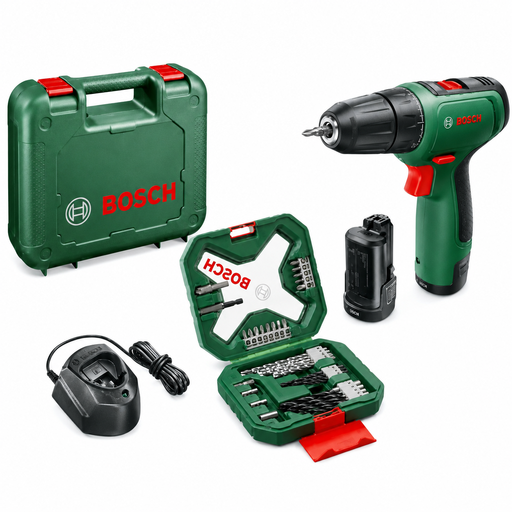
Why this model is a great fit: Ideal for anyone who needs a reliable, lightweight tool for everyday tasks like assembling furniture or hanging pictures. Its compact design makes it easy to work in tight spaces.
The 12V power is perfectly adequate for home use, avoiding the trap of an oversized, heavy tool. The included Bosch accessories provide a solid starter kit.
Lightweight, compact, and ready to use out of the box thanks to the included battery, charger, and accessories. The variable torque setting allows for precise screwdriving.
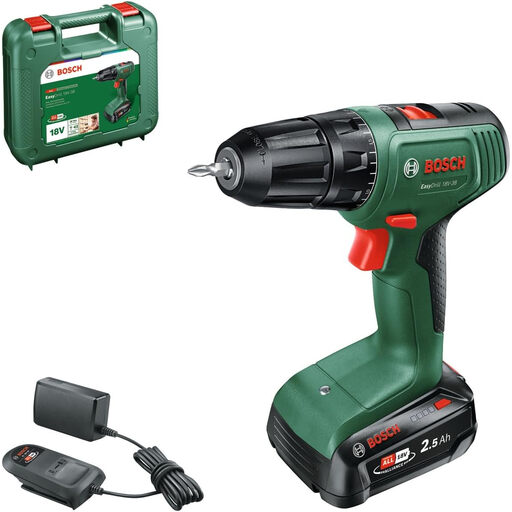
Why this model is a great fit: For DIYers who regularly tackle projects around the house and garden. The 18V platform provides enough power for drilling in wood and metal, as well as for repetitive screwdriving.
This model is part of the POWER FOR ALL ALLIANCE. The 18V battery is compatible with numerous tools from different brands, solving the problem of expensive, proprietary battery systems.
Flexibility through the cross-brand battery system. The 2-speed gearbox and 20 torque settings allow for precise adjustment for both drilling and screwdriving tasks.
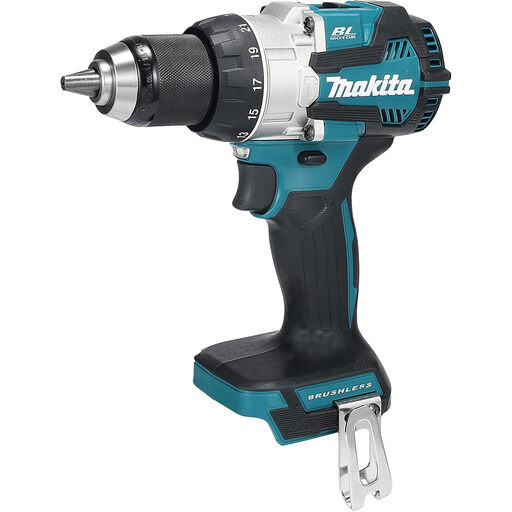
Why this model is a great fit: A robust hammer drill driver for users who regularly drill into hard materials like masonry. The bare tool delivery is ideal for anyone who already owns tools from the Makita 18V LXT system.
By offering the tool as a body-only version, it avoids unnecessary costs for extra batteries and chargers. The brushless motor ensures a long service life even under intensive use.
High performance and durability thanks to the brushless motor. The selectable hammer function (XPT technology) enables drilling in masonry and protects the tool from dust and water spray.
We have compiled a complete, up-to-date list of products that fully meet these strict selection criteria and relevant safety regulations.
The runtime of a battery depends on its capacity (measured in Amp-hours, Ah) and the intensity of use. For light screwdriving tasks, a 2.0 Ah battery often lasts several hours. For demanding drilling in hard materials, the runtime can be shorter. A brushless motor can extend the runtime per charge by up to 30%.
Generally, no. Most manufacturers use their own battery mounts and electronics. An exception is cross-brand alliances like the "POWER FOR ALL ALLIANCE," where batteries from brands like Bosch, Gardena, and others are mutually compatible. Always check this before purchasing.
A standard cordless drill driver is suitable for screwdriving and drilling in materials like wood, metal, and plastic. A hammer drill driver has an additional, selectable function that applies rapid, small, forward-thrusting blows to the drill bit. This makes it significantly easier to drill into harder materials like brick or masonry.