
Lieferung heute & morgen

Qualitätsgarantie

Willkommens-Angebote freischalten: KOSTENLOSE Lieferung | Bis zu 80 % RABATT | Kostenlose 30-Tage-JoyPlus-Testphase
App herunterladen
A cordless drill driver should drive screws securely, create clean holes and perform reliably in everyday use without being held back by an unsuitable battery or missing accessories. For DIY enthusiasts, furniture makers and renovators, however, choosing the right model can be confusing. Manufacturers quote high speeds, numerous torque settings and extensive kits, while important details are often hidden in the small print.
An 18V cordless drill driver does not automatically offer more practical value than a 12V cordless drill. What matters is the interaction between torque, gearing, motor, battery capacity and design. A compact 12V model may be perfectly adequate for assembling furniture or drilling smaller holes. For longer screws, larger drill bits or frequent use, an 18V system will generally offer greater reserves.
Before buying, check whether the battery and charger are included. Some models are sold as “Tool Only” and require a system battery to be purchased separately. The Makita DDF487Z is one example. A low tool price can therefore become less attractive if the battery, charger and carrying case are still missing.
A conventional drill driver is typically suitable for wood, metal and plastic. A cordless hammer drill can also handle light masonry work. For concrete, frequent chiselling or demanding construction-site applications, however, you need a rotary hammer system designed specifically for those tasks. The terms “Impact” and “Hammer” should therefore always be checked against the actual technical specifications.
Torque control prevents screws from being driven too deeply or delicate materials from being damaged. Having numerous settings is particularly useful when assembling furniture, fitting hardware and working with wood or plastic. A higher speed is also beneficial for drilling.
Look out for:
The battery voltage should match your intended use. 12V models are often easier to handle, while 16V and 18V systems can offer greater power reserves for renovation work and regular drilling. Battery capacity in Ah mainly affects the potential runtime. Two 2.0Ah batteries allow you to swap batteries while the other is charging, provided the charger is purchased separately or included in the box.
Compatibility is also important. A Makita cordless drill driver will not automatically use Bosch batteries. With the Bosch EasyDrill 18V-38, the battery belongs to the POWER FOR ALL 18V system. The Makita DDF487Z and Makita DHR241Z require Makita 18V Li-ion batteries and compatible chargers.
A keyless chuck allows you to change drill bits and screwdriver bits without tools. The chuck size must be suitable for the accessories you intend to use. The Bosch EasyDrill 18V-38 has a stated chuck capacity of 10 mm, while the Makita DDF487Z is specified with a 13mm chuck.
For a drill for wood and metal, you should also check the maximum drilling diameters and suitable drill bits. The Bosch EasyDrill 18V-38 is specified for up to 30 mm in wood and 10 mm in steel. An LED work light, electronic overload protection and a secure grip are useful additions, but they do not replace safety goggles or securely fixing the workpiece.
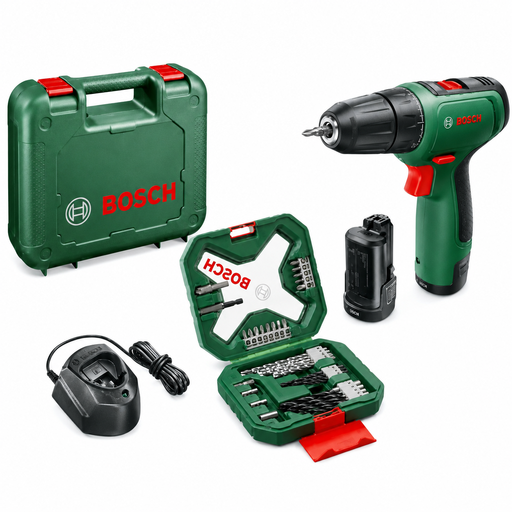
Why this product suits this profile: This 12V model is aimed at users who want to assemble furniture, put up shelves and tackle smaller jobs in wood, metal and plastic. The battery, charging base and accessories are listed as included.
The contents list includes a 1.5Ah battery, charging unit and 34 accessories. This makes it easier to see which additional purchases are actually required.
Compact design, keyless chuck, variable torque control and accessories for typical DIY tasks.
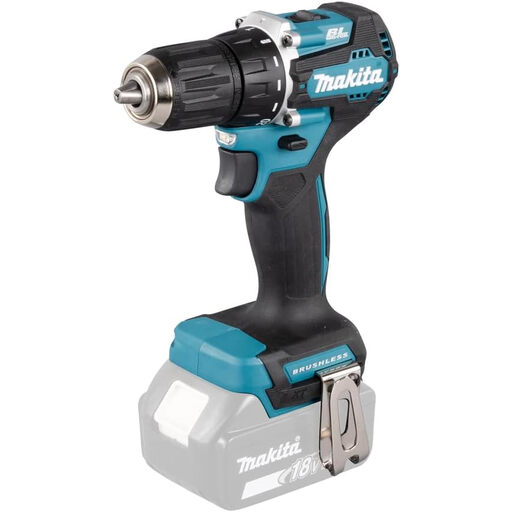
Why this product suits this profile: This brushless cordless drill driver delivers a maximum torque of 40 Nm, two speed ranges up to 1,700 rpm and electronic overload protection. It is suitable for regular screwdriving and drilling work.
The specifications clearly state that the battery and charger are not included. This prevents miscalculating the cost when buying a bare tool.
Brushless motor, 13mm chuck, LED lighting and compatibility with Makita 18V Li-ion batteries.
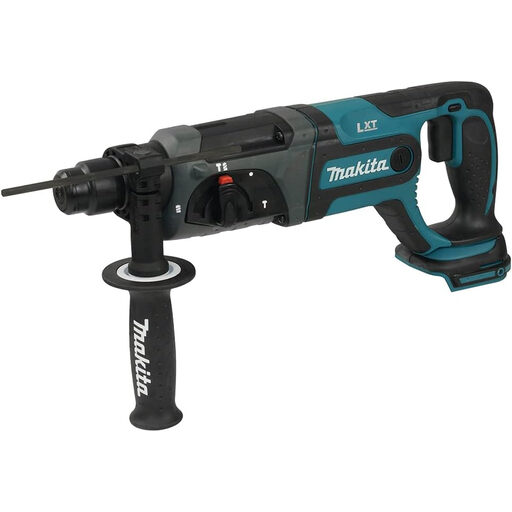
Why this product suits this profile: This model is specified with dedicated hammer and drilling functions, 19 settings and a maximum speed of 1,100 rpm. It is therefore an appealing option for users who plan to tackle light masonry work as well as drilling.
The hammer function is explicitly stated rather than inferred from a marketing product name alone. Before use, check that the specific chuck is compatible with the accessories you plan to use.
18V Li-ion system, ergonomic grip and stated hammer and drilling functions; battery and charger must be budgeted for separately.
For every cordless drill driver with battery, check the product page and packaging information for the following:
When drilling, wear safety goggles and, where noise levels are higher, hearing protection. The workpiece must be secured, and the bit or drill bit must be firmly seated in the chuck. Always remove the battery before changing it or carrying out maintenance.
We have put together a complete, regularly updated list of products that fully meet these strict selection criteria and the safety regulations applicable in the EU.
A 12V cordless drill is often sufficient for light assembly work. If you regularly drill into wood and metal, drive long screws or need greater power reserves, consider a 16V or 18V system. Torque, battery capacity and suitable accessories remain the key factors.
Service life depends on the load, storage conditions, charging habits and availability of spare parts. The battery and charger should belong to the intended platform. Storing the tool in a dry, frost-free place and following the manufacturer’s instructions can help extend its practical service life. A fixed lifespan cannot be determined from the voltage alone.
The charger’s electricity consumption is generally modest compared with many corded jobs. More significant costs include replacement batteries, chargers, wear parts and any additional drill bits or screwdriver bits required. A cordless drill driver set with suitable accessories can reduce the initial additional costs, while a bare tool may be a sensible choice if you already have a compatible battery platform.