
Lieferung heute & morgen

Qualitätsgarantie

Willkommens-Angebote freischalten: KOSTENLOSE Lieferung | Bis zu 80 % RABATT | Kostenlose 30-Tage-JoyPlus-Testphase
App herunterladen
A cordless drill driver should drive screws in securely, drill clean holes and perform reliably in everyday use. But product descriptions often draw attention to individual figures, while important details are buried in the small print. If you focus only on a high voltage rating or a large number of accessories, you could end up with a tool that isn’t right for the job.
Three common reasons for buying a drill driver often lead to the wrong choice:
A 12V cordless drill driver is usually more compact and suitable for assembling furniture, putting up shelves, light repairs and smaller holes in wood or plastic. An 18V cordless drill driver generally offers more power in reserve for larger screws and drill bits.
Voltage alone, however, tells you little about actual run time. Also check:
A drill driver with battery and charger is often easier for first-time buyers to budget for. If you already have compatible batteries, a ‘tool only’ model may make more sense.
Torque is measured in Newton metres (Nm). A higher figure can be useful for larger screws or tougher materials, but it doesn’t replace choosing the right setting. For delicate workpieces, several torque settings and a trigger that allows fine speed control are useful.
A two-speed gearbox caters for different tasks:
For furniture making and assembly, a finely adjustable clutch is often more important than the highest possible torque figure. When comparing models, also check the no-load speed, chuck size and which drill bits are available.
A standard cordless drill driver is designed for driving screws and drilling in wood, metal and plastic. A cordless combi drill adds a hammer action for light drilling in masonry. This function delivers additional impacts and can be useful with mineral-based materials.
For concrete or regular, heavy-duty masonry work, a dedicated SDS drill is usually a better choice. The hammer action of a cordless combi drill shouldn’t be confused with the performance of a dedicated SDS drill.
Also check:
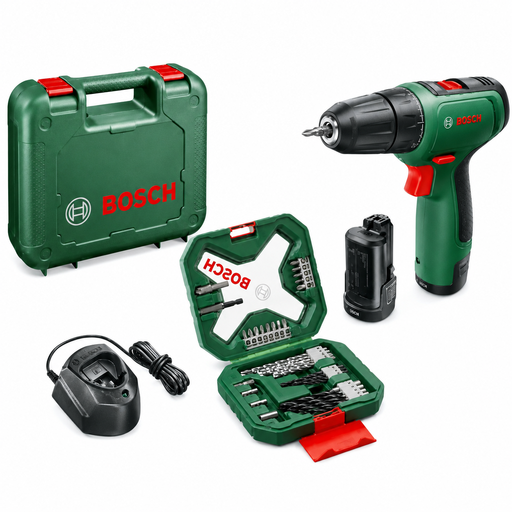
Why this product suits this profile: This compact 12V model is designed for assembling furniture, smaller repairs and occasional drilling in wood, metal and plastic. The set includes a battery, charger and accessories.
Everything included is clearly listed, so you can get started straight away. The 12V design avoids unnecessary weight for lighter tasks.
12V lithium-ion battery with 1.5 Ah, keyless chuck and 34-piece drill bit and screwdriver bit set.
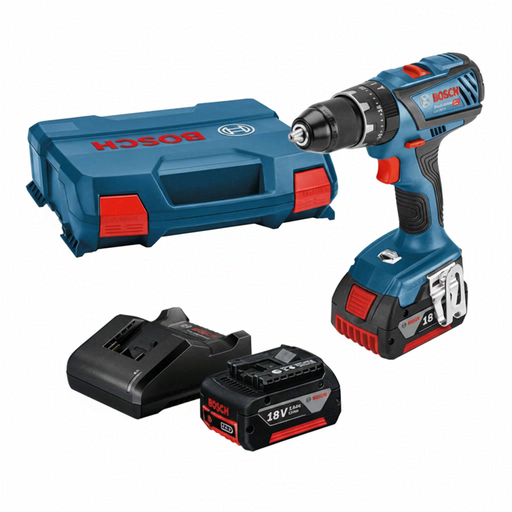
Why this product suits this profile: This 18V cordless combi drill is aimed at users who want one tool for driving screws, drilling and light masonry work.
Separate settings for driving screws, drilling and hammer drilling help ensure the hammer action isn’t used for every material. Two batteries reduce interruptions.
63 Nm hard torque, 13 mm metal chuck, two 3.0 Ah batteries, charger and L-Case included.
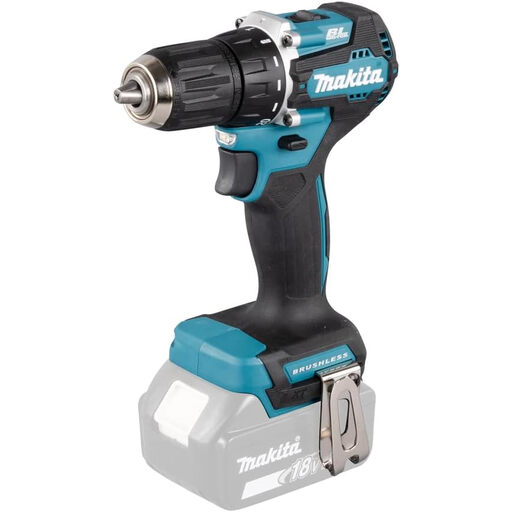
Why this product suits this profile: This model is ideal for users who already own batteries and chargers from the Makita 18V system and need a compact tool for regular screwdriving and drilling.
The product name clearly states that it’s supplied without a battery or charger. This makes it easier to budget realistically for any additional costs before buying.
Brushless motor, up to 40 Nm torque, 0–1.700 U/min and electronic overload and deep-discharge protection.
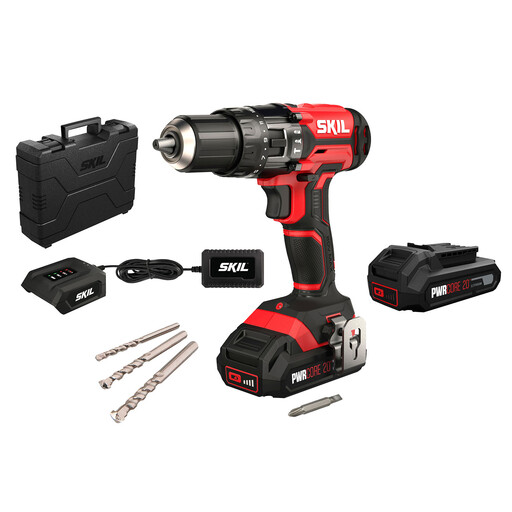
Why this product suits this profile: With screwdriving, drilling and hammer drilling functions, this tool is a good fit for DIYers working with different materials who need several functions in one tool.
The separate operating modes make it clear when to use the hammer action. The 13 mm keyless chuck lets you change accessories without a tool.
Three functions, two speed settings, 17 torque settings, plus separate settings for drilling and hammer drilling.
We’ve put together a comprehensive, regularly updated list of products that meet these strict selection criteria and the safety regulations in force across the EU.
Before using the tool for the first time, charge the battery fully according to the manufacturer’s instructions. When drilling, make sure the workpiece is securely held and that the drill bits and screwdriver bits are suitable for the material and chuck. Remove the battery before changing accessories or cleaning the tool.
Three things are particularly relevant to ongoing costs:
A compact 12V model is often enough for assembling furniture and smaller repairs. For larger screws, longer periods of use or drilling into harder materials, an 18V tool offers more power in reserve. You only need a hammer action if you’re planning light drilling in masonry too.
Its service life depends on the battery chemistry, workload, care and availability of spare parts. Store the tool somewhere dry, avoid overloading it for long periods and use the charger designed for it. When comparing models, it’s also worth checking the warranty terms and whether compatible batteries are available.
A cordless screwdriver set can be good value if it includes a battery, charger and suitable accessories. Still, check the quality of the screwdriver bits and drill bits, and make sure they’re genuinely suitable for wood, metal or masonry. If you already own batteries for the same system, buying the tool on its own may be more economical.