
Lieferung heute & morgen

Qualitätsgarantie

Willkommens-Angebote freischalten: KOSTENLOSE Lieferung | Bis zu 80 % RABATT | Kostenlose 30-Tage-JoyPlus-Testphase
App herunterladen
A cordless drill driver is an essential tool for many DIY enthusiasts, furniture assemblers and tradespeople. The range extends from compact models for furniture assembly to powerful cordless hammer drill drivers for drilling into masonry. However, the technical differences in torque, battery system and what's included in the box can mean that a seemingly budget-friendly model ends up costing you more later on.
Many tools are sold as "bare units" or "tool only". This means the package contains just the tool and possibly a bit or belt clip, but no battery and no charger. This is common across various Makita models, including the Makita DHP489Z and the Makita DDF487Z.
If you don't already own a compatible battery system, you should factor in the extra cost before you buy. A cordless drill driver with battery and charger can be more economical for beginners, even if the upfront price of the tool alone seems higher.
Manufacturers often quote the maximum torque in Newton metres (Nm). This figure describes the twisting force, but it doesn't tell you how pleasant or controlled the tool feels to use. Equally important are:
A very high torque can actually be a disadvantage with small screws if the power can't be finely adjusted. For furniture assembly and light renovation work, precise control is often more important than the highest possible peak figure.
A standard cordless drill driver is typically suitable for wood, metal and screwdriving. A cordless hammer drill driver adds a hammer action, making it more suitable for certain masonry tasks. However, this doesn't automatically replace a rotary hammer for tough building materials or extensive concrete work.
Before you buy, you should be clear about whether you'll mainly be driving screws, drilling into wood and metal, or occasionally working with masonry.
An 18 V cordless drill driver offers a widely used platform for DIY and assembly work. What matters isn't just the voltage, but compatibility within the specific system. Makita 18 V LXT batteries fit designated Makita tools; Bosch 18 V POWER FOR ALL batteries belong to a different system. Greenworks also uses its own 24 V system with POWERALL.
A unified battery system can reduce ongoing costs because you can use one charger and several batteries across different tools. For safety reasons, you should never use third-party batteries or unauthorised chargers.
For controlled screwdriving, multiple torque settings are useful. For drilling, a higher speed is helpful, while first gear provides more power at lower speeds. A two-speed gearbox is therefore more practical for varied tasks than a single-speed design.
As a rough guide:
These figures are manufacturer values and should always be considered alongside drill bit diameter, material and duration of use.
A brushless cordless drill driver operates without traditional carbon brushes. This eliminates the need to replace worn brushes. Whether the extra cost is worthwhile depends on how intensively you use the tool and how long you expect it to last. For regular use, this motor type can be appealing because of its low maintenance and longer runtime.
The chuck should suit your needs. A 10 mm chuck is sufficient for many DIY tasks, while a 13 mm chuck gives you more choice when it comes to drill bits. Weight also matters: a lighter tool is more comfortable for overhead work, while a more robust model can offer greater reserves for prolonged use.
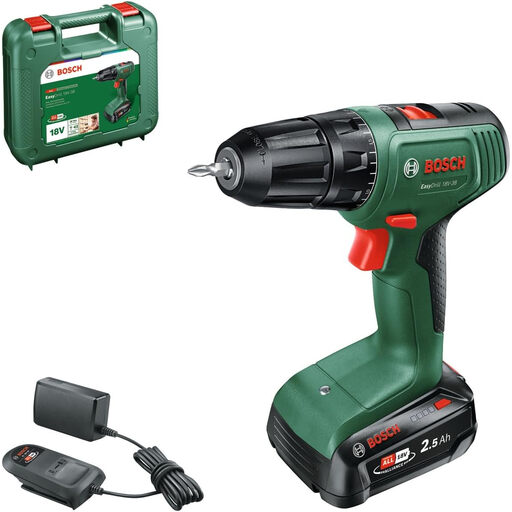
Why this product fits the profile: The set includes a battery and charger and is designed for typical household tasks as well as drilling into wood, metal and plastic.
The package includes an 18 V battery and a charger. This means you don't need to choose a separate system when starting out.
20 torque settings, two-speed gearbox, 38 Nm and a 10 mm keyless chuck.
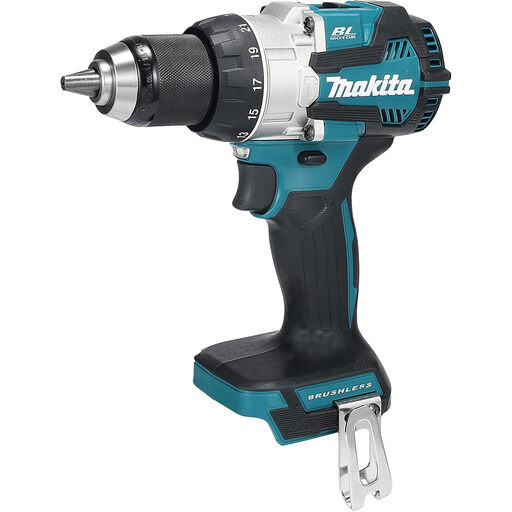
Why this product fits the profile: This cordless hammer drill driver is aimed at users who need a 13 mm chuck, brushless motor and an additional hammer action.
The technical specifications clearly state the speed, torque, chuck size and battery system. However, the battery and charger are not included.
73 Nm, 1,800 rpm, two-speed gearbox, XPT protection and integrated LED lighting.
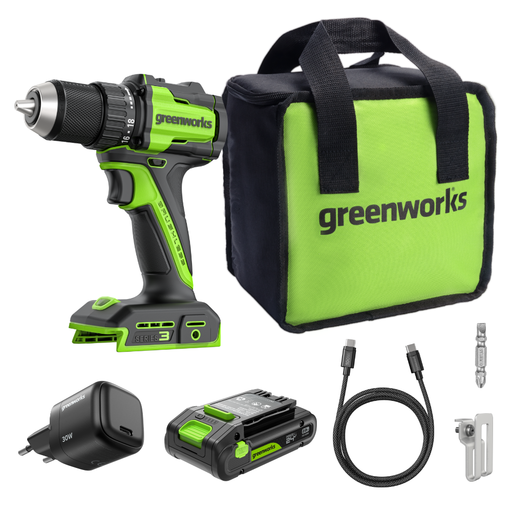
Why this product fits the profile: This model combines a brushless motor with a battery, charger and carry bag, and is compatible with the Greenworks 24 V POWERALL system.
The package is designed for immediate use. However, you should check compatibility with any existing Greenworks tools before buying.
45 Nm, 18+1 settings, up to 2,000 rpm, 30 mm wood drilling capacity and LED light.
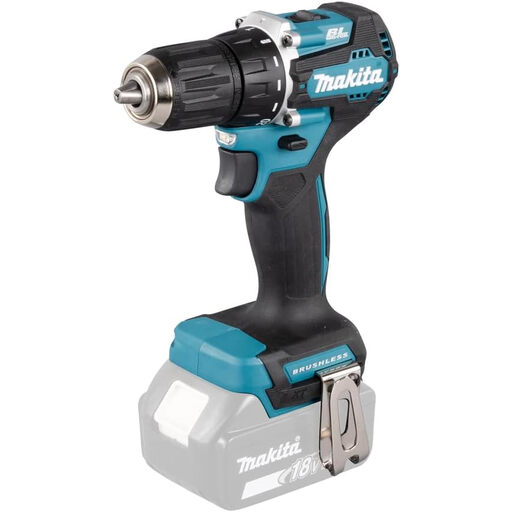
Why this product fits the profile: This compact Makita cordless drill driver is designed for users with an existing 18 V LXT system who regularly drive screws and drill.
The "Tool Only" label makes it clear that a battery and charger are needed separately. This helps you avoid unnecessary duplicate purchases.
Brushless motor, 40 Nm, up to 1,700 rpm, 13 mm chuck and electronic overload protection.
We've put together a full, regularly updated list of products that fully meet these strict selection criteria and the safety regulations in force in the EU.
Before drilling, make sure the workpiece is securely clamped. Wearing safety goggles is always advisable when drilling; for longer periods of use, you may also need ear protection and work gloves. Remove the battery before changing bits, cleaning or performing maintenance. Keep the ventilation slots and chuck free from dust. Store batteries in a dry, frost-free place according to the manufacturer's instructions.
For furniture assembly, a tool with 30 to 45 Nm, multiple torque settings, a two-speed gearbox and a 10 mm keyless chuck is usually sufficient. An LED light makes it easier to work in poorly lit areas. A set that includes a battery and charger is often the most practical choice for beginners.
The runtime depends on the battery capacity, the material, the drill bit diameter and the load. A 2.0 Ah battery is compact and suitable for shorter tasks. For longer assembly or renovation work, having an additional battery can be useful. If you already have a battery system, you can use charged spare batteries.
A hammer action is useful if you occasionally need to drill into masonry as well as wood and metal. For frequent drilling into concrete or very hard surfaces, a dedicated rotary hammer is more suitable. The key is to always follow the manufacturer's specifications for materials and maximum drilling diameters.