
Lieferung heute & morgen

Qualitätsgarantie

Willkommens-Angebote freischalten: KOSTENLOSE Lieferung | Bis zu 80 % RABATT | Kostenlose 30-Tage-JoyPlus-Testphase
App herunterladen
A cordless drill driver kit can replace several individual tools when assembling furniture, carrying out renovations or working in your home workshop. But kits can vary considerably in battery capacity, torque, accessories and charger. A high voltage rating alone tells you little about whether a model is right for the job.
An 18V cordless drill driver doesn’t automatically offer more practical value than a compact 12V model. Torque, gearing, battery capacity and the mechanical design of the chuck all matter too. A 12V cordless drill driver may be easier to handle for light screwdriving in furniture panels. For larger sections of wood or regular drilling, an 18V tool may offer more power in reserve.
A large case full of bits is only useful if the sizes included suit your needs. Check whether it contains wood and metal drill bits, socket bits, a bit holder and extensions. With a drill driver with accessories, it should also be clear whether a charger is included and how many batteries come with the kit.
A cordless hammer drill driver is designed for occasional drilling into masonry, provided the manufacturer approves this use. For concrete, repeated drilling or particularly hard building materials, a rotary hammer is usually a more suitable type of tool. The hammer function is not automatically a substitute for a specialist tool.
Torque is measured in Newton metres (Nm). A higher figure can be useful when driving larger screws or drilling into resistant materials. For controlled screwdriving, however, the torque setting is just as important. A wide range of finely stepped settings makes it easier to protect screw heads and workpieces from unnecessary strain.
Also check the difference between soft and hard torque if both figures are given. Manufacturers’ figures are based on specific test conditions, so they can’t always be compared directly across different brands.
Capacity is measured in Ah (ampere-hours). A 2.0-Ah battery is lighter and may be enough for shorter jobs; with comparable technology, a 3.0-Ah battery stores more energy. Actual runtime depends on the material, drill bit diameter, speed and workload.
A drill driver with 2 batteries is a good choice if you want to work without a long charging break. You can use one battery while charging the other. Check that both batteries are actually included in the kit and that the charger matches the stated voltage.
A keyless chuck lets you change drill bits and screwdriver bits without tools. Chuck capacity matters: a 10-mm chuck covers many DIY jobs, while a 13-mm all-metal chuck can take larger shanks and suggests a more robust design.
Two gears usually give you a lower speed with higher torque and a higher speed for smaller drill bits. Also compare the stated drilling diameters for wood, metal and masonry. These figures are not a general guarantee for every material; they’re a guide based on the manufacturer’s specifications.
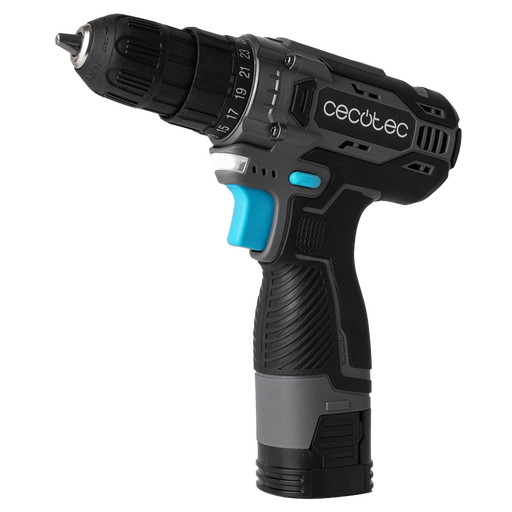
Why this product suits this profile: This kit combines a 16V tool with two batteries, a case and a range of drill and screwdriver bits. It’s well suited to typical household jobs and smaller DIY projects.
The kit contents list two 2.0-Ah batteries, plus accessories for wood and metal. That makes it easier to see what you’re getting than with offers that simply highlight a high accessory count.
Up to 1.500 U/min, 25+1 torque settings, an LED work light and a keyless chuck up to 10 mm.
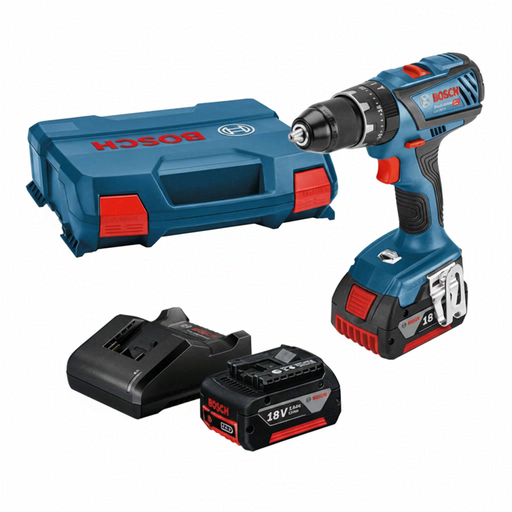
Why this product suits this profile: The 18V system is designed for people who drill and screw regularly and need a metal chuck, two batteries and a hammer-drilling function.
The specifications list torque, speed and impact rate separately. The kit contents also explicitly include two 3.0-Ah batteries, a charger and an L-Case.
63 Nm hard torque, a 13-mm all-metal chuck, 0–500/0–1.900 U/min and up to 28.500 impacts per minute.
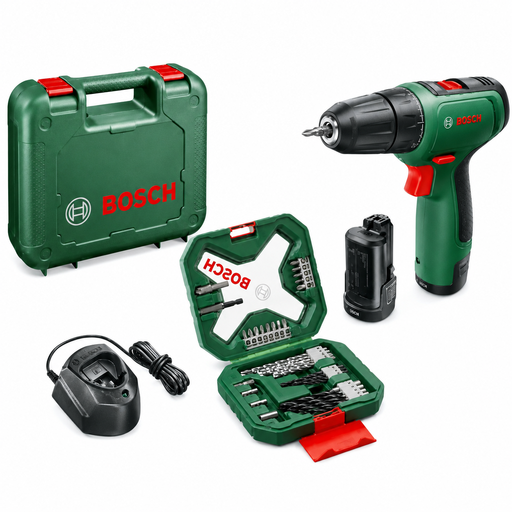
Why this product suits this profile: This compact 12V tool is designed for tight spaces, furniture assembly and lighter drilling and screwdriving jobs. The 34-piece kit covers a range of everyday tasks.
Its compact design and weight make it clear that ease of handling, rather than high impact power, is the priority. This helps set realistic expectations for masonry work.
12V lithium-ion battery with 1,5 Ah, tool-free keyless chuck and variable torque settings.
We’ve put together a complete, regularly updated list of products that meet these strict selection criteria and comply fully with the safety regulations in force in the EU.
For light assembly, furniture making and smaller holes, a 12V cordless drill driver may be all you need and can be easier to handle. An 18V model often offers more torque in reserve and a wider choice of compatible system batteries. The right choice depends on the material, drill bit diameter and how long you’ll be working each day.
You can’t work out a fixed runtime from the Ah rating alone. Large drill bits, hard materials and frequent use at high torque will drain the battery more quickly. Two batteries help reduce interruptions. To extend battery life, use only the recommended charger, protect batteries from moisture and excessive heat, and store them according to the manufacturer’s instructions.
A cordless hammer drill driver may be suitable for the occasional plug hole in suitable types of masonry. For concrete or more extensive work, follow the manufacturer’s guidance and consider using a rotary hammer. Safety glasses, ear protection and suitable dust protection are all part of the appropriate personal protective equipment for drilling.