
Lieferung heute & morgen

Qualitätsgarantie

Willkommens-Angebote freischalten: KOSTENLOSE Lieferung | Bis zu 80 % RABATT | Kostenlose 30-Tage-JoyPlus-Testphase
App herunterladen
A cordless drill driver should drive screws reliably, create clean drill holes and be ready for everyday use without an inconvenient cable. However, there are clear differences between a compact model for furniture assembly and an 18V cordless drill driver for renovation work. If you only look at voltage or a high speed, you may end up paying for features that are barely used for your own projects.
Many offers are described as a “drill driver with battery”, but are actually sold as a bare tool without a battery or charger. For example, several Makita models with the suffix “Z” contain the tool only. Before buying, check the contents, battery platform and cost of an additional battery.
An existing battery system can reduce the purchase cost. If you do not already own a battery, compare the total price of the tool, battery and charger instead.
A high no-load speed does not automatically mean more power when driving screws. Torque, gear ratios and torque settings are also important for controlled screwdriving. A cordless drill driver with 1,500 or 1,700 rpm may be unsuitable for delicate screwdriving if the speed cannot be adjusted sufficiently.
A cordless impact drill driver produces short impacts in addition to the rotary motion, making it suitable for certain masonry jobs. For concrete, larger drill diameters or frequent chiselling, however, a rotary hammer or suitable core drilling machine is often the better choice. The impact function does not automatically replace every specialist tool.
12-volt tools are generally compact and suitable for light assembly work, furniture, plastic and smaller holes in wood. An 16V cordless drill driver can offer a useful middle ground. 18V systems often provide greater power reserves and are suitable for more demanding work in wood and metal and, with the appropriate impact function, masonry.
It is not just the voltage that matters, but also compatibility:
The maximum torque in Newton metres (Nm) describes the force available when turning. This figure should always be considered together with the torque settings. A wide range of settings makes it easier to drive screws into delicate materials without unnecessarily damaging screw heads or surfaces.
A two-speed gearbox is practical for everyday use:
A keyless chuck allows you to change drill bits and screwdriver bits without tools. The maximum chuck capacity, such as 10 or 13 mm, indicates which shank diameters can be accepted. It is not the same as the maximum drilling size in every material.
A conventional cordless drill driver is sufficient for wood, metal and plastic. For masonry, look specifically for a cordless impact drill driver with a clearly stated impact function. Also consider the weight, handle design, LED work light and secure storage.
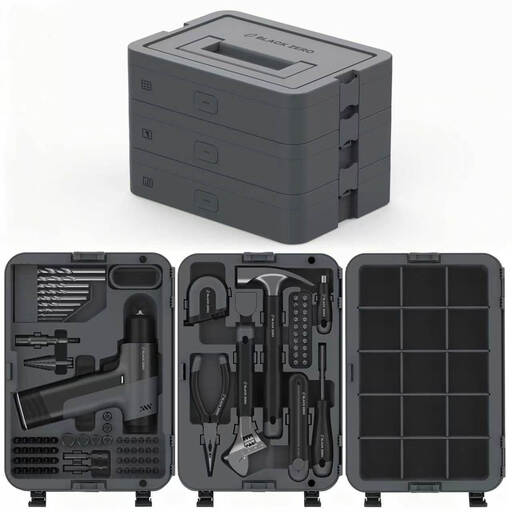
Why this product suits this profile: This set is designed for home repairs, DIY projects and maintenance tasks. It combines a 16V drill with hand tools and a structured storage case.
As well as the drill, the set includes several hand tools and a case. This makes it clearer which items are included in the set.
16V operation, 0–1,000 rpm and separate compartments for tools and accessories.
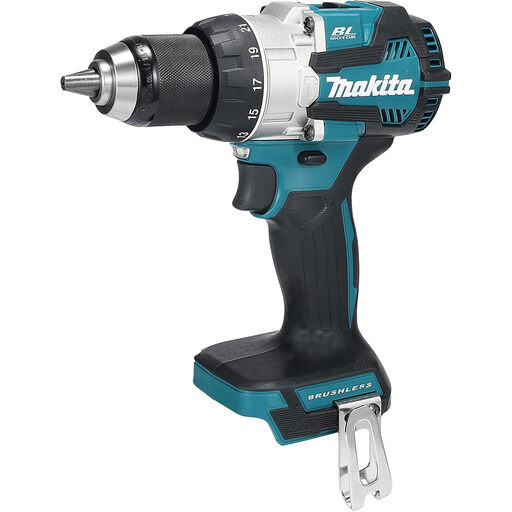
Why this product suits this profile: This 18V cordless impact drill driver is aimed at users who want to work on wood, metal and masonry with one tool.
The product specifications state 73 Nm of torque, two gears, a 13 mm chuck and an impact function. The battery and charger are expressly not included.
18V LXT compatibility, speeds of up to 1,800 rpm, LED work light and XPT protection against dust and splashing water.
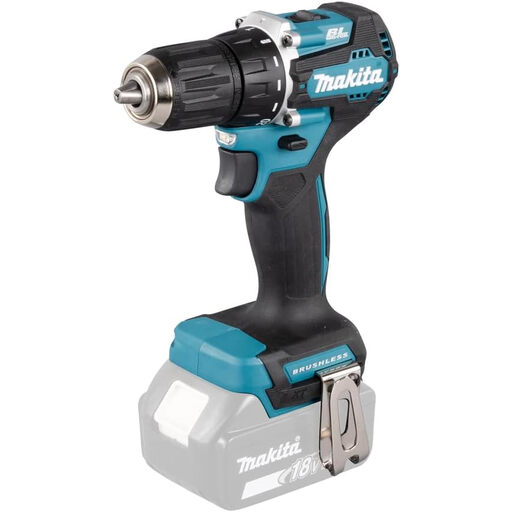
Why this product suits this profile: This compact cordless drill driver is designed for regular drilling and screwdriving when a brushless motor and a unified battery system are priorities.
The brushless motor, electronic overload protection and deep-discharge protection are clearly listed. The offer is supplied without a battery or charger.
40 Nm of torque, speeds of up to 1,700 rpm, dual LED light and compatibility with Makita 18V lithium-ion batteries.
We have put together a complete, regularly updated list of products that fully meet these strict selection criteria and the safety regulations applicable in the EU.
Always use bits and drills that are suitable for the material in question. Metal requires suitable metal drill bits, while wood drill bits have a different geometry. When driving screws, use a low speed with the appropriate clutch setting. Before drilling into walls, check whether cables or pipes are concealed in the substrate.
Follow the manufacturer’s instructions when using lithium-ion batteries. Damaged batteries must not be used any further. Charge them with the specified charger and do not dispose of them in household waste; instead, take them to a suitable collection point.
A 12V tool is often sufficient for assembling furniture, carrying out light repairs and drilling smaller holes in wood or plastic. For longer screws, larger hole diameters or regular work in harder materials, an 18V cordless drill driver generally offers greater power reserves. Torque, chuck and the specific substrate remain key factors.
Runtime depends on battery capacity, load, material and torque. A higher capacity in ampere-hours can extend operating time, but usually makes the battery heavier. Spare batteries are useful for longer jobs. With sets containing two batteries, one battery can be charged while you work, provided the charger and battery system are compatible.
A cordless impact drill driver is useful when you occasionally need to work on masonry as well as wood and metal. For frequent drilling in concrete or extensive chiselling, pay attention to the tool’s technical limitations and consider choosing a specialist device designed for the task. Always check the actual contents and choose the appropriate battery class.