
Lieferung heute & morgen

Qualitätsgarantie

Willkommens-Angebote freischalten: KOSTENLOSE Lieferung | Bis zu 80 % RABATT | Kostenlose 30-Tage-JoyPlus-Testphase
App herunterladen
A well-maintained hedge frames any garden, but choosing the right hedge trimmer can be a challenge given the many options available. Whether you need to perform precise shaping on small ornamental shrubs, maintain an extensive property line, or cut back woody, thick branches, the requirements for the tool vary. This guide serves as a reference, introducing different models to provide you with an informed basis for your purchasing decision.
Before you decide on a model, three fundamental criteria should be considered, as they determine the device's performance, handling, and range of application.
The choice of power source is the most fundamental decision and depends on the size of your garden, the availability of power outlets, and your desired power reserves.
These two values determine how efficiently the trimmer works and what type of foliage it is suitable for.
The weight of the device has a direct impact on user comfort. Especially during overhead work or long sessions, every gram can make a difference. A lightweight hedge trimmer under 3 kg is significantly more comfortable to handle. Ergonomic grips, good weight distribution, and low-vibration motors reduce fatigue and increase safety when operating the tool.
Here is a selection of models that cover different needs—from a versatile combo tool for small gardens to a high-performance machine for demanding tasks.

Why It Stands Out: This model combines a hedge trimmer with a grass shear and shrub shear. The tool-free blade change makes it a flexible tool for detailed garden work. Weighing only about 1.36 kg (3 lbs), it is an exceptionally lightweight hedge trimmer.
Advantages:
Best Suited For: Garden owners with small to medium-sized gardens who are looking for a lightweight and versatile tool for shaping shrubs, boxwoods, and trimming lawn edges.

Why It Stands Out: This petrol hedge trimmer is designed for power and endurance. With a 0.7 kW engine and a cutting length of 570 mm, it is built for demanding tasks and large areas. The adjustable handle ensures good ergonomics at various cutting angles.
Advantages:
Best Suited For: Owners of large properties, professional landscapers, and groundskeepers who need a robust and powerful professional hedge trimmer for continuous use without a power connection.
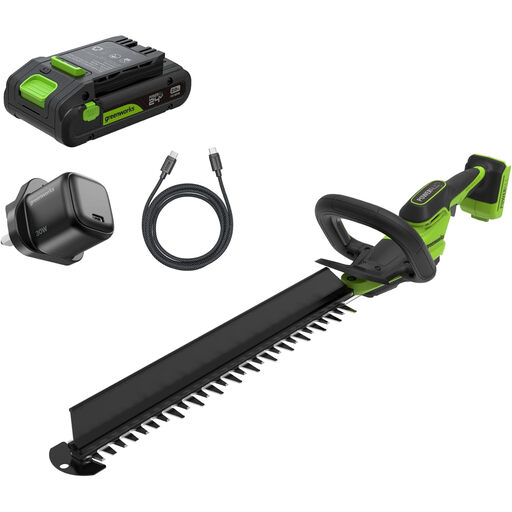
Why It Stands Out: This model offers a balanced combination of performance and comfort. The brushless motor ensures greater efficiency and a longer service life. With a cutting capacity of 28 mm, this cordless hedge trimmer is also well-equipped for thicker branches. The set is delivered as a complete package with a battery and charger.
Advantages:
Best Suited For: Home gardeners with medium to large gardens who are looking for a powerful, yet comfortable and low-maintenance cordless solution for regular hedge care.
Haven't found the right tool for your specific needs in our selection? Our comprehensive category features a wider range of models for every garden size and task.
Discover More Hedge Trimmers Here
1. How often should you trim a hedge? The frequency depends on the plant species. Most deciduous hedges (e.g., privet, hornbeam) benefit from two trims per year: a more substantial cut at the end of June and a light shaping trim at the end of August. Conifers like arborvitae or yew are more tolerant of cutting and are typically trimmed once in the spring or late summer. Be mindful of local wildlife protection laws, which often restrict heavy pruning during bird nesting seasons.
2. What is the difference between a hedge trimmer and a shrub shear? A hedge trimmer is designed for cutting surfaces and straight lines on hedges and has a long, dual-action blade. A shrub shear, often also called a shaping shear, has a much shorter blade and is intended for precise, detailed work like shaping boxwoods or small ornamental shrubs. Combo tools like the GARTOL model offer both functions with interchangeable blades.
3. How do you properly maintain the blades of a hedge trimmer? After each use, the blades should be cleaned of plant debris and sap with a brush. A resin-dissolving maintenance spray protects against corrosion and keeps the blades running smoothly. Always store the trimmer with its supplied protective sheath in a dry place. If cutting performance diminishes, the blades can be resharpened, depending on the model.